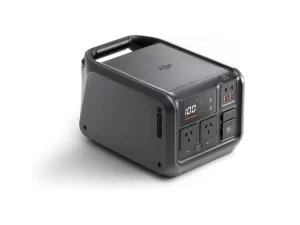
Complete brand lineup guide

DJI Power Station Comparison Chart

DJI Power stations combine high inverter output, fast charging, quiet operation, and compact designs. They are especially compelling for DJI drone users, but some solar and DC functions depend on proprietary SDC accessories.

Compare like with like Models are grouped by capability class, making it easier to compare power stations built for similar needs.

Expert context

Understanding the DJI Power Lineup

DJI brings a different background to portable power than most battery brands. Its experience with drones, high-output batteries, charging systems, and professional imaging equipment shows up in a lineup that tends to favor strong inverter performance, fast recharging, quiet operation, and compact packaging.

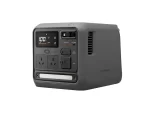
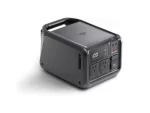
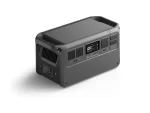
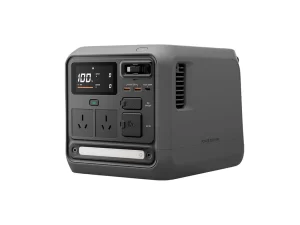
The current U.S. range covers several distinct needs. The Power 500 is a light 512Wh option with unusually strong 1,000W continuous output for its size. The Power 1000 Mini keeps roughly 1kWh of storage in a more travel-friendly design, but limits sustained AC output to 800W. The Power 1000 V2 pushes in the opposite direction with 2,600W continuous output from a 1,024Wh battery, while the Power 2000 moves into larger backup, RV, and expandable-system use.

Across the lineup, the key question is not simply how much power DJI provides. Buyers should also consider whether DJI's SDC-based charging and accessory ecosystem fits the way they plan to use solar panels, vehicle charging, DC devices, and DJI drones.

Lineup overview

DJI at a Glance

The maximum figures below show the upper end of each current lineup. Use the class rankings for closer like-for-like comparisons.

BrandMax BatteryMax OutputMax Solar
DJI 2,048 Wh 3,000 W 800 W

Category analysis

How This Lineup Performs by Category

Performance & Capacity

DJI generally offers a high amount of inverter power for the size of the battery. The Power 500 combines 512Wh with 1,000W continuous AC output, while the Power 1000 V2 delivers 2,600W from a 1,024Wh battery. The Power 2000 reaches 3,000W continuous output from 2,048Wh and can grow into a much larger battery system with expansion packs.

That strong output is useful for tools, cooking appliances, production equipment, and other demanding loads, but it does not create extra runtime. A 1kWh battery can still discharge quickly when powering a 2,000W appliance. The Power 1000 Mini takes a different approach: its 1,008Wh battery is paired with a more modest 800W continuous inverter, making it better suited to electronics, refrigeration, cameras, drones, and lower-draw travel loads than heavy appliances.

Current DJI models use LFP batteries with long cycle-life claims. The newer 1kWh and 2kWh models are rated to retain more than 80% capacity after 4,000 cycles, while the Power 500 uses a more conservative 70%-remaining benchmark after the same number of cycles.

AC & Solar Charging

Fast wall charging is one of DJI's clearest strengths. The Power 500 can recharge in about 70 minutes, the Power 1000 Mini in about 75 minutes, and the Power 1000 V2 in about 56 minutes. In the U.S., the larger Power 2000 takes about 90 minutes to reach a full charge. These are practical recharge times for travelers and backup users who may have only a short window with grid or generator power.

Solar charging is capable but requires more attention. The Power 1000 Mini has a built-in 400W MPPT controller, making it the most straightforward DJI model for conventional solar use. Other DJI stations rely more heavily on SDC ports, MPPT adapter modules, and optional high-power solar/car chargers. Those accessories can unlock very fast solar and vehicle charging, including much larger solar arrays on compatible systems, but they add cost and make panel compatibility less obvious than on stations with standard solar inputs built directly into the case.

Buyers using existing panels should check voltage, current, connector requirements, and the specific DJI adapter before assuming a panel will work.

Outlets & Connectivity

DJI provides a strong mix of AC and high-power USB connections, particularly on the newer models. The Power 1000 V2 includes dual 140W USB-C outputs, while the Power 2000 adds four USB-C and four USB-A ports alongside its AC outlets. The Power 1000 Mini also adds a built-in retractable 100W USB-C cable, which is genuinely useful for laptops and other travel electronics.

The newer Power 1000 Mini, Power 1000 V2, and Power 2000 add Wi-Fi and Bluetooth control through DJI Home, while the Power 500 remains a simpler offline unit. The V2 and Power 2000 also provide roughly 10ms UPS switching for computers, network equipment, and other devices that benefit from quick backup transfer.

The tradeoff is DJI's SDC ecosystem. It enables fast drone charging, vehicle charging, battery expansion, and other useful features, but some everyday DC functions require an adapter rather than a dedicated built-in port. Buyers who regularly use 12V refrigerators or other car-socket accessories should include those adapters in the total system cost.

Portability & Size

DJI is particularly competitive when capability is compared with physical size. The Power 500 weighs about 16.1 pounds, making it easy to move around a campsite, vehicle, or work area. The 1,008Wh Power 1000 Mini weighs about 25.4 pounds, which is notably manageable for a 1kWh-class battery.

The Power 1000 V2 is also relatively compact at about 31.3 pounds despite its 2,600W continuous inverter. The Power 2000 steps up to about 48.5 pounds, so it is better viewed as a movable backup or RV system than something to carry frequently.

Across the lineup, DJI generally packages substantial electrical capability into clean, compact enclosures. That makes the brand especially appealing when storage space, vehicle space, or frequent movement matters.

Solar Waypoint research and analysis

What to Know About DJI

DJI launched its Power Series after building its reputation around drones, camera systems, stabilization equipment, batteries, and high-speed charging. That background helps explain why the power stations feel more like carefully engineered electronics than generic battery boxes. Strong power density, fast charging, quiet cooling, and high-output USB-C are recurring themes, and DJI’s drone-charging support gives the lineup a feature that competing power brands cannot match as directly.

The lineup also shows a clearer range of use cases than DJI’s first generation suggested. The Power 500 is a compact option for camping, electronics, and short backup duty. The Power 1000 Mini focuses on portability and integrated charging rather than maximum appliance output. The Power 1000 V2 is the performance-focused choice, with unusually high continuous output for a 1kWh-class station. The Power 2000 moves DJI into more serious RV, production, and home-backup territory with 3,000W continuous output and substantial battery expansion.

Independent testing and owner feedback are generally favorable toward the hardware itself. Reviewers frequently praise DJI’s build quality, low fan noise, compact dimensions, and charging speed. The most consistent criticism is the accessory system. DJI’s SDC ports enable genuinely useful features, including rapid charging for compatible drones, high-power vehicle charging, and expansion batteries, but they also mean that solar panels and common 12V devices may need extra adapters. That distinction matters most for buyers who already own solar equipment or want a simple plug-and-play DC setup.

For shoppers who already use DJI drones, the ecosystem can be a major advantage rather than a drawback. A DJI power station can serve as a field-power hub for flight batteries, laptops, cameras, lighting, and other production equipment. For buyers with no DJI equipment, the decision is more conventional: compare DJI’s high output, fast charging, battery longevity, and compact size against the accessory cost and connector flexibility offered by EcoFlow, Anker SOLIX, Jackery, Bluetti, and other established power-station brands.

Standout Models in the Lineup

Solar Waypoint expert insight

Our Expert View of DJI Power

DJI has become a serious portable-power competitor in a short period because its strongest models solve real problems rather than relying on brand recognition alone. The Power 1000 V2 is the clearest example: 2,600W of continuous output from a roughly 1kWh battery gives it far more appliance capability than its size suggests, while fast AC charging and a 10ms UPS make it useful for both travel and backup power. The Power 1000 Mini is equally interesting for the opposite reason—it sacrifices inverter headroom to make a 1kWh battery easier to carry and simpler to charge from a vehicle or solar panel.

The main reservation is DJI's reliance on SDC accessories. The ecosystem is powerful when you use it as intended, especially for drone charging, alternator charging, and battery expansion. It is less attractive when you simply want to connect an existing solar array or a common 12V appliance without another adapter. We would therefore judge DJI very highly on power density, charging speed, noise, and build quality, while treating connector flexibility and accessory cost as the main reasons to compare an otherwise excellent DJI model with a more conventional competitor.

Like-for-like recommendations

Top DJI Models by Class

Each model is rated against products with similar capability. The class rank shows how it compares with all active models in that class.

Midrange class

Highest-Rated Midrange Power Stations

See the full class ranking

Large class

Highest-Rated Large Power Stations

See the full class ranking

Leading active models

Explore Leading DJI Models

Browse leading models from this brand. Open one for full analysis, or select two to four to compare side by side.

Explore every brand in the directory
Class RankPower StationBatteryOutputSolarPeer RatingSelect
MidrangeTied #22 DJI Power 1000 Mini 1,008 Wh 800 W 400 W 61/100
MidrangeTied #29 DJI Power 500 512 Wh 1,000 W 300 W 52/100
LargeTied #7 DJI Power 2000 2,048 Wh 3,000 W 800 W 73/100
LargeTied #22 DJI Power 1000 V2 1,024 Wh 2,600 W 800 W 63/100

The bottom line

Who Should Choose DJI Power?

DJI Power is a strong fit for buyers who want fast charging, high output, quiet operation, and a relatively compact station. It is especially easy to recommend to DJI drone owners, photographers, video crews, campers, and vehicle travelers who can take advantage of the SDC ecosystem.

Buyers who already own solar panels or rely heavily on standard 12V accessories should look more closely at connector and adapter requirements before choosing a model. If those details fit your setup, DJI's current power stations compete very well with the established leaders in portable power.

How the ratings work

Experience Behind the Ratings

Our team combines many years of solar experience with practical knowledge of portable power, custom battery systems, off-grid design, and the products currently competing for your money.

Real solar and off-grid experience

Our team has worked with power stations since some of the earliest models, along with custom battery, solar, and off-grid system design and builds. We understand what specifications mean once equipment leaves the product page and has to power real loads.

A practical view of the current market

We continually follow new products, changing capabilities, useful features, and common marketing claims. That helps our team recognize what creates real value, what limits a system, and how buyers can make the most of it.

How we turn specifications into useful advice

Solar Waypoint tracks detailed specifications covering battery storage, continuous output, AC and solar charging, battery longevity, outlets, connectivity, and physical design. We standardize those figures so products are evaluated consistently while keeping the specifications visible so readers can see what drives each result.

Class rankings apply the same Peer Rating standards to every active model in the class, making it easier to compare products on the same basis.

More About Our Team

Our experience covers portable power stations, solar charging, custom battery banks, electrical load planning, and complete off-grid system design and builds. That background helps us distinguish a specification that sounds impressive from one that meaningfully improves runtime, charging, reliability, or day-to-day usability.

Power-station expertise begins with the job the system must perform. An experienced team looks beyond a single watt or watt-hour number and considers running loads, startup demands, duty cycles, conversion losses, charging opportunities, storage conditions, and how often the equipment must be moved.

Load and runtime planning

We understand the difference between stored battery energy, usable AC energy, continuous inverter output, and short starting demands. That makes it easier to judge whether a unit is suited to electronics, refrigeration, medical equipment, tools, RV loads, or home-backup essentials—and how long it can reasonably support them.

Charging-system knowledge

A large battery is far less useful when it cannot be replenished in time. We examine AC charging in relation to battery size and evaluate solar watts together with voltage, current, connector, and controller limits. Those details determine which arrays are compatible and how practical off-grid charging will be.

Battery and electrical experience

Battery chemistry, cycle-life claims, warranty coverage, inverter design, outlet types, 120V or 240V capability, DC connections, and backup transfer behavior all affect the way a system can be used. We treat those specifications as parts of one electrical system rather than isolated marketing features.

Selection for real use

The best option changes with the setting. Camping, vehicle travel, job-site use, emergency backup, and expandable home systems place different demands on weight, charging, output, outlets, and accessories. We organize the comparison around those practical tradeoffs.

We also follow product generations, manuals, changing capabilities, accessory ecosystems, and common marketing claims across the market. The goal is not to repeat a product page. It is to explain what the specifications mean together, identify limitations before they become expensive surprises, and help readers choose a system that fits both their present needs and realistic plans for expansion.

Detailed Rating Methodology

Our rating system is designed to answer three practical questions: how much useful work a power station can perform, how effectively it can be recharged, and how convenient it is to connect, move, and live with. The groups are intentionally weighted differently because they do not contribute equally to the core job of providing dependable power.

Performance & Capacity Greatest influence

Storage, continuous output, battery longevity, warranty, and system capability determine which loads the unit can support and for how long.

AC & Solar Charging Major supporting influence

Charging power and estimated recharge time show whether the battery can be restored quickly enough from the wall, solar panels, or a larger system.

Outlets & Connectivity Major supporting influence

The right AC, USB, and DC connections determine whether stored energy can reach the equipment that needs it without unnecessary adapters or conversion losses.

Portability & Size Smaller, use-case influence

Weight and physical size matter, but they are judged in class context so larger batteries are not unfairly penalized simply for containing more hardware.

Why the groups are weighted this way

Performance and capacity receive the most influence because they establish the basic limit of the system: the appliances it can run, the runtime it can provide, and the durability expected from the battery. A light, well-connected product cannot compensate for being unable to support the required load.

Charging and connectivity provide much of the remaining influence. Charging matters because stored energy must be replaced on a useful schedule, especially during outages or off-grid use. Outlets and connectivity matter because power must be delivered in the correct form. Portability remains meaningful, but it carries less influence because every increase in battery capacity and inverter capability normally adds weight and volume.

Peer Ratings compare each model with appropriate standards for its capability class. Matchup Ratings apply the same rating framework to the products selected for a direct comparison. This keeps compact products useful within their intended role while still recognizing the additional capability of larger systems.

  • Continuous output matters. Advertised peak output is shown for reference but receives no rating weight because it does not reliably represent sustained appliance capability.
  • Charging is judged in context. Input wattage is considered together with battery size and estimated recharge time, while solar evaluation also accounts for the limits that determine compatible panel configurations.
  • Useful connections matter more than a long feature list. Common outlets establish everyday flexibility, while specialized 240V, high-amp DC, expansion, and system-level features become important when they change what the compared products can actually do.
  • Class context keeps comparisons fair. Products are measured against realistic expectations for their capability range instead of rewarding size alone or expecting a compact unit to behave like a home-backup system.
  • The evidence stays visible. Category results, strengths and tradeoffs, and the full specification table let readers verify what drives the result.

A practical next step

Continue With Leading Options

Build your own matchup

Compare the Models That Matter to You

Choose one model to open its expert analysis, or select two to four models for a complete specification and rating comparison.

Explore the full directory