
Power station comparison
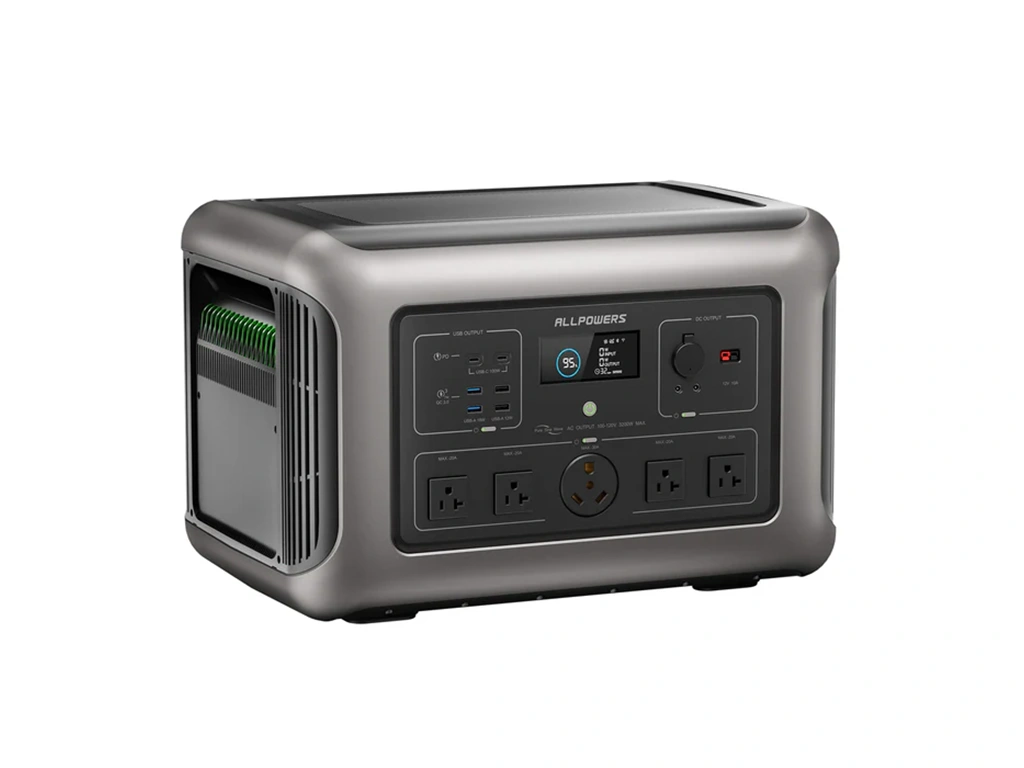
AllPowers R3500 vs Anker Solix F3000 vs EcoFlow DELTA 3 Plus Comparison
Solix F3000 is the more capable option. It supports up to 24,576Wh of total battery capacity versus 6,336Wh or less for the other models, leaving more room for extended backup. R3500 delivers 3,200W of continuous output versus 2,400W or less for the other models, giving it more headroom for higher-draw appliances.
The verdict
Solix F3000 offers the most capability
Solix F3000 finishes with a Matchup Rating of 82/100, compared with 79/100 for the next-highest model. R3500 remains worth considering when higher appliance headroom is more important for your use case. Because these models span materially different capability classes, the smaller option can still be the better purchase when maximum backup capability matters less than portability or a smaller overall system.
Anker Solix F3000
Fast, transparent comparison
At a Glance
Use this as the quick numerical view. A Best label marks the stronger value, but not every win carries the same buying weight; the analysis below explains which gaps are large enough to matter.
| Specification |
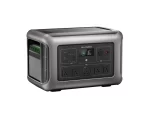 AllPowers R3500 |
Anker Solix F3000
|
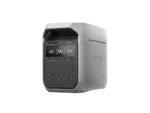 EcoFlow DELTA 3 Plus |
|---|---|---|---|
| Matchup Rating | 79/100 | 82/100 Best overall | 60/100 |
| Battery Capacity | 3,168 Wh Best | 3,072 Wh | 1,024 Wh |
| Continuous Inverter | 3,200 W Best | 2,400 W | 1,800 W |
| Maximum AC Input | 1,500 W | 3,600 W Best | 1,500 W |
| Estimated AC Recharge | 2.50 hours | 1 hour Co-leader | 0.93 hours Co-leader |
| Maximum Solar Input | 2,000 W | 2,400 W Best | 1,000 W |
| Estimated Solar Recharge | 1.90 hours | 1.50 hours | 1.17 hours |
| Warranty | 5 years | 5 years | 5 years |
| Weight | 93 lb | 91.50 lb | 27.60 lb Best |
| Retailer Options |
Expert buying analysis
Strengths & Tradeoffs
These are the advantages and compromises most likely to affect what each station can do in real use, rather than a simple count of specification wins.
AllPowers R3500
Strengths
- Large battery capacity: 3,168 Wh
- Strong continuous output: 3,200 W
Tradeoffs
- Lower expandable capacity in this matchup: 6,336 Wh
- System expansion does not increase continuous AC output
Anker Solix F3000
Strengths
- Large battery capacity: 3,072 Wh
- Strong expansion potential: 24,576 Wh
Tradeoffs
- Slower backup transfer: 20ms
- Only 2 USB-A ports
EcoFlow DELTA 3 Plus
Strengths
- Compact overall size: 1,406.72 cu in
- Fast backup transfer: 10ms
Tradeoffs
- Lower battery capacity: 1,024 Wh
- Lower continuous output: 1,800 W
Where each model wins
Category Results
Category scores group related specifications. The notes below explain why each score moved and how much that category should influence the buying decision.
Performance & Capacity
AllPowers R3500 80/100
Anker Solix F3000 81/100
EcoFlow DELTA 3 Plus 53/100
Category leader
Anker Solix F3000 leads here with higher battery capacity (3,072 Wh) and greater expandable capacity (24,576 Wh).
Anker Solix F3000
Trails in This Category
EcoFlow DELTA 3 Plus trails here primarily because of lower battery capacity (1,024 Wh).
Buying impact
Solix F3000 leads the next-highest model by only 1 point, so treat this as a slight edge rather than a major capability gap. Give this category extra weight when runtime, sustained appliance power, battery expansion, or long-term ownership are your priorities.
AC & Solar Charging Speeds
AllPowers R3500 73/100
Anker Solix F3000 100/100
EcoFlow DELTA 3 Plus 68/100
Category leader
Anker Solix F3000 leads here with higher system solar input (4,800 W) and higher solar input (2,400 W).
Anker Solix F3000
Trails in This Category
EcoFlow DELTA 3 Plus trails here primarily because of lower solar input (1,000 W).
Buying impact
Solix F3000 leads the next-highest model by 27 points here, large enough to matter if this category matches your main use case. It matters most if you cycle the battery often, rely on solar between outages, or need short turnaround between uses.
Outlets, Ports & Connectivity
AllPowers R3500 87/100
Anker Solix F3000 72/100
EcoFlow DELTA 3 Plus 65/100
Category leader
AllPowers R3500 leads here with 4 USB-A ports and one high-amp DC output.
AllPowers R3500
Trails in This Category
EcoFlow DELTA 3 Plus trails here primarily because it has no high-amp DC outputs.
Buying impact
R3500 leads the next-highest model by 15 points here, large enough to matter if this category matches your main use case. Use it mainly as a fit check: 240V capability and the specific ports your equipment needs matter more than the raw number of outlets.
Portability & Size
AllPowers R3500 52/100
Anker Solix F3000 51/100
EcoFlow DELTA 3 Plus 100/100
Category leader
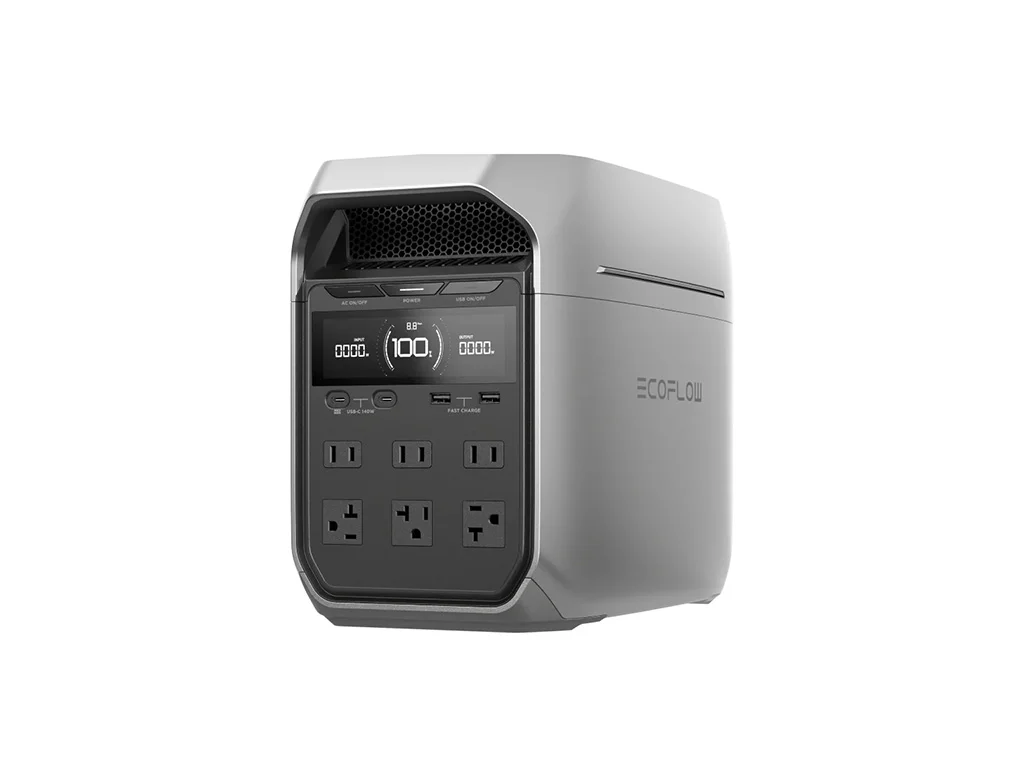
EcoFlow DELTA 3 Plus leads here with smaller overall size (1,406.72 cu in) and lower weight (27.60 lb).
EcoFlow DELTA 3 Plus
Trails in This Category
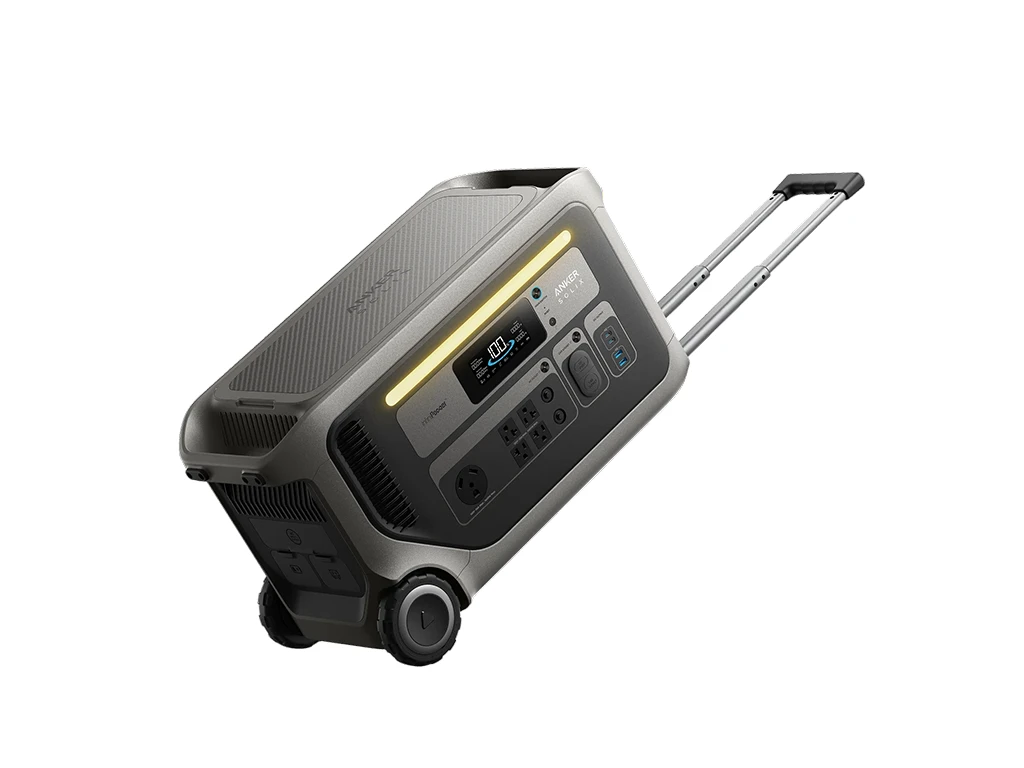
Anker Solix F3000 trails here primarily because of larger overall size (4,470.78 cu in).
Buying impact
DELTA 3 Plus leads the next-highest model by 48 points here, large enough to matter if this category matches your main use case. Portability matters most for frequent carrying, vehicle use, and tight storage; a mostly stationary backup system can usually give it less weight.
Analysis & specifications
Performance & Capacity
Battery storage, continuous output, service life, and backup-power capability determine how much useful work a power station can support.
Expert analysis
Solix F3000 can scale to 24,576Wh of total battery capacity versus 6,336Wh or less for the other models, giving it more room to grow into a longer-duration backup system. R3500 provides 3,200W of continuous output versus 2,400W or less for the other models. Continuous output is the number to prioritize for sustained appliance loads; advertised peak output matters much less.
Battery Capacity
AllPowers R3500
3,168 Wh
Best
Anker Solix F3000
3,072 Wh
EcoFlow DELTA 3 Plus
1,024 Wh
Stored energy available for running devices and appliances.
Expandable Capacity
AllPowers R3500
6,336 Wh
Anker Solix F3000
24,576 Wh
Best
EcoFlow DELTA 3 Plus
5,120 Wh
Maximum battery capacity when supported expansion batteries are added.
Continuous Inverter Power
AllPowers R3500
3,200 W
Best
Anker Solix F3000
2,400 W
EcoFlow DELTA 3 Plus
1,800 W
Sustained AC output, which is the meaningful figure for ordinary appliance loads.
Inverter System Maximum
AllPowers R3500
3,200 W
Anker Solix F3000
4,800 W
Best
EcoFlow DELTA 3 Plus
1,800 W
Maximum continuous output available in a supported linked system.
Advertised Peak Output
Not scored
AllPowers R3500
6,400 W
Anker Solix F3000
7,200 W
EcoFlow DELTA 3 Plus
3,600 W
Shown for reference only. Peak claims are not included in Solar Waypoint ratings because they do not reliably describe sustained usable output.
Warranty
AllPowers R3500
5 years
Anker Solix F3000
5 years
EcoFlow DELTA 3 Plus
5 years
Manufacturer warranty coverage for the power station.
Battery Cycles
AllPowers R3500
3,500 cycles
Anker Solix F3000
4,000 cycles
Co-leader
EcoFlow DELTA 3 Plus
4,000 cycles
Co-leader
Published cycle-life figure for long-term battery durability.
Battery Chemistry
AllPowers R3500
LiFePO4 (LFP)
Anker Solix F3000
LiFePO4 (LFP)
EcoFlow DELTA 3 Plus
LiFePO4 (LFP)
Battery chemistry affects expected cycle life, weight, and thermal stability.
UPS / EPS Transfer Time
AllPowers R3500
15ms
Anker Solix F3000
20ms
EcoFlow DELTA 3 Plus
10ms
Best
How quickly backup power takes over when grid power is interrupted.
Analysis & specifications
AC & Solar Charging Speeds
Input limits and estimated recharge times show how quickly each battery can be restored from the wall or from solar panels.
Expert analysis
Solix F3000 accepts up to 2,400W of solar, R3500 is close at 2,000W, and DELTA 3 Plus is limited to 1,000W. The larger spread matters when solar recovery is a priority. DELTA 3 Plus has the fastest estimated AC recharge at 56 minutes, Solix F3000 is close at 1 hour, and R3500 takes about 2.5 hours. The spread matters most when turnaround time is important.
Maximum AC Input
AllPowers R3500
1,500 W
Anker Solix F3000
3,600 W
Best
EcoFlow DELTA 3 Plus
1,500 W
Maximum published charging input from an AC wall source.
Estimated AC Recharge
AllPowers R3500
2.50 hours
Anker Solix F3000
1 hour
Co-leader
EcoFlow DELTA 3 Plus
0.93 hours
Co-leader
Estimated time to recharge from AC; lower is better.
Maximum Solar Input
AllPowers R3500
2,000 W
Anker Solix F3000
2,400 W
Best
EcoFlow DELTA 3 Plus
1,000 W
Maximum solar input accepted by the base power station.
Estimated Solar Recharge
AllPowers R3500
1.90 hours
Anker Solix F3000
1.50 hours
EcoFlow DELTA 3 Plus
1.17 hours
Estimated best-case solar recharge time; lower is better.
Solar Charging System Maximum
AllPowers R3500
2,000 W
Anker Solix F3000
4,800 W
Best
EcoFlow DELTA 3 Plus
1,000 W
Maximum solar input available in a supported expanded system.
Analysis & specifications
Outlets, Ports & Connectivity
The outlet mix determines how many devices can be powered directly and how often the less-efficient AC inverter is needed.
Expert analysis
R3500, Solix F3000, and DELTA 3 Plus are close on the connectivity features that usually affect a purchase. Treat this section as a compatibility check: 240V support and the exact ports your devices need matter more than simply having the highest total port count.
120V AC Outlets
AllPowers R3500
5
Anker Solix F3000
5
EcoFlow DELTA 3 Plus
6
Best
Standard household AC outlets.
USB-A Ports
AllPowers R3500
4
Best
Anker Solix F3000
2
EcoFlow DELTA 3 Plus
2
Direct charging ports for common USB devices.
USB-C Ports
AllPowers R3500
2
Anker Solix F3000
2
EcoFlow DELTA 3 Plus
2
Direct charging for modern phones, tablets, laptops, and other USB-C equipment.
High-Amp DC Ports
AllPowers R3500
1
Co-leader
Anker Solix F3000
1
Co-leader
EcoFlow DELTA 3 Plus
0
Specialized DC outputs above 10A for equipment that needs substantial direct-current power.
Low-Amp DC Ports
AllPowers R3500
2
Co-leader
Anker Solix F3000
0
EcoFlow DELTA 3 Plus
2
Co-leader
Direct-current outputs for lights, routers, CPAP equipment, and similar devices.
12V Accessory Sockets
AllPowers R3500
1
Anker Solix F3000
1
EcoFlow DELTA 3 Plus
1
Automotive-style sockets for portable refrigerators and other 12V accessories.
App Connectivity
AllPowers R3500
WiFi, Bluetooth
Anker Solix F3000
WiFi, Bluetooth
EcoFlow DELTA 3 Plus
WiFi, Bluetooth
Remote monitoring and controls available through the product app or supported connection.
Analysis & specifications
Portability & Size
Weight and overall size show how easily a unit can be carried, stored, and fitted into a vehicle or backup-power setup.
Expert analysis
DELTA 3 Plus is at least 63.9 lb lighter than the other models. That is meaningful if you move the station regularly, but much less important for mostly stationary home backup. It is also about 65% smaller by calculated exterior volume than R3500, reinforcing its advantage for vehicles and tight storage.
Weight
AllPowers R3500
93 lb
Anker Solix F3000
91.50 lb
EcoFlow DELTA 3 Plus
27.60 lb
Best
Published product weight; lower is easier to move.
Physical Volume
AllPowers R3500
4,036.21 cu in
Anker Solix F3000
4,470.78 cu in
EcoFlow DELTA 3 Plus
1,406.72 cu in
Best
Calculated from the published exterior dimensions; lower takes less storage space.
Dimensions
Not scored
AllPowers R3500
20.9 × 14.2 × 13.6 in
Anker Solix F3000
25.6 × 11.8 × 14.8 in
EcoFlow DELTA 3 Plus
15.7 × 8 × 11.2 in
Published length, width, and height in inches.
Editorial analysis
Expert Quick Takes
AllPowers R3500
The ALLPOWERS R3500 is a home-backup-style power station with 3,168Wh of LiFePO₄ capacity, 3,200W of AC output, and 6,000W surge. Its biggest strength is the fast recovery with up to 2,000W of solar input, 4,000W max dual input (AC + solar). It also features under-15ms UPS and expansion from 3,168Wh to 6,336Wh with one B3000 battery.
Anker Solix F3000
The Anker SOLIX F3000 is a high-output, backup-focused power station built around 3,072Wh of capacity and 3,600W of AC output, with a design that emphasizes long runtime and efficient everyday readiness. Its standout strengths are the ultra-low idle draw, 3,600W pass-through charging, and up to 2,400W of dual-voltage solar input. It also adds practical flexibility with features like a TT-30R outlet and high-amp DC Anderson port, giving the unit a more serious RV and off-grid edge than many large power stations in this class.
EcoFlow DELTA 3 Plus
One of EcoFlow's most flexible 1kWh models, combining 1.8kW AC output, dual 500W solar inputs, 10ms UPS switching, and battery expansion. It is a strong all-around choice for home electronics, camping, and vehicle-based use.
View Full Specifications
Review the complete published specifications, or learn how to interpret power-station specifications.
| Specification | AllPowers R3500 | Anker Solix F3000 | EcoFlow DELTA 3 Plus |
|---|---|---|---|
| Battery & Power | |||
| Battery Capacity | 3,168 Wh | 3,072 Wh | 1,024 Wh |
| Expandable Capacity | 6,336 Wh | 24,576 Wh | 5,120 Wh |
| Continuous Inverter Power | 3,200 W | 2,400 W | 1,800 W |
| Inverter System Maximum | 3,200 W | 4,800 W | 1,800 W |
| Advertised Peak Output | 6,400 W | 7,200 W | 3,600 W |
| Warranty | 5 years | 5 years | 5 years |
| Battery Cycles | 3,500 cycles | 4,000 cycles | 4,000 cycles |
| Battery Chemistry | LiFePO4 (LFP) | LiFePO4 (LFP) | LiFePO4 (LFP) |
| UPS / EPS Transfer Time | 15ms | 20ms | 10ms |
| AC & Solar Charging | |||
| Maximum AC Input | 1,500 W | 3,600 W | 1,500 W |
| Estimated AC Recharge | 2.50 hours | 1 hour | 0.93 hours |
| Maximum Solar Input | 2,000 W | 2,400 W | 1,000 W |
| Estimated Solar Recharge | 1.90 hours | 1.50 hours | 1.17 hours |
| Solar Charging System Maximum | 2,000 W | 4,800 W | 1,000 W |
| Solar Input 1 | |||
| Maximum Watts | 2,000 W | 1,600 W | 500 W |
| Voltage Range | 12–150 V | 11–165 V | 11–60 V |
| Maximum Current | 40 A | 17 A | 15 A |
| Connector | XT60/XT60i | MC4, Other | XT60/XT60i |
| Solar Input 2 | |||
| Maximum Watts | — | 800 W | 500 W |
| Voltage Range | — | 11–60 V | 11–60 V |
| Maximum Current | — | 17 A | 15 A |
| Connector | None | XT60/XT60i | XT60/XT60i |
| Outlets, Ports & Connectivity | |||
| 120V AC Outlets | 5 | 5 | 6 |
| USB-A Ports | 4 | 2 | 2 |
| USB-C Ports | 2 | 2 | 2 |
| High-Amp DC Ports | 1 | 1 | 0 |
| Low-Amp DC Ports | 2 | 0 | 2 |
| 12V Accessory Sockets | 1 | 1 | 1 |
| App Connectivity | WiFi, Bluetooth | WiFi, Bluetooth | WiFi, Bluetooth |
| Physical, Support & Resources | |||
| Weight | 93 lb | 91.50 lb | 27.60 lb |
| Weight (Metric) | 42 kg | 41.50 kg | 12.50 kg |
| Physical Volume | 4,036.21 cu in | 4,470.78 cu in | 1,406.72 cu in |
| Dimensions | 20.9 × 14.2 × 13.6 in | 25.6 × 11.8 × 14.8 in | 15.7 × 8 × 11.2 in |
| Dimensions (Metric) | 530 × 360 × 345 mm | 650 × 300 × 376 mm | 398 × 202 × 284 mm |
| User Manual | Open manual | Open manual | Open manual |
Why this comparison is trustworthy
Experience Behind the Ratings
Our team combines many years of solar experience with practical knowledge of portable power, custom battery systems, off-grid design, and the products currently competing for your money.
How we turn specifications into useful advice
Solar Waypoint tracks detailed specifications covering battery storage, continuous output, AC and solar charging, battery longevity, outlets, connectivity, and physical design. We standardize those figures so products are evaluated consistently while keeping the specifications visible so readers can see what drives each result.
Matchup Ratings use the capability class represented by the selected products. Larger batteries and stronger continuous inverters receive appropriate credit, while the category results show exactly where each product wins or trails.
More About Our Team
Our experience covers portable power stations, solar charging, custom battery banks, electrical load planning, and complete off-grid system design and builds. That background helps us distinguish a specification that sounds impressive from one that meaningfully improves runtime, charging, reliability, or day-to-day usability.
Power-station expertise begins with the job the system must perform. An experienced team looks beyond a single watt or watt-hour number and considers running loads, startup demands, duty cycles, conversion losses, charging opportunities, storage conditions, and how often the equipment must be moved.
Load and runtime planning
We understand the difference between stored battery energy, usable AC energy, continuous inverter output, and short starting demands. That makes it easier to judge whether a unit is suited to electronics, refrigeration, medical equipment, tools, RV loads, or home-backup essentials—and how long it can reasonably support them.
Charging-system knowledge
A large battery is far less useful when it cannot be replenished in time. We examine AC charging in relation to battery size and evaluate solar watts together with voltage, current, connector, and controller limits. Those details determine which arrays are compatible and how practical off-grid charging will be.
Battery and electrical experience
Battery chemistry, cycle-life claims, warranty coverage, inverter design, outlet types, 120V or 240V capability, DC connections, and backup transfer behavior all affect the way a system can be used. We treat those specifications as parts of one electrical system rather than isolated marketing features.
Selection for real use
The best option changes with the setting. Camping, vehicle travel, job-site use, emergency backup, and expandable home systems place different demands on weight, charging, output, outlets, and accessories. We organize the comparison around those practical tradeoffs.
We also follow product generations, manuals, changing capabilities, accessory ecosystems, and common marketing claims across the market. The goal is not to repeat a product page. It is to explain what the specifications mean together, identify limitations before they become expensive surprises, and help readers choose a system that fits both their present needs and realistic plans for expansion.
Detailed Rating Methodology
Our rating system is designed to answer three practical questions: how much useful work a power station can perform, how effectively it can be recharged, and how convenient it is to connect, move, and live with. The groups are intentionally weighted differently because they do not contribute equally to the core job of providing dependable power.
Storage, continuous output, battery longevity, warranty, and system capability determine which loads the unit can support and for how long.
Charging power and estimated recharge time show whether the battery can be restored quickly enough from the wall, solar panels, or a larger system.
The right AC, USB, and DC connections determine whether stored energy can reach the equipment that needs it without unnecessary adapters or conversion losses.
Weight and physical size matter, but they are judged in class context so larger batteries are not unfairly penalized simply for containing more hardware.
Why the groups are weighted this way
Performance and capacity receive the most influence because they establish the basic limit of the system: the appliances it can run, the runtime it can provide, and the durability expected from the battery. A light, well-connected product cannot compensate for being unable to support the required load.
Charging and connectivity provide much of the remaining influence. Charging matters because stored energy must be replaced on a useful schedule, especially during outages or off-grid use. Outlets and connectivity matter because power must be delivered in the correct form. Portability remains meaningful, but it carries less influence because every increase in battery capacity and inverter capability normally adds weight and volume.
Peer Ratings compare each model with appropriate standards for its capability class. Matchup Ratings apply the same rating framework to the products selected for a direct comparison. This keeps compact products useful within their intended role while still recognizing the additional capability of larger systems.
- Continuous output matters. Advertised peak output is shown for reference but receives no rating weight because it does not reliably represent sustained appliance capability.
- Charging is judged in context. Input wattage is considered together with battery size and estimated recharge time, while solar evaluation also accounts for the limits that determine compatible panel configurations.
- Useful connections matter more than a long feature list. Common outlets establish everyday flexibility, while specialized 240V, high-amp DC, expansion, and system-level features become important when they change what the compared products can actually do.
- Class context keeps comparisons fair. Products are measured against realistic expectations for their capability range instead of rewarding size alone or expecting a compact unit to behave like a home-backup system.
- The evidence stays visible. Category results, strengths and tradeoffs, and the full specification table let readers verify what drives the result.
Ready to choose?
Retailer Options
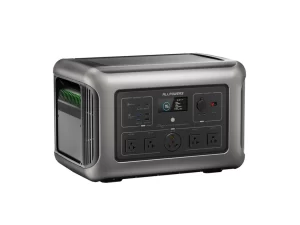 79/100 Matchup Rating
AllPowers R3500
- Battery
- 3,168 Wh
- Output
- 3,200 W
- Solar
- 2,000 W
Why choose it
- Large battery capacity: 3,168 Wh
- Strong continuous output: 3,200 W
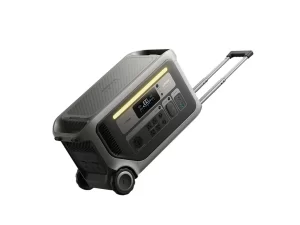 82/100 Matchup Rating
Anker Solix F3000
- Battery
- 3,072 Wh
- Output
- 2,400 W
- Solar
- 2,400 W
Why choose it
- Large battery capacity: 3,072 Wh
- Strong expansion potential: 24,576 Wh
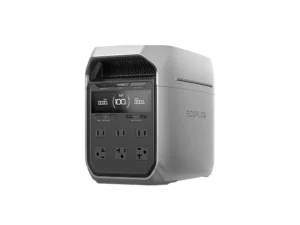 60/100 Matchup Rating
EcoFlow DELTA 3 Plus
- Battery
- 1,024 Wh
- Output
- 1,800 W
- Solar
- 1,000 W
Why choose it
- Compact overall size: 1,406.72 cu in
- Fast backup transfer: 10ms
Build your own matchup
Compare the Models That Matter to You
Choose one model to open its expert analysis, or select two to four models for a complete specification and rating comparison.
Best: Anker Solix F3000