Best overall
Power station comparison
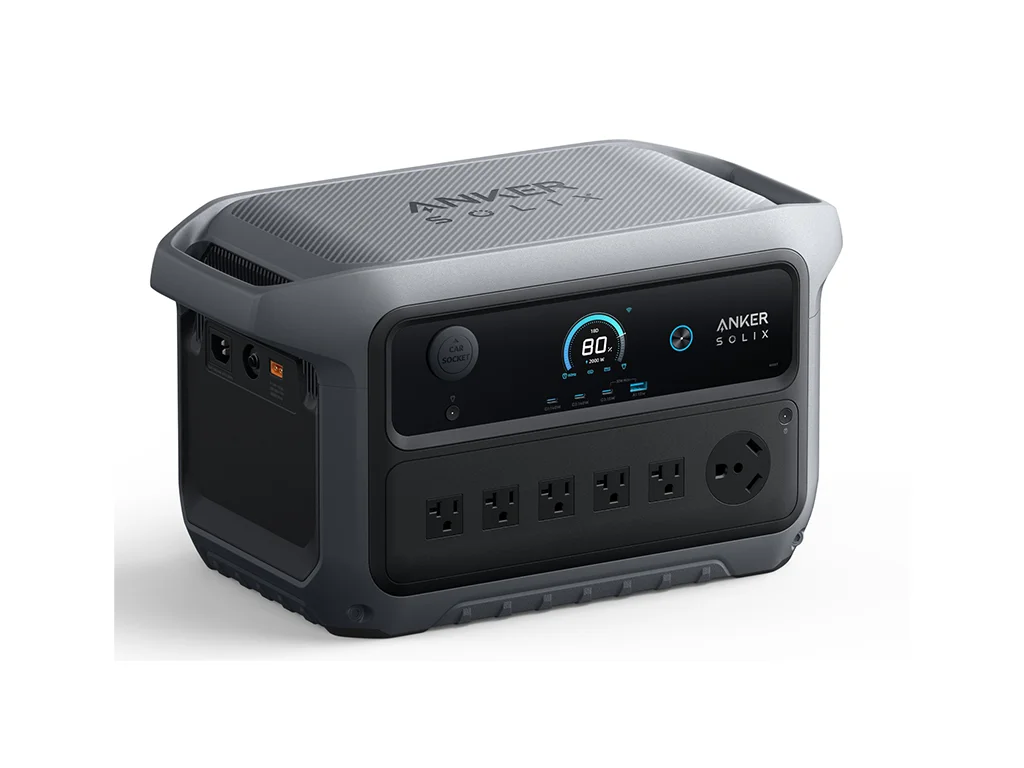
Solix C2000 Gen 2 is the stronger overall choice. It finishes with the highest Matchup Rating, but the specification differences are relatively small rather than dominated by one headline advantage. DELTA 3 Max Plus supports up to 10,240Wh of total battery capacity versus 4,096Wh or less for the other models, leaving more room for extended backup.
The verdict
Solix C2000 Gen 2 finishes with a Matchup Rating of 69/100, compared with 61/100 for the next-highest model. DELTA 3 Max Plus remains worth considering when maximum system capacity is more important for your use case. The category results below show how consistently that advantage holds and where the alternatives still win.
Fast, transparent comparison
Use this as the quick numerical view. A Best label marks the stronger value, but not every win carries the same buying weight; the analysis below explains which gaps are large enough to matter.
| Specification |
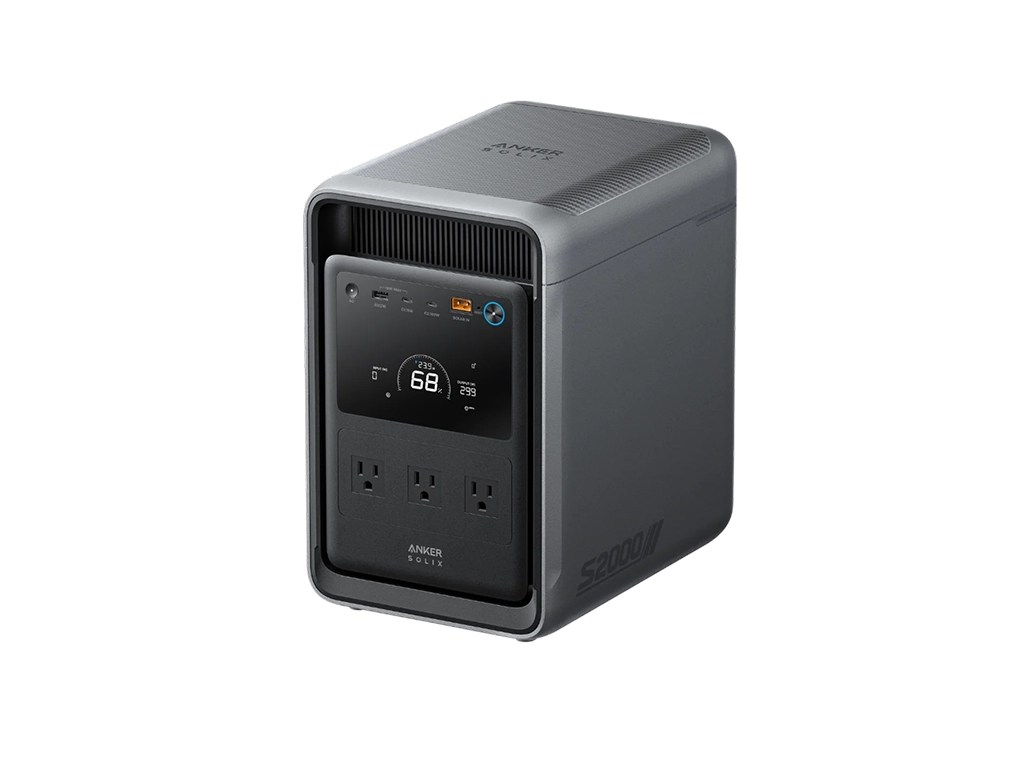
Anker Solix C2000 Gen 2
|
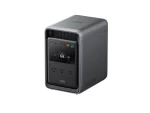 Anker Solix S2000 |
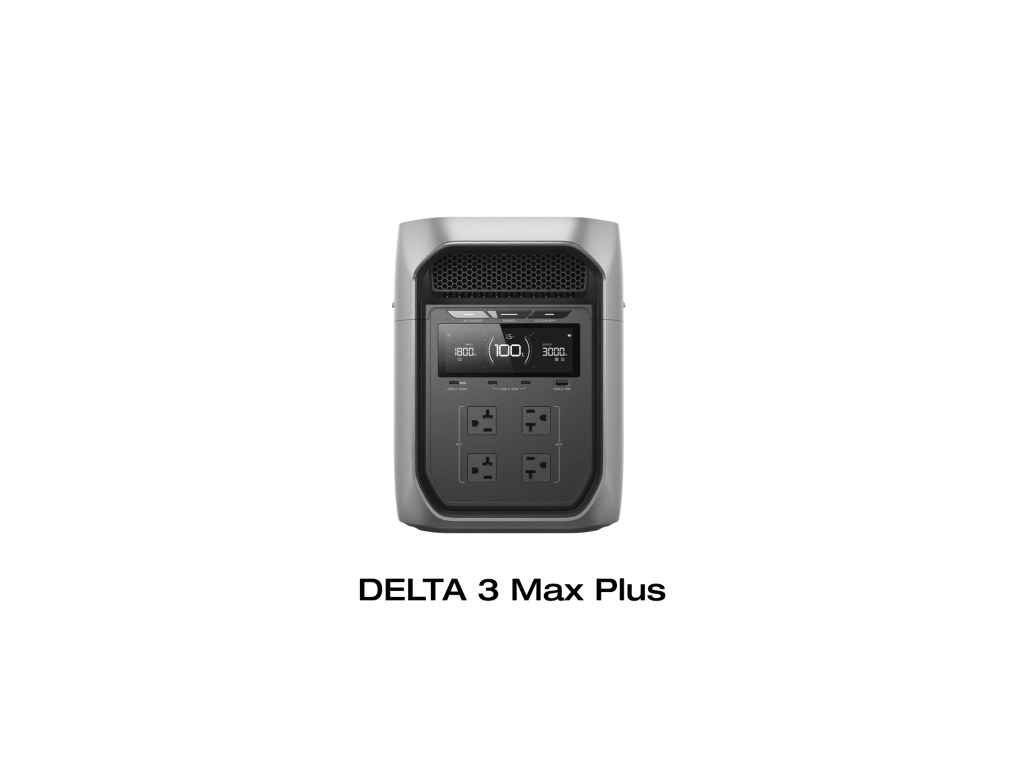
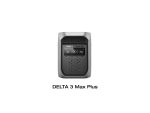 EcoFlow DELTA 3 Max Plus |
|---|---|---|---|
| Matchup Rating | 69/100 Best overall | 59/100 | 61/100 |
| Battery Capacity | 2,048 Wh Co-leader | 2,010 Wh | 2,048 Wh Co-leader |
| Continuous Inverter | 2,400 W | 1,500 W | 3,000 W Best |
| Maximum AC Input | 1,800 W Co-leader | 1,600 W | 1,800 W Co-leader |
| Estimated AC Recharge | 1.40 hours Co-leader | 1.50 hours Co-leader | — |
| Maximum Solar Input | 800 W | 400 W | 1,000 W Best |
| Estimated Solar Recharge | 3.10 hours Best | 6 hours | — |
| Warranty | 5 years | 5 years | 5 years |
| Weight | 41.70 lb | 35.70 lb | 48.70 lb |
| Retailer Options |
Expert buying analysis
These are the advantages and compromises most likely to affect what each station can do in real use, rather than a simple count of specification wins.
Where each model wins
Category scores group related specifications. The notes below explain why each score moved and how much that category should influence the buying decision.
EcoFlow DELTA 3 Max Plus leads here with higher continuous output (3,000 W) and greater expandable capacity (10,240 Wh).
Anker Solix S2000 trails here primarily because of lower continuous output (1,500 W).
DELTA 3 Max Plus leads the next-highest model by only 3 points, so treat this as a slight edge rather than a major capability gap. Give this category extra weight when runtime, sustained appliance power, battery expansion, or long-term ownership are your priorities.
Anker Solix C2000 Gen 2 leads here with faster solar recharge (3.10 hours) and faster AC recharge (1.40 hours).
EcoFlow DELTA 3 Max Plus trails here primarily because of slower AC recharge (—).
Solix C2000 Gen 2 leads the next-highest model by 20 points here, large enough to matter if this category matches your main use case. It matters most if you cycle the battery often, rely on solar between outages, or need short turnaround between uses.
EcoFlow DELTA 3 Max Plus leads here with one high-amp DC output and 3 USB-C ports.
Anker Solix S2000 trails here primarily because it has no high-amp DC outputs.
DELTA 3 Max Plus leads the next-highest model by 11 points here, large enough to matter if this category matches your main use case. Use it mainly as a fit check: 240V capability and the specific ports your equipment needs matter more than the raw number of outlets.
Anker Solix S2000 leads here with smaller overall size (1,155.95 cu in) and lower weight (35.70 lb).
EcoFlow DELTA 3 Max Plus trails here primarily because of larger overall size (2,211.60 cu in).
Solix S2000 has a meaningful edge over the next-highest model here, but it should still be weighed against the other categories rather than treated as a standalone verdict. Portability matters most for frequent carrying, vehicle use, and tight storage; a mostly stationary backup system can usually give it less weight.
Analysis & specifications
Battery storage, continuous output, service life, and backup-power capability determine how much useful work a power station can support.
DELTA 3 Max Plus can scale to 10,240Wh of total battery capacity versus 4,096Wh or less for the other models, giving it more room to grow into a longer-duration backup system. DELTA 3 Max Plus provides 3,000W of continuous output versus 2,400W or less for the other models. Continuous output is the number to prioritize for sustained appliance loads; advertised peak output matters much less.
Stored energy available for running devices and appliances.
Maximum battery capacity when supported expansion batteries are added.
Sustained AC output, which is the meaningful figure for ordinary appliance loads.
Shown for reference only. Peak claims are not included in Solar Waypoint ratings because they do not reliably describe sustained usable output.
Manufacturer warranty coverage for the power station.
Published cycle-life figure for long-term battery durability.
Battery chemistry affects expected cycle life, weight, and thermal stability.
How quickly backup power takes over when grid power is interrupted.
Analysis & specifications
Input limits and estimated recharge times show how quickly each battery can be restored from the wall or from solar panels.
DELTA 3 Max Plus accepts up to 1,000W of solar versus 800W or less for the other models. That gap can materially shorten daytime recovery when you have enough panel capacity and good sun.
Maximum published charging input from an AC wall source.
Estimated time to recharge from AC; lower is better.
Maximum solar input accepted by the base power station.
Estimated best-case solar recharge time; lower is better.
Analysis & specifications
The outlet mix determines how many devices can be powered directly and how often the less-efficient AC inverter is needed.
DELTA 3 Max Plus has 1 high-amp DC output versus 0 or fewer on the other models. That matters mainly for specialized 12V equipment that can use the direct-current connection.
Standard household AC outlets.
Direct charging ports for common USB devices.
Direct charging for modern phones, tablets, laptops, and other USB-C equipment.
Specialized DC outputs above 10A for equipment that needs substantial direct-current power.
Direct-current outputs for lights, routers, CPAP equipment, and similar devices.
Automotive-style sockets for portable refrigerators and other 12V accessories.
Remote monitoring and controls available through the product app or supported connection.
Analysis & specifications
Weight and overall size show how easily a unit can be carried, stored, and fitted into a vehicle or backup-power setup.
Solix S2000 is at least 6 lb lighter than the other models. That is meaningful if you move the station regularly, but much less important for mostly stationary home backup. It is also about 35% smaller by calculated exterior volume than Solix C2000 Gen 2, reinforcing its advantage for vehicles and tight storage.
Published product weight; lower is easier to move.
Calculated from the published exterior dimensions; lower takes less storage space.
Published length, width, and height in inches.
Editorial analysis
The Anker Solix C2000 Gen 2 is a thoughtful upgrade that focuses on real-world efficiency rather than flashy specs. Its new low idle consumption means it wastes far less energy on standby, making it ideal for long-term backup use. The addition of an expansion battery option doubles its capacity for extended off-grid power, while the rapid dual-input recharge gets it back to full in under an hour. Altogether, it’s a more refined, power-smart version of Anker’s 2 kWh class: lighter, faster, and more efficient where it truly counts.
The Anker SOLIX S2000 prioritizes runtime, compactness, and low idle consumption over headline inverter size, pairing the 2,010Wh of capacity with a more modest 1,500W inverter. It also keeps the solar input to just 400W and the DC outputs to a minimum with just 3 total USB ports. The usable backup power fits into a 35.7-pound body, along with 10ms UPS, quiet operation, and exceptionally long battery life. The tradeoff is obvious: it is excellent for fridges, routers, lights, and core home loads, but it is not the 2kWh model to choose when higher-wattage appliances are the main priority.
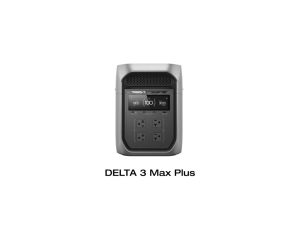
A high-output 2kWh model that pushes to 3kW continuous AC power while retaining 10ms switching and expansion to about 10kWh. It is a strong step up for heavier home or RV loads without moving to the much larger Pro series.
Review the complete published specifications, or learn how to interpret power-station specifications.
| Specification | Anker Solix C2000 Gen 2 | Anker Solix S2000 | EcoFlow DELTA 3 Max Plus |
|---|---|---|---|
| Battery & Power | |||
| Battery Capacity | 2,048 Wh | 2,010 Wh | 2,048 Wh |
| Expandable Capacity | 4,096 Wh | 2,010 Wh | 10,240 Wh |
| Continuous Inverter Power | 2,400 W | 1,500 W | 3,000 W |
| Advertised Peak Output | 4,000 W | 3,000 W | 6,000 W |
| Warranty | 5 years | 5 years | 5 years |
| Battery Cycles | 4,000 cycles | 6,000 cycles | — |
| Battery Chemistry | LiFePO4 (LFP) | LiFePO4 (LFP) | LiFePO4 (LFP) |
| UPS / EPS Transfer Time | 10ms | 10ms | 10ms |
| AC & Solar Charging | |||
| Maximum AC Input | 1,800 W | 1,600 W | 1,800 W |
| Estimated AC Recharge | 1.40 hours | 1.50 hours | — |
| Maximum Solar Input | 800 W | 400 W | 1,000 W |
| Estimated Solar Recharge | 3.10 hours | 6 hours | — |
| Solar Input 1 | |||
| Maximum Watts | 800 W | 400 W | 1,000 W |
| Voltage Range | 11–60 V | 11–60 V | 11–60 V |
| Maximum Current | 17 A | 12.50 A | 18 A |
| Connector | XT60/XT60i | XT60/XT60i | XT60/XT60i |
| Outlets, Ports & Connectivity | |||
| 120V AC Outlets | 5 | 5 | 4 |
| USB-A Ports | 1 | 1 | 1 |
| USB-C Ports | 3 | 2 | 3 |
| High-Amp DC Ports | 0 | 0 | 1 |
| Low-Amp DC Ports | 0 | 0 | 0 |
| 12V Accessory Sockets | 1 | 0 | 1 |
| App Connectivity | WiFi, Bluetooth | WiFi, Bluetooth | WiFi, Bluetooth |
| Physical, Support & Resources | |||
| Weight | 41.70 lb | 35.70 lb | 48.70 lb |
| Weight (Metric) | 18.90 kg | 16.20 kg | 22.10 kg |
| Physical Volume | 1,791.54 cu in | 1,155.95 cu in | 2,211.60 cu in |
| Dimensions | 18.1 × 9.8 × 10.1 in | 8.2 × 11.1 × 12.7 in | 19.4 × 9.5 × 12 in |
| Dimensions (Metric) | 459 × 250 × 257 mm | 208 × 282 × 323 mm | 494 × 242 × 305 mm |
| User Manual | Open manual | Open manual | Open manual |
Why this comparison is trustworthy
Our team combines many years of solar experience with practical knowledge of portable power, custom battery systems, off-grid design, and the products currently competing for your money.
Solar Waypoint tracks detailed specifications covering battery storage, continuous output, AC and solar charging, battery longevity, outlets, connectivity, and physical design. We standardize those figures so products are evaluated consistently while keeping the specifications visible so readers can see what drives each result.
Matchup Ratings use the capability class represented by the selected products. Larger batteries and stronger continuous inverters receive appropriate credit, while the category results show exactly where each product wins or trails.
Our experience covers portable power stations, solar charging, custom battery banks, electrical load planning, and complete off-grid system design and builds. That background helps us distinguish a specification that sounds impressive from one that meaningfully improves runtime, charging, reliability, or day-to-day usability.
Power-station expertise begins with the job the system must perform. An experienced team looks beyond a single watt or watt-hour number and considers running loads, startup demands, duty cycles, conversion losses, charging opportunities, storage conditions, and how often the equipment must be moved.
We understand the difference between stored battery energy, usable AC energy, continuous inverter output, and short starting demands. That makes it easier to judge whether a unit is suited to electronics, refrigeration, medical equipment, tools, RV loads, or home-backup essentials—and how long it can reasonably support them.
A large battery is far less useful when it cannot be replenished in time. We examine AC charging in relation to battery size and evaluate solar watts together with voltage, current, connector, and controller limits. Those details determine which arrays are compatible and how practical off-grid charging will be.
Battery chemistry, cycle-life claims, warranty coverage, inverter design, outlet types, 120V or 240V capability, DC connections, and backup transfer behavior all affect the way a system can be used. We treat those specifications as parts of one electrical system rather than isolated marketing features.
The best option changes with the setting. Camping, vehicle travel, job-site use, emergency backup, and expandable home systems place different demands on weight, charging, output, outlets, and accessories. We organize the comparison around those practical tradeoffs.
We also follow product generations, manuals, changing capabilities, accessory ecosystems, and common marketing claims across the market. The goal is not to repeat a product page. It is to explain what the specifications mean together, identify limitations before they become expensive surprises, and help readers choose a system that fits both their present needs and realistic plans for expansion.
Our rating system is designed to answer three practical questions: how much useful work a power station can perform, how effectively it can be recharged, and how convenient it is to connect, move, and live with. The groups are intentionally weighted differently because they do not contribute equally to the core job of providing dependable power.
Storage, continuous output, battery longevity, warranty, and system capability determine which loads the unit can support and for how long.
Charging power and estimated recharge time show whether the battery can be restored quickly enough from the wall, solar panels, or a larger system.
The right AC, USB, and DC connections determine whether stored energy can reach the equipment that needs it without unnecessary adapters or conversion losses.
Weight and physical size matter, but they are judged in class context so larger batteries are not unfairly penalized simply for containing more hardware.
Performance and capacity receive the most influence because they establish the basic limit of the system: the appliances it can run, the runtime it can provide, and the durability expected from the battery. A light, well-connected product cannot compensate for being unable to support the required load.
Charging and connectivity provide much of the remaining influence. Charging matters because stored energy must be replaced on a useful schedule, especially during outages or off-grid use. Outlets and connectivity matter because power must be delivered in the correct form. Portability remains meaningful, but it carries less influence because every increase in battery capacity and inverter capability normally adds weight and volume.
Peer Ratings compare each model with appropriate standards for its capability class. Matchup Ratings apply the same rating framework to the products selected for a direct comparison. This keeps compact products useful within their intended role while still recognizing the additional capability of larger systems.
Ready to choose?
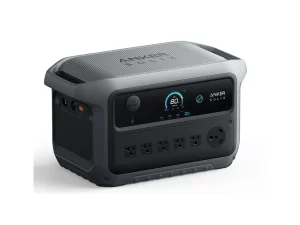 69/100 Matchup Rating
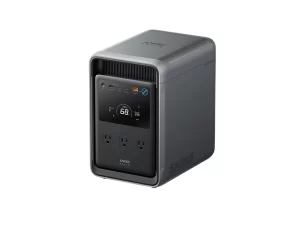 59/100 Matchup Rating
 61/100 Matchup Rating
Build your own matchup
Choose one model to open its expert analysis, or select two to four models for a complete specification and rating comparison.