
Tied for best
Expert power station comparison
Compare the specifications, category results, strengths, and tradeoffs behind every rating.


The verdict
The leaders finish with the same displayed Matchup Rating of 53/100. The category results and exact specifications below show where each one earns its advantage, so the better purchase depends on which strengths matter most to your setup.
Fast, transparent comparison
Start with the specifications that most directly affect runtime, usable output, recharge speed, ownership, and portability.
| Specification |
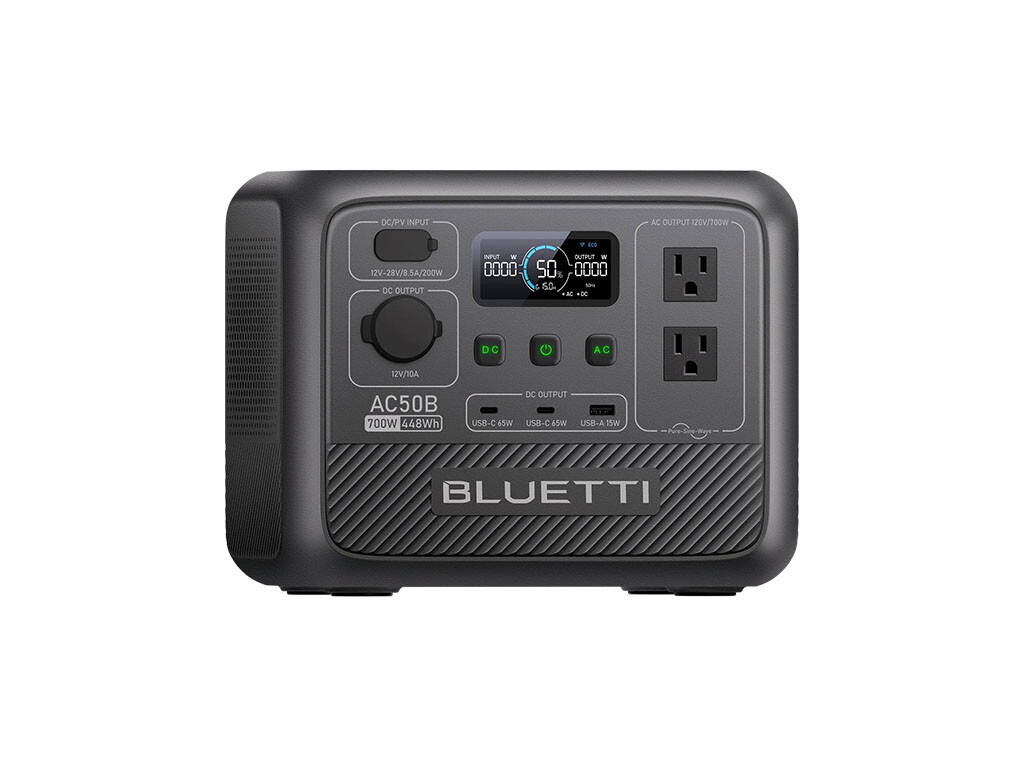
Bluetti AC50B
|
EcoFlow RIVER 3 Plus
|
 Pecron E500LFP
|
|---|---|---|---|
| Matchup Rating | 53/100 Tied for best | 53/100 Tied for best | 47/100 |
| Battery Capacity | 448 Wh | 286 Wh | 576 Wh Best |
| Continuous Inverter | 700 W Best | 600 W | 600 W |
| Maximum AC Input | 580 W | 1,200 W Best | 500 W |
| Estimated AC Recharge | 0.90 hours | 0.30 hours | 1.40 hours |
| Maximum Solar Input | 200 W | 220 W Best | 100 W |
| Estimated Solar Recharge | 2.70 hours Co-leader | 1.60 hours Co-leader | 6.90 hours |
| Warranty | 5 years Co-leader | 5 years Co-leader | 2 years |
| Weight | 14.80 lb | 10.40 lb | 14 lb |
| Retailer Options |
Model-specific takeaways
Where each model wins
Bluetti AC50B leads here with longer warranty coverage (5 years) and greater expandable capacity (1,254 Wh).
Pecron E500LFP trails here primarily because of shorter warranty coverage (2 years).
EcoFlow RIVER 3 Plus leads here with faster solar recharge (1.60 hours) and higher AC charging input (1,200 W).
Pecron E500LFP trails here primarily because of slower solar recharge (6.90 hours).
Pecron E500LFP leads here with 2 low-amp DC outputs and one wireless charging pad.
EcoFlow RIVER 3 Plus trails here primarily because it has only one 120V AC outlet.
EcoFlow RIVER 3 Plus leads here with smaller overall size (481.39 cu in) and lower weight (10.40 lb).
Pecron E500LFP leads here with smaller overall size (503.20 cu in) and lower weight (14 lb).
Bluetti AC50B trails here primarily because of larger overall size (756.03 cu in).
Specification comparison
Battery storage, continuous output, service life, and backup-power capability determine how much useful work a power station can support.
Stored energy available for running devices and appliances.
Maximum battery capacity when supported expansion batteries are added.
Sustained AC output, which is the meaningful figure for ordinary appliance loads.
Shown for reference only. Peak claims are not included in Solar Waypoint ratings because they do not reliably describe sustained usable output.
Manufacturer warranty coverage for the power station.
Published cycle-life figure for long-term battery durability.
Battery chemistry affects expected cycle life, weight, and thermal stability.
How quickly backup power takes over when grid power is interrupted.
Specification comparison
Input limits and estimated recharge times show how quickly each battery can be restored from the wall or from solar panels.
Maximum published charging input from an AC wall source.
Estimated time to recharge from AC; lower is better.
Maximum solar input accepted by the base power station.
Estimated best-case solar recharge time; lower is better.
Specification comparison
The outlet mix determines how many devices can be powered directly and how often the less-efficient AC inverter is needed.
Standard household AC outlets.
Direct charging ports for common USB devices.
Direct charging for modern phones, tablets, laptops, and other USB-C equipment.
Direct-current outputs for lights, routers, CPAP equipment, and similar devices.
Automotive-style sockets for portable refrigerators and other 12V accessories.
Built-in wireless phone charging; useful, but lightly weighted.
Remote monitoring and controls available through the product app or supported connection.
Specification comparison
Weight and overall size show how easily a unit can be carried, stored, and fitted into a vehicle or backup-power setup.
Published product weight; lower is easier to move.
Calculated from the published exterior dimensions; lower takes less storage space.
Published length, width, and height in inches.
Editorial analysis
The BLUETTI AC50B is a fun-sized workhorse that can keep your road trips, tailgates, or short camping trips going strong. The 448Wh battery and 700W inverter are substantial for the compact category, and it throws in surprisingly fast recharge times. Small in size, big on usefulness, and ready for adventure.
The EcoFlow RIVER 3 Plus is an ultra-portable model that starts with a 286Wh battery but can push up to 858Wh with external batteries - a rare feature in this segment. The 600W inverter limits the use, yet keeps it perfectly aligned for long-haul times for low power devices, ideal for long nights powering CPAP machines and other small devices.
Review the complete published specifications, or learn how to interpret power-station specifications.
| Specification | Bluetti AC50B | EcoFlow RIVER 3 Plus | Pecron E500LFP |
|---|---|---|---|
| Battery & Power | |||
| Battery Capacity | 448 Wh | 286 Wh | 576 Wh |
| Expandable Capacity | 1,254 Wh | 858 Wh | 576 Wh |
| Continuous Inverter Power | 700 W | 600 W | 600 W |
| Advertised Peak Output | 1,000 W | 1,200 W | 600 W |
| Warranty | 5 years | 5 years | 2 years |
| Battery Cycles | 3,000 cycles | 3,000 cycles | 3,500 cycles |
| Battery Chemistry | LiFePO4 (LFP) | LiFePO4 (LFP) | LiFePO4 (LFP) |
| UPS / EPS Transfer Time | 20ms | 10ms | 20ms |
| AC & Solar Charging | |||
| Maximum AC Input | 580 W | 1,200 W | 500 W |
| Estimated AC Recharge | 0.90 hours | 0.30 hours | 1.40 hours |
| Maximum Solar Input | 200 W | 220 W | 100 W |
| Estimated Solar Recharge | 2.70 hours | 1.60 hours | 6.90 hours |
| Solar Input 1 | |||
| Maximum Watts | 200 W | 220 W | 100 W |
| Voltage Range | 12–28 V | 11–55 V | 12–28 V |
| Maximum Current | 8.50 A | 13 A | 7 A |
| Connector | XT60/XT60i, MC4 | XT60/XT60i | DC5521 |
| Outlets, Ports & Connectivity | |||
| 120V AC Outlets | 2 | 1 | 2 |
| USB-A Ports | 1 | 2 | 2 |
| USB-C Ports | 2 | 1 | 1 |
| Low-Amp DC Ports | 0 | 0 | 2 |
| 12V Accessory Sockets | 1 | 1 | 1 |
| Wireless Charging Pads | 0 | 0 | 1 |
| App Connectivity | Bluetooth | WiFi, Bluetooth | WiFi, Bluetooth |
| Physical, Support & Resources | |||
| Weight | 14.80 lb | 10.40 lb | 14 lb |
| Weight (Metric) | 6.70 kg | 4.70 kg | 6.75 kg |
| Physical Volume | 756.03 cu in | 481.39 cu in | 503.20 cu in |
| Dimensions | 11 × 7.9 × 8.7 in | 9.2 × 9.1 × 5.8 in | 10 × 6.8 × 7.4 in |
| Dimensions (Metric) | 280 × 200 × 220 mm | 234 × 232 × 146 mm | 254 × 172 × 189 mm |
| User Manual | Open manual | Open manual | Open manual |
Why this comparison is trustworthy
Our team combines many years of solar experience with practical knowledge of portable power, custom battery systems, off-grid design, and the products currently competing for your money.
Solar Waypoint tracks detailed specifications covering battery storage, continuous output, AC and solar charging, battery longevity, outlets, connectivity, and physical design. We standardize those figures so products are evaluated consistently while keeping the specifications visible so readers can see what drives each result.
Matchup Ratings use the capability class represented by the selected products. Larger batteries and stronger continuous inverters receive appropriate credit, while the category results show exactly where each product wins or trails.
Our experience covers portable power stations, solar charging, custom battery banks, electrical load planning, and complete off-grid system design and builds. That background helps us distinguish a specification that sounds impressive from one that meaningfully improves runtime, charging, reliability, or day-to-day usability.
Power-station expertise begins with the job the system must perform. An experienced team looks beyond a single watt or watt-hour number and considers running loads, startup demands, duty cycles, conversion losses, charging opportunities, storage conditions, and how often the equipment must be moved.
We understand the difference between stored battery energy, usable AC energy, continuous inverter output, and short starting demands. That makes it easier to judge whether a unit is suited to electronics, refrigeration, medical equipment, tools, RV loads, or home-backup essentials—and how long it can reasonably support them.
A large battery is far less useful when it cannot be replenished in time. We examine AC charging in relation to battery size and evaluate solar watts together with voltage, current, connector, and controller limits. Those details determine which arrays are compatible and how practical off-grid charging will be.
Battery chemistry, cycle-life claims, warranty coverage, inverter design, outlet types, 120V or 240V capability, DC connections, and backup transfer behavior all affect the way a system can be used. We treat those specifications as parts of one electrical system rather than isolated marketing features.
The best option changes with the setting. Camping, vehicle travel, job-site use, emergency backup, and expandable home systems place different demands on weight, charging, output, outlets, and accessories. We organize the comparison around those practical tradeoffs.
We also follow product generations, manuals, changing capabilities, accessory ecosystems, and common marketing claims across the market. The goal is not to repeat a product page. It is to explain what the specifications mean together, identify limitations before they become expensive surprises, and help readers choose a system that fits both their present needs and realistic plans for expansion.
Our rating system is designed to answer three practical questions: how much useful work a power station can perform, how effectively it can be recharged, and how convenient it is to connect, move, and live with. The groups are intentionally weighted differently because they do not contribute equally to the core job of providing dependable power.
Storage, continuous output, battery longevity, warranty, and system capability determine which loads the unit can support and for how long.
Charging power and estimated recharge time show whether the battery can be restored quickly enough from the wall, solar panels, or a larger system.
The right AC, USB, and DC connections determine whether stored energy can reach the equipment that needs it without unnecessary adapters or conversion losses.
Weight and physical size matter, but they are judged in class context so larger batteries are not unfairly penalized simply for containing more hardware.
Performance and capacity receive the most influence because they establish the basic limit of the system: the appliances it can run, the runtime it can provide, and the durability expected from the battery. A light, well-connected product cannot compensate for being unable to support the required load.
Charging and connectivity provide much of the remaining influence. Charging matters because stored energy must be replaced on a useful schedule, especially during outages or off-grid use. Outlets and connectivity matter because power must be delivered in the correct form. Portability remains meaningful, but it carries less influence because every increase in battery capacity and inverter capability normally adds weight and volume.
Peer Ratings compare each model with appropriate standards for its capability class. Matchup Ratings apply the same rating framework to the products selected for a direct comparison. This keeps compact products useful within their intended role while still recognizing the additional capability of larger systems.
Ready to choose?
 53/100 Matchup Rating
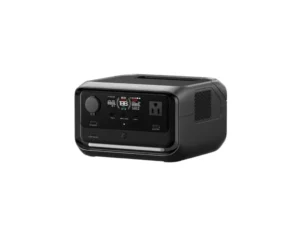 53/100 Matchup Rating
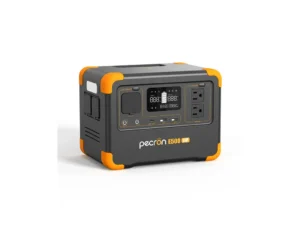 47/100 Matchup Rating
Build your own matchup
Choose one model to open its expert analysis, or select two to four models for a complete specification and rating comparison.