

In our tech-filled world, staying powered up is more crucial than ever. Whether you’re preparing for unexpected power outages or simply need a reliable energy source on the go, a portable power station like the EcoFlow River 2 can be a game-changer.
The EcoFlow River 2 is a compact yet capable powerhouse designed to keep your devices running wherever life takes you. It packs an impressive punch in a surprisingly small package, featuring a 256Wh LFP battery, 300W pure sine wave inverter, and fast charging capabilities.
In a market flooded with portable power options, does the EcoFlow River 2 stand out? This guide will compare the River 2’s specs, features, and performance to see how it stacks up against the competition.
We carefully select the products and services we link to. If you buy through our links, we may earn a commission. There’s no extra cost to you and it helps us provide this information.
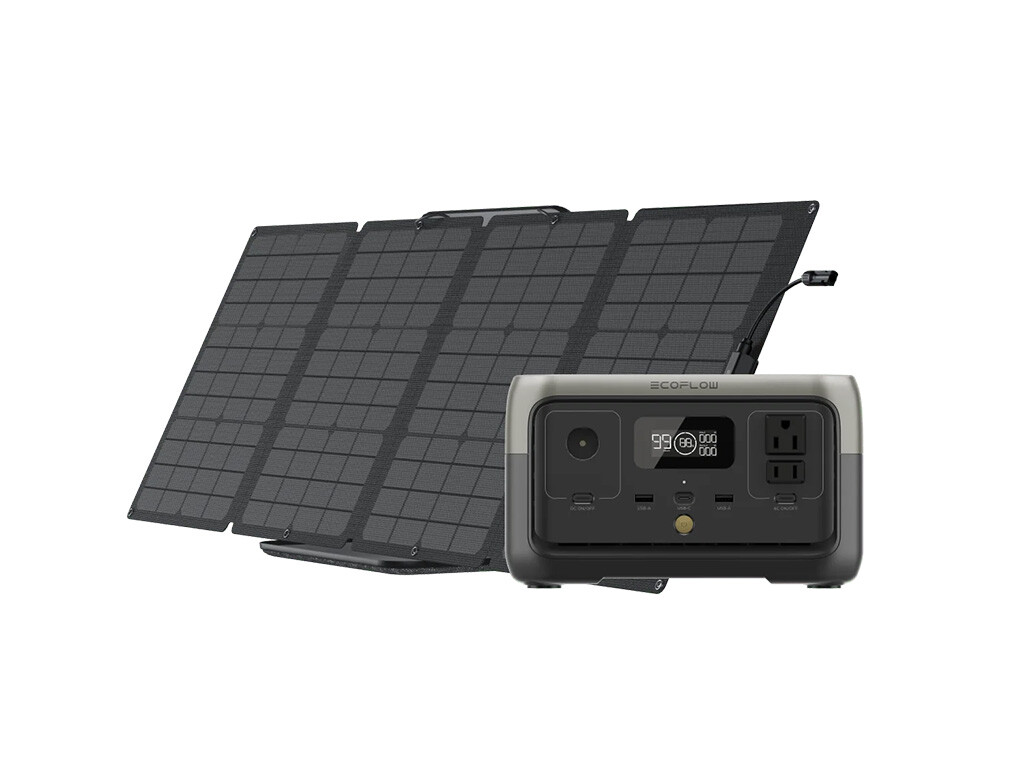
Quick Summary: Portable Power for the Masses
As EcoFlow’s smallest portable power station, managing expectations for the River 2’s specs and performance is important. It comes from a reputable brand and can serve extremely well for the things it’s designed to do. But when you try to stretch it beyond its limits, you’ll snap like a rubber band.
The EcoFlow River 2 will perform very well as a lightweight and compact way to keep small devices powered up while on the go. It can use a limited amount of solar and has a small AC inverter. But everything about it is designed for portability and affordability.
The most important River 2 specs include:
- AC Power Output: 300W inverter with 600W surge
- Battery Capacity: 256Wh battery capacity, enough to recharge a phone about 20 times
- Charging Options: Fast charging from regular AC outlets in less than an hour
- Ports, Outlets, and Features: Three USB ports, a 300W AC inverter outlet, and a car cigarette lighter port
At the heart of the River 2 is its advanced LiFePO4 (LFP) battery, known for its exceptional longevity and stability. It is rated for over 3,000 charges while still keeping at least 80% capacity. That’s about 8-10 years worth of use and it’s backed by EcoFlow’s 5-year warranty.
The River 2’s charging capabilities are quite impressive. Even if you forget to plug it in overnight, just one hour can fully top it off, so it can refill as you pack your bags. And for solar or car charging, just a 100W solar panel can recharge it in about 3 hours of peak sunlight or driving. This is one major benefit of a small battery, but it also relies on EcoFlow’s engineers deciding to use fast charging inputs.
Tip: To figure out what these numbers mean, see our article on How to Understand Power Station Specs.
The EcoFlow River 2 is best for:
- Charging phones, camera batteries, and tablets
- Powering small fans and other USB devices
- Running small AC-powered devices for short bursts
The problems come when you need more power or battery life. You can’t use this power station for a hair dryer or microwave. And even a 60W fridge will push this beyond its limits, emptying the entire 256Wh battery in less than 5 hours.
These limits are very similar for power stations compared to the River 2, which we’ll go over below including the River 2 vs. Jackery Explorer 240, River 2 vs. Bluetti EB3A, and River 2 vs. BougeRV Flash 300.
For quick weekend camping trips, emergency home backup for essential devices, or powering tailgating events or short outdoor events, the EcoFlow River 2 can be a great choice.
| Product | EcoFlow RIVER 2 |
|---|---|
| Battery | 256Wh |
| AC Output | 300W |
| AC Output Peak | 600W |
| AC Input | 360W |
| AC Recharge Hours (Est.) | 0.9h |
| Solar Input | 110W |
| Solar Recharge Hours (Est.) | 2.8h |
| Warranty | 5 years |
| Weight (lbs) | 7.7lbs |
| Weight (kg) | 3.5kg |
| Battery Type | LiFePO4 / LFP |
| UPS / EPS | 30 ms (EPS) |
| Buy Now | Buy Now |
|
EcoFlow RIVER 2 |
R2 on EcoFlow R2 on Amazon |
AC Power Output: Easy Does It
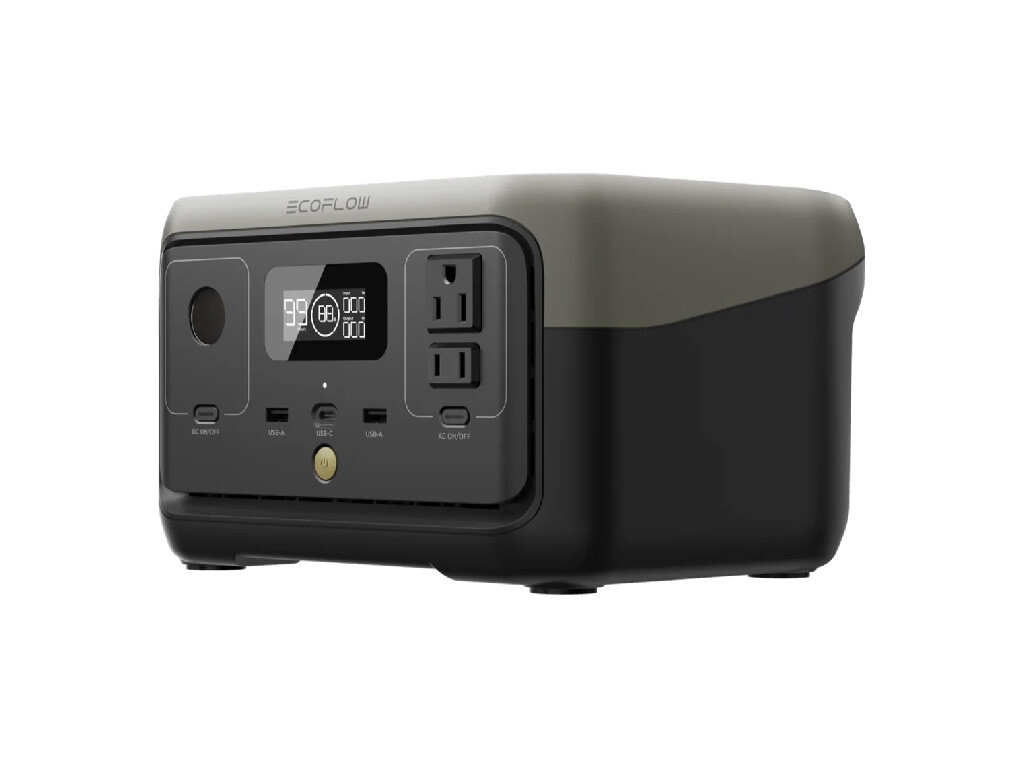
The best way to use the EcoFlow River 2 will be through the DC outlets and ports. These include the two USB-A and one USB-C ports available, which can run a wide variety of small electronics. More details on these are covered below.
Some devices require an AC outlet running on 110V/120V, the same outlet that you find at home or in businesses. AC inverters are a critical component of the power station, changing the battery’s direct current (DC) energy into the alternating current (AC) that some devices need.
With an AC inverter rated for 300W continuous and 600W peak output, the EcoFlow River 2 is a lightweight option. It can handle recharging small batteries. You can find low-watt coffee grinders, blenders, and other kitchen gadgets that can stay within the limits, but regular blenders and food processors are usually over this limit.
Even though the River 2 has a nice AC inverter, it’s made particularly for small devices. This is one of its known shortfalls, but it also helps maintain a low price and compact size. Inverters are expensive and can be quite large.
| Product | EcoFlow RIVER 2 |
|---|---|
| AC Output | 300W |
| AC Output Peak | 600W |
| 120V Outlets | 2 |
| UPS / EPS | 30 ms (EPS) |

256Wh LFP Battery: Small but Mighty
The centerpiece to the EcoFlow River 2 is the 256Wh LiFePO4 (LFP) battery. While this capacity is modest compared to larger power stations, it’s enough juice to get a lot done. And it features the ideal battery chemistry that lets this small power station have exceptional longevity, safety, and stability.
Capacity and Runtime
Let’s first hit on the battery capacity of the EcoFlow River 2. For most of us non-engineers, 256Wh hardly resembles useful information. And in reality, it’s also not actually 256Wh of usable energy. It’s a good idea to plan on only about 80% of the rated capacity as what will actually make its way into your devices due to system inefficiencies and the reserve of the battery.
So let’s put it into real-world use examples:
- 10Wh to 12Wh is a phone battery
- 40Wh to 80Wh is a laptop battery
- 500Wh to 1,000Wh is a typical car battery (lead acid)
As you can see, the River 2’s battery is great for small devices like phones. When you start to use this power station to recharge laptops, it’s a little more limited. You also need to be aware that you can’t expect 100% use of the battery’s capacity. So that 256Wh is more like 205Wh of actual use (20% cushion), which translates to about 20 phone charges and 3-5 laptop charges.
If you’re running things that aren’t battery powered, you can figure out how long this power station will run your devices easily. Just take the Watt-hours of this battery and divide by the Watts of the device(s) you want to use. Say you have a 10W fan, that would be 205Wh / 10W = 20 hours.
You can see how this capacity stacks up to the rest of this brand’s lineup in the EcoFlow Comparison Charts.
Battery Type
The other aspect of the River 2 battery to consider is the type of battery.
There are many types of off-grid batteries, with lithium ion technology typically favored today due to its lightweight design and full cycle abilities. But there is more than one type of lithium battery. And the amount of charged to discharged cycles varies quite a bit.
Some power stations use NMC battery types, which only have about 500 cycles before serious degradation. But the River 2 features LiFePO4 (also known as LFP or lithium iron phosphate) and it comes with an impressive rating of more than 3,000 charging cycles while maintaining 80% of its original capacity.
This means that if you charge and discharge this 256Wh battery 3,000 times, it will still hold about 205Wh of energy or about 80%. That’s a lot of use with a level of capacity retention that is extremely hard to beat.
This translates to about 10 years of daily use before you’d notice a significant drop in performance. Compared to traditional lithium-ion batteries found in many other portable power stations, which typically last 500-1000 cycles, the River 2’s LFP battery offers a substantially longer lifespan.
| Product | EcoFlow RIVER 2 |
|---|---|
| Battery | 256Wh |
| Battery Type | LiFePO4 / LFP |
| Battery Cycles | >3,000 |
Charging Options: Rapid Replenishment
The EcoFlow River 2 shines when it comes to recharging. The AC charging speed is so fast you’ll never have to worry about it, but the other charging sources are sufficient as well. Overall, the River 2 has impressive charging speeds.
The EcoFlow River 2’s recharge rates include:
- 360W AC Charging: Plug into a wall outlet and reach 0-80% in just 48 minutes, with a full charge in about an hour. Remarkably fast.
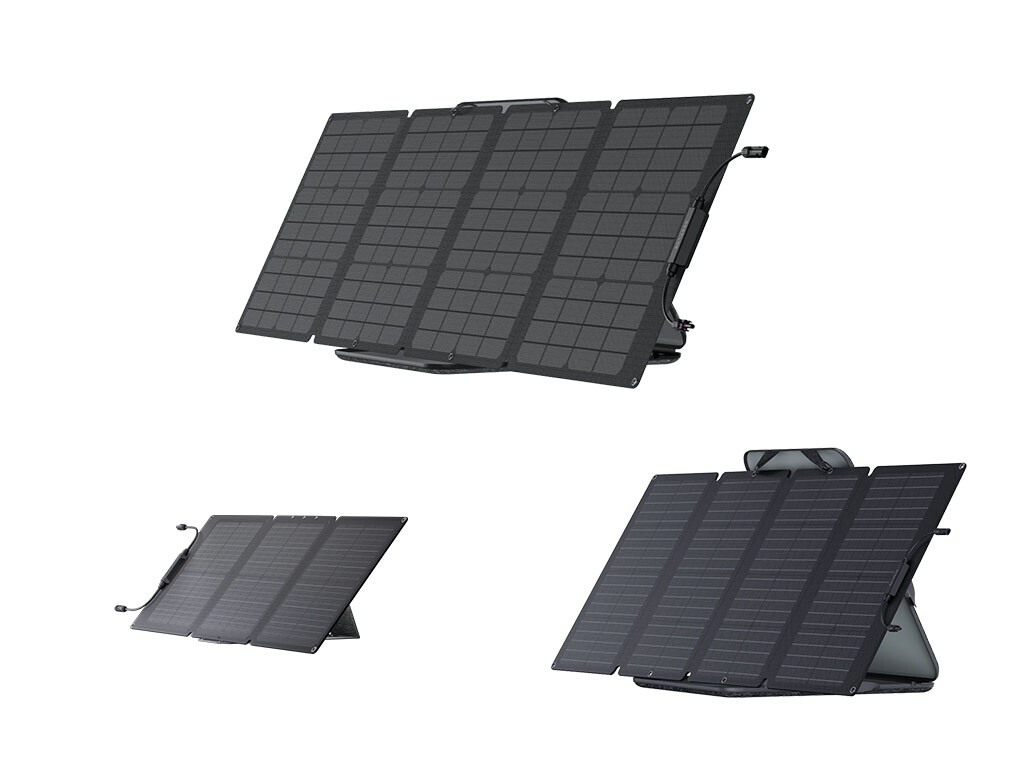
- 110W Solar Input: Fully charge the River 2 in about 3 hours of good sunlight.
- 110W Car Charging: A standard 12V car outlet can fully charge the River 2 in about 3 hours, perfect for road trips.
Many small power stations have two inputs, one for regular AC charging and one for both solar and car charging. The River 2 has those, plus one of the USB-C ports serves as input/output. So you have three different ways to feed energy into it. The USB-C touch can level up convenience by easily charging with solar panels or other sources with a USB-C output.
TIP: Ready for solar charging? Check out our coverage of the Best Solar Panels for the EcoFlow River 2.
Power stations can use a lot of different sources to generate electricity. For a small power station like the River 2, often a simple refill at home before your portable use is sufficient. That’s AC charging. But you can also use DC charging sources when away from the grid, such as solar, car charging, and even fuel generators.
To determine how many hours your power station will take to recharge, you take the size of the battery in Watt-hours and divide it by the charging source in Watts. Once again, adding about 20% to this number is wise as the power station may intentionally slow down recharging to protect the battery.
For example, this 256Wh battery charging at 100W will take about 2.5 hours, then add another 20% to get 2.75 hours (2 hours 45 minutes).
But you’ll need to pay attention to the power station’s charging limits. Even if you hook it up to 1,000W of solar panels, it will only accept what its maximum is. And there are other things to watch out for when figuring out how many solar panels you can use with a power station.
| Product | EcoFlow RIVER 2 |
|---|---|
| AC Input | 360W |
| AC Recharge Hours (Est.) | 0.9h |
| Solar Input | 110W |
| Solar Recharge Hours (Est.) | 2.8h |
| Solar Input 1 Volts Min | 11V |
| Solar Input 1 Volts Max | 30V |
| Solar Input 1 Amps | 8A |
| Buy Now | Buy Now |
Weight and Dimensions: Portability First
Size and weight can make or break the experience of any power station. Did you know that big units like the EcoFlow Delta Pro 3 now weigh more than 100lbs?! Thankfully, the EcoFlow River 2 is on the other end of the spectrum.
This small power station is a compact and lightweight solution for on-the-go power needs. It weighs 7.7 lbs (3.5 kg). That’s less than the weight of one gallon of water. Its dimensions are roughly the size of a toaster.
You can easily fit the River 2 in a backpack, car trunk, or even a larger camera bag. The portability of the River 2 opens up a world of possibilities:
- Camping trips: Easily carry it to your campsite, even if you’re hiking in.
- Home use: Store it conveniently in a closet or drawer when not in use.
- Outdoor events: Bring portable power to picnics, tailgates, or beach days without breaking a sweat.
This ultra-portable design doesn’t come at the cost of durability, though. EcoFlow has managed to pack a robust power station into this small frame, with a solid build quality that instills confidence in its ability to withstand the rigors of outdoor use.
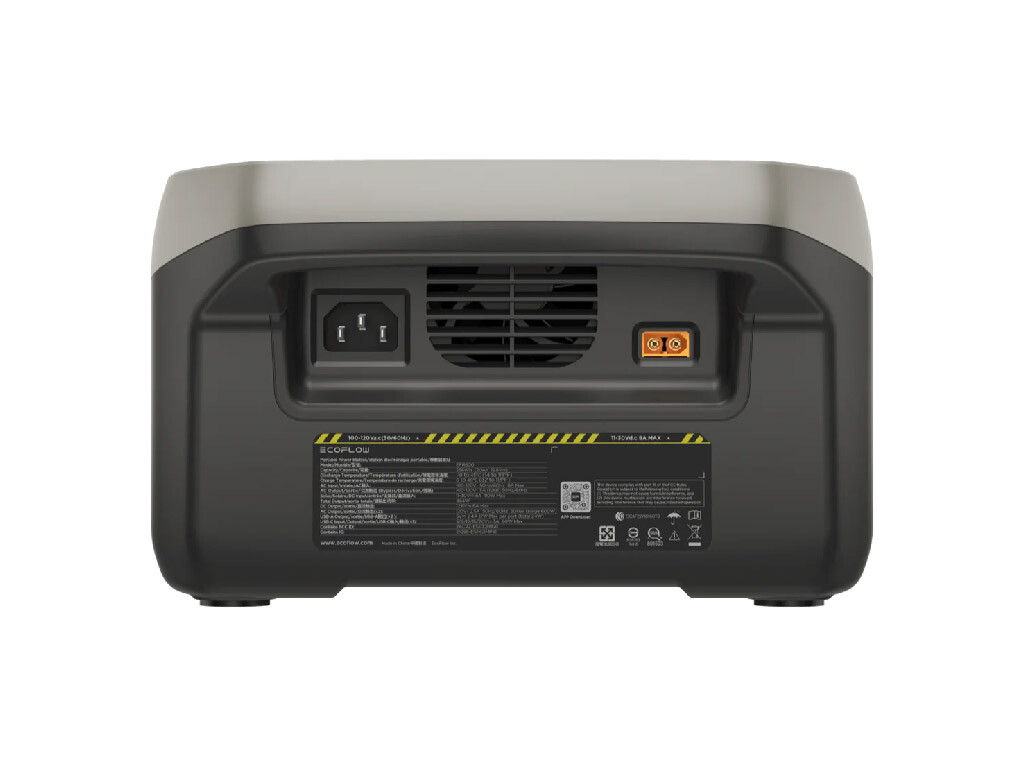
It also has a brilliant handle design that keeps it out of the way without sacrificing anything. Instead of having a big handle on top, it sticks out the backside. So there is a comfortable rigid handle when you need it, but it doesn’t get in the way of stacking things on top of this EcoFlow power station.
The River 2 strikes an impressive balance between portability and power, making it an ideal choice for those who prioritize mobility in their power solution.
| Product | EcoFlow RIVER 2 |
|---|---|
| Weight (lbs) | 7.7lbs |
| Weight (kg) | 3.5kg |
| Dimensions (in) | 9.6×8.5×5.7in |
| Dimensions (mm) | 244x216x145mm |
Outlets, Features, and Interface: Straight Simplicity
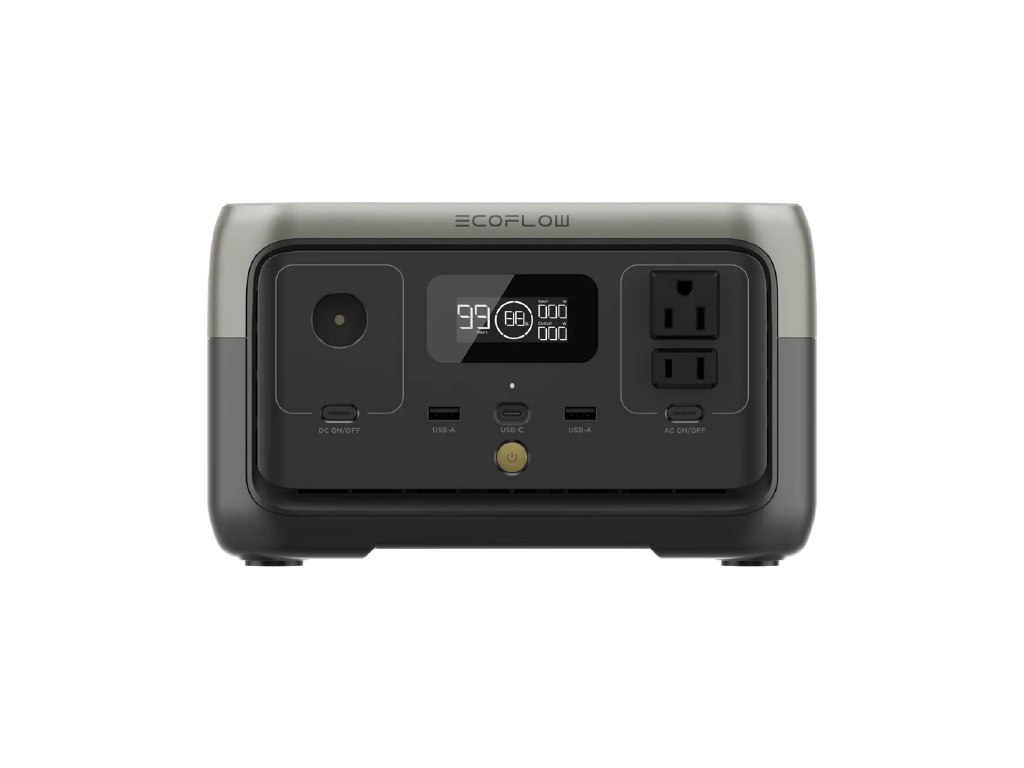
The EcoFlow River 2 has the outlets you need for the small devices, with a main focus on the USB ports yet still has other versatile outlets. The full lineup includes:
- 1 x 60W USB-C port
- 2 x 12W USB-A ports
- 1 x 100W car port
- 2 x AC output (300W max)
You can power or charge up to five devices simultaneously. The USB-C port delivers enough juice to fast-charge smartphones or power most laptops. The additional USB-A ports and car outlet round out the charging options to ensure capability with tons of small devices. The River 2 is a true power hub.
The River 2’s user interface is another area where it shines. The clear, easy-to-read display provides at-a-glance information about power input, output, and remaining battery life. It’s everything you need in one sleek look.
This smart integration extends the River 2’s functionality, transforming it from a simple battery into a comprehensive power management system. Whether you’re a tech enthusiast, remote worker, or outdoor adventurer, the EcoFlow River 2’s combination of versatile outputs and smart features offers a portable power solution that punches well above its weight class.
| Product | EcoFlow RIVER 2 |
|---|---|
| 120V Outlets | 2 |
| UPS / EPS | 30 ms (EPS) |
| USB-A Ports | 2 x 12W |
| USB-C Ports | 1 x 60W |
| Cigarette Lighter | 1 x 100W |
| Buy Now | Buy Now |

EcoFlow River 2 Compared to Others
There are a lot of options for affordable, compact power stations ready to meet light power needs. The EcoFlow River 2 faces stiff competition from top brands like Jackery, Bluetti, and BougeRV.
Let’s see how the River 2 compares to other power stations. While not listed here, we also have an entire article on the EcoFlow River 2 vs. Anker 521 comparison.
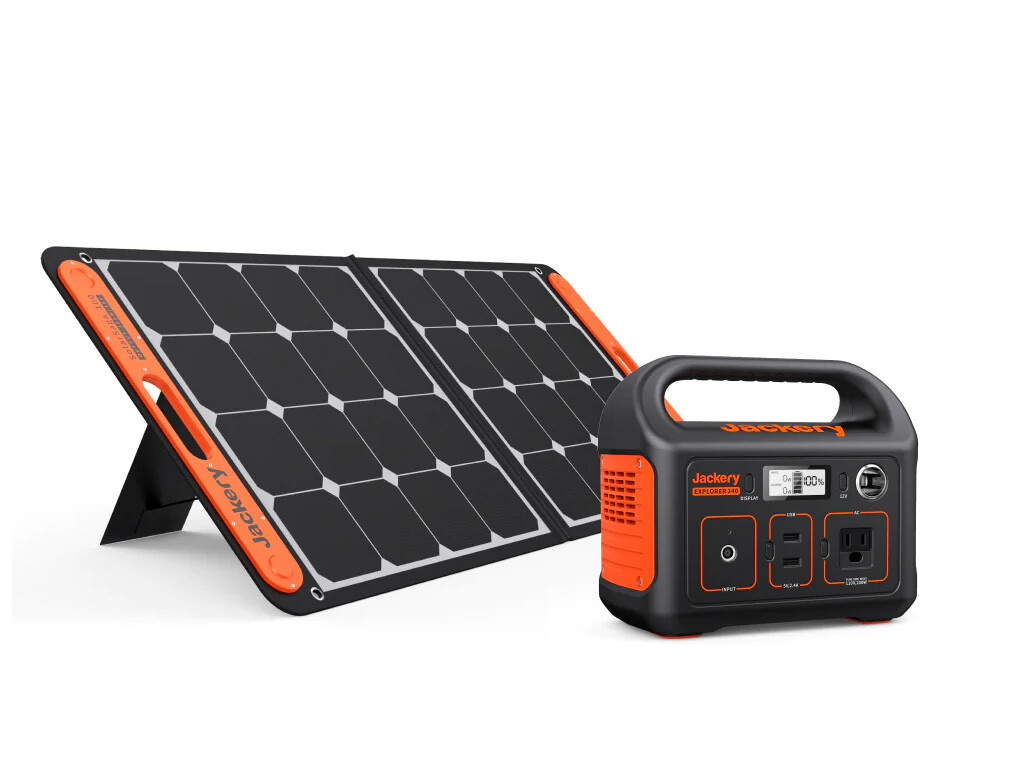
EcoFlow River 2 vs. Jackery Explorer 240
The Jackery Explorer 240 has long been a popular choice in this category, but the River 2 brings a lot to the table. While both offer similar capacity (256Wh vs. 241Wh), the River 2’s LiFePO4 (LFP) battery chemistry outshines the Explorer 240’s NMC. It’s 3,000 cycles vs. about 500.
The River 2 takes the lead with its inclusion of a USB-C port (absent from the Jackery) and an additional USB-A port. The River 2 also boasts faster charging speeds and a more powerful AC inverter (300W vs. 200W), giving it an edge in both input and output abilities.
- River 2: LFP battery, USB-C port, 300W inverter
- Explorer 240: NMC battery, no USB-C, 200W inverter
Verdict: The EcoFlow River 2 comes out ahead in this matchup. It’s worth noting that the newer, bigger Jackery Explorer 300 Plus is a better competitor to the River 2, offering closer features but still lacking the same charging speeds.
| Product | EcoFlow RIVER 2 | Jackery Explorer 240 |
|---|---|---|
| Battery | 256Wh | 241Wh |
| AC Output | 300W | 200W |
| AC Output Peak | 600W | 400W |
| AC Input | 360W | 90W |
| AC Recharge Hours (Est.) | 0.9h | 3.2h |
| Solar Input | 110W | 90W |
| Solar Recharge Hours (Est.) | 2.8h | 3.2h |
| Warranty | 5 years | 2-3 years |
| Weight (lbs) | 7.7lbs | 6.6lbs |
| Weight (kg) | 3.5kg | 3kg |
| Battery Type | LiFePO4 / LFP | NMC |
| Battery Cycles | >3,000 | >500 |
| Buy Now | Buy R2 | Buy 240 |
| Buy on Amazon | Buy on Amazon | 240 on Amazon |

EcoFlow River 2 vs. Bluetti EB3A
The Bluetti EB3A presents strong competition for the River 2. With a wireless charging pad, a DC barrel plug, and app connectivity, the Bluetti EB3A has the edge. Throw on the more powerful 600W inverter and a slightly larger 269Wh battery, there’s just no doubting that this EcoFlow vs. Bluetti comparison goes in favor of the EB3A.
The River 2 isn’t without its strengths in this comparison. This EcoFlow has a longer warranty period (5 years vs 2 years) and faster AC charging speeds (360W vs. 268W).
Both units feature long-lasting LFP batteries, putting them on equal footing in terms of battery longevity.
- EB3A: Wireless charging, 600W inverter, larger capacity
- River 2: Longer warranty, faster AC charging
Verdict: The Bluetti EB3A’s additional features with a more powerful inverter and bigger battery give it the edge. While the River 2 is a worthy power station, the EB3A does a little better.
| Product | EcoFlow RIVER 2 | BLUETTI EB3A |
|---|---|---|
| Battery | 256Wh | 269Wh |
| AC Output | 300W | 600W |
| AC Output Peak | 600W | 1,200W |
| AC Input | 360W | 268W |
| AC Recharge Hours (Est.) | 0.9h | 1.2h |
| Solar Input | 110W | 200W |
| Solar Recharge Hours (Est.) | 2.8h | 1.6h |
| Warranty | 5 years | 2 years |
| Weight (lbs) | 7.7lbs | 10.14lbs |
| Weight (kg) | 3.5kg | 4.6kg |
| Battery Type | LiFePO4 / LFP | LiFePO4 / LFP |
| Battery Cycles | >3,000 | – |
| Buy Now | Buy R2 | Buy EB3A |
| Buy on Amazon | Buy on Amazon | EB3A on Amazon |

EcoFlow River 2 vs. BougeRV Flash 300
The BougeRV Flash 300 brings impressive specs to the table, including a 600W inverter, a 286Wh battery, and remarkably fast 600W charging speeds. It matches the River 2’s 5-year warranty and offers similar outlets, with the addition of a wireless charging pad.
However, the River 2’s LFP battery chemistry gives it a significant advantage over the Flash 300’s NMC battery in terms of cycle life and longevity. This could mean the difference between a power station that lasts closer to 10 years and one that will struggle to have a battery with a lot of capacity after 5 years.
- Flash 300: 600W inverter, larger capacity, faster charging
- River 2: LFP battery chemistry, longer lifespan
Verdict: While the BougeRV Flash 300 impresses with its power output and charging speed, the EcoFlow River 2’s LFP battery makes it a better long-term investment for most users.
| Product | EcoFlow RIVER 2 | BougeRV Flash 300 |
|---|---|---|
| Battery | 256Wh | 286Wh |
| AC Output | 300W | 600W |
| AC Output Peak | 600W | 600W |
| AC Input | 360W | 600W |
| AC Recharge Hours (Est.) | 0.9h | 0.6h |
| Solar Input | 110W | 600W |
| Solar Recharge Hours (Est.) | 2.8h | 0.6h |
| Warranty | 5 years | 5 years |
| Weight (lbs) | 7.7lbs | 14.6lbs |
| Weight (kg) | 3.5kg | 6.6kg |
| Battery Type | LiFePO4 / LFP | NMC |
| Battery Cycles | >3,000 | >700 |
| Buy Now | Buy R2 | Buy Now |
| Buy on Amazon | Buy on Amazon | Buy on Amazon |
User Manual Link
Here is a link to the user manual for the EcoFlow River 2 so you can see any details not covered here.
| Product | EcoFlow RIVER 2 |
|---|---|
| User Manual | User Manual |
Full Specifications Table
Ready to see all the specs you need for the River 2 in one spot? Here is the full specifications chart:
| Product | EcoFlow RIVER 2 |
|---|---|
| Battery | 256Wh |
| AC Output | 300W |
| AC Output Peak | 600W |
| AC Input | 360W |
| AC Recharge Hours (Est.) | 0.9h |
| Solar Input | 110W |
| Solar Recharge Hours (Est.) | 2.8h |
| Warranty | 5 years |
| Weight (lbs) | 7.7lbs |
| Weight (kg) | 3.5kg |
| Dimensions (in) | 9.6×8.5×5.7in |
| Dimensions (mm) | 244x216x145mm |
| Solar Input 1 Watts | 110W |
| Solar Input 1 Volts Min | 11V |
| Solar Input 1 Volts Max | 30V |
| Solar Input 1 Amps | 8A |
| Battery Type | LiFePO4 / LFP |
| Battery Cycles | >3,000 |
| 120V Outlets | 2 |
| UPS / EPS | 30 ms (EPS) |
| USB-A Ports | 2 x 12W |
| USB-C Ports | 1 x 60W |
| Cigarette Lighter | 1 x 100W |
| User Manual | User Manual |
| Buy Now | Buy Now |
| Buy on Amazon | Buy on Amazon |
|
|
EcoFlow RIVER 2 |
R2 on EcoFlow R2 on Amazon |
Conclusion: Is the EcoFlow River 2 Right for You?
The EcoFlow River 2 proves to be a formidable contender in the compact portable power station market. Its LFP battery chemistry, fast charging capabilities, and versatile output options make it an excellent choice for users seeking reliable power on the go.
Check out the EcoFlow River 2 vs. Anker 521 comparison to see how it stacks up against another popular option in this category. And to unlock the potential of the River 2 for off-grid adventures, review the best solar panels to pair with the EcoFlow River 2.


