

In a battle for reliable power, this EcoFlow River 3 vs. Jackery 300 Plus comparison is here to lead the way. From charging phones to powering laptops, these compact power stations are ready for adventure. They can also provide more confidence through emergency power outages and road trips.
We’ll take a close look by highlighting the pros and cons of both options. You can leave the rose-tinted glasses of advertising behind and discover the real story. By translating the long spec sheets into plain language, you’ll see what these are capable of and why.
Let’s jump into the comparison of the EcoFlow River 3 and Jackery Explorer 300 Plus small power stations.
We carefully select the products and services we link to. If you buy through our links, we may earn a commission. There’s no extra cost to you and it helps us provide this information.

Short Summary
We are dedicated to investigating portable power stations to help you find the best ones. And these two brands consistently impress. EcoFlow is a newer company that has continued to push the entire industry forward with innovative and well-designed products. Jackery is one of the oldest brands in the business with a well-earned reputation for reliable, user-friendly devices.
The truth is that there’s very little separating the EcoFlow River 3 and Jackery 300 Plus. The features and abilities of these compact power stations are one of the closest we’ve come across. But there are some crucial differences.
Two of the most important differences are the price and warranty coverage. EcoFlow has used its expertise to offer an incredible value that’s hard to compete with, while Jackery pushes its warranty coverage out much longer but it comes at an extra cost.
Which is best for your needs? Let’s see a more detailed comparison to see which you should pick. Or if you need another choice.
| Product | EcoFlow RIVER 3 | Jackery Explorer 300 Plus |
|---|---|---|
| Battery | 245Wh | 288Wh |
| AC Output | 300W | 300W |
| Warranty | 2 years | 3-5 years |
|
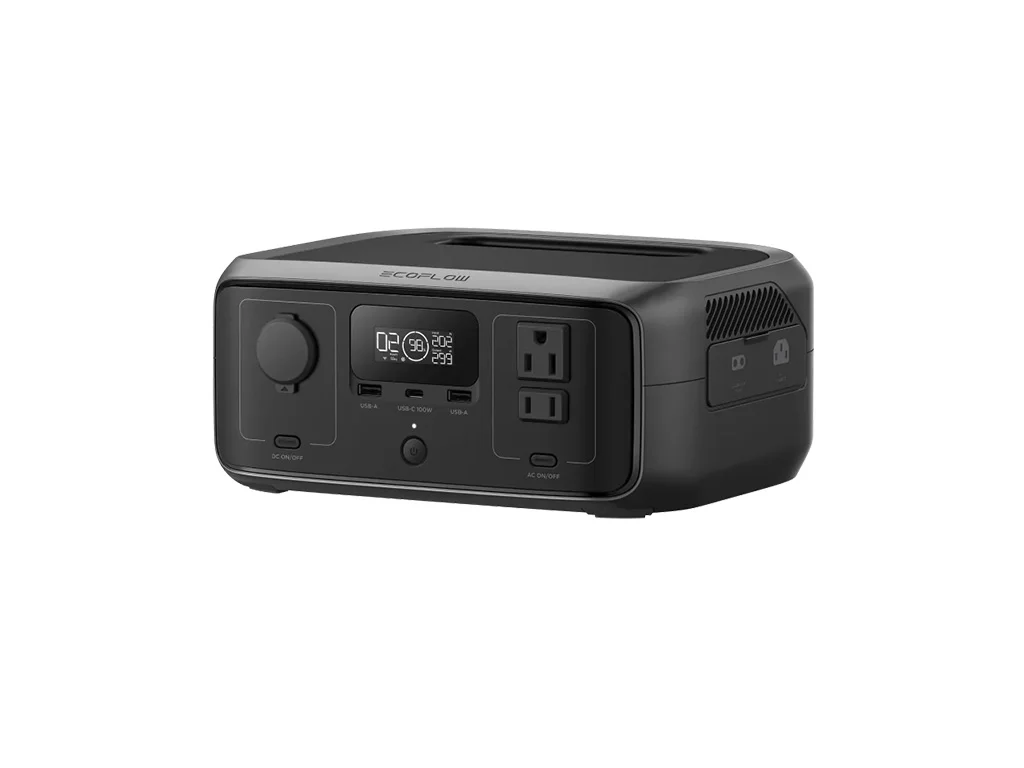
EcoFlow RIVER 3 |
R3 on EcoFlow R3 on Amazon |
|
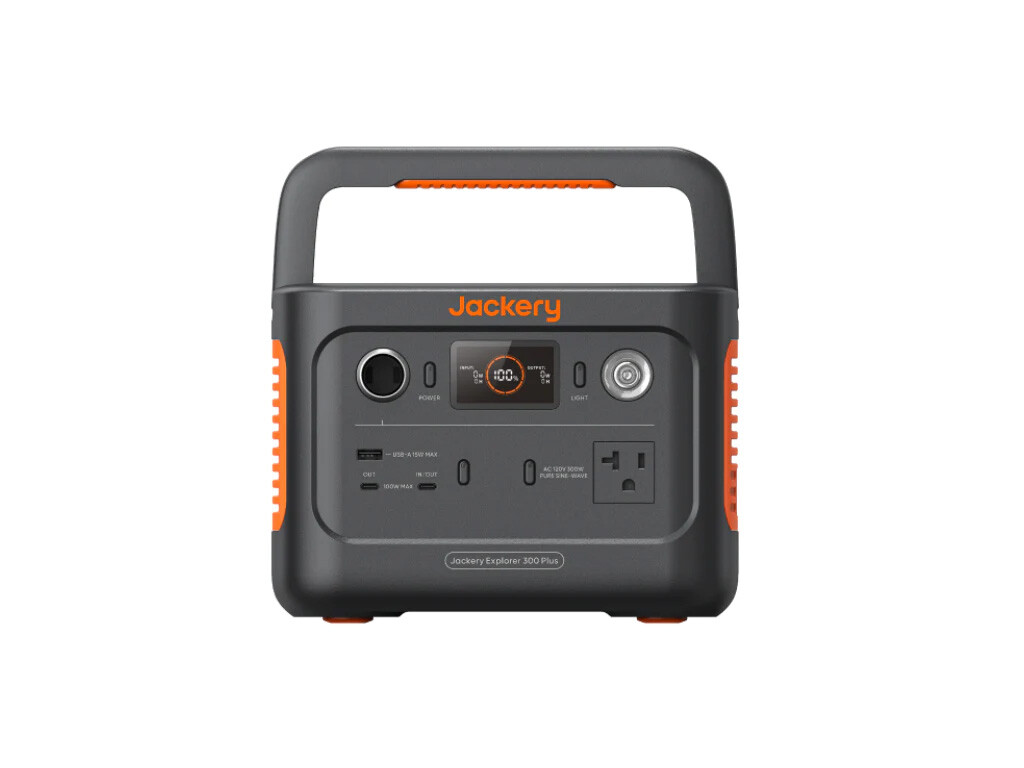
Jackery Explorer 300 Plus Portable Power Station |
300 Plus on Jackery 300 Plus on Amazon |
Get 5% off most EcoFlow orders with the discount code SOLARWAY5OFF. See our EcoFlow Sales, Codes, and Prices page for more cost-saving tips.

Detailed Comparison
We’ve separated this article into sections that answer your most important power station questions. A comparison chart with the relevant specs in each section, along with a full spec comparison chart at the end. Plus, we provide our exclusive power station comparison tool where you can choose any three power stations to see how they line up.
Here is how we will go through this River 3 vs. Explorer 300 Plus comparison:
- What Can These Power?
- How Long Will the Battery Last?
- Can They Recharge Quickly?
- Which Is a Better Size?
- Final Verdict

What Can These Power?
The stark reality of this size power station is that they offer limited capabilities. If you browse reviews for options of this size from almost any brand, you’ll read the same story about how they are frustrated with the inability to power the devices they need. Before dropping down your dough, make sure these power stations can power what you need.
Some crucial considerations are the amount of ports and outlets, as well as the power available from each. This isn’t about how long it will run (we’ll cover that next). This is just whether the River 3 or Jackery 300 Plus can send out the power your devices need.
It’s always best to use the DC outputs like USB ports and 12V car charger outlets when possible. These are more efficient (battery -wise) and are great for charging phones, tablets, and some laptops. For devices that require a standard 110V/120V AC outlet, then you need to turn on the AC inverter.
The DC ports of the River 3 and Explorer 300 Plus are similar but not identical:
- EcoFlow: 2 low-watt USB-A ports, 1 high-watt USB-C port, and a 12V car outlet
- Jackery: 1 low-watt USB-A port, 2 USB-C ports (1 high-watt and 1 low-watt), and a 12V car outlet
These have nearly the same total output capabilities. For those with more USB-C devices, the Jackery is the better bet. But only one USB-C has the full 100W. The 12V car outlet can be great for things like a portable fridge, but due to the small battery size, they won’t last very long.

The AC inverters are both 300W with 600W surge capabilities. These are:
- Great for televisions and computers
- Struggle with refrigerators, likely working for mini models only
- Not useful for higher-powered devices like microwaves and electric kettles
Stick to lower-powered devices and you’ll be satisfied. If you want to run larger electronics or cover fridge backup needs, consider jumping up to a midrange power station instead. Our article covering the EcoFlow DELTA 3 Plus vs. Jackery Explorer 1000 Plus comparison might be more useful.
The Jackery only has one AC outlet, while the EcoFlow has two. But you’re still limited to 300W from both outlets.
Another excellent feature of the River 3 and Explorer 300 Plus is the UPS function. If you have a device that always needs power, like a computer or CPAP machine, the uninterruptible power supply (UPS) can step up to the plate. It uses power from a wall outlet and switches to battery power during an outage to deliver constant power. Both of these switch to battery power from a wall outage in 20ms or less. Some devices — but not all — will avoid rebooting. <10ms or an online UPS (0ms) are ideal, but not often found on power stations of this size.
Outlets and Inverter Verdict: This category is so close that it’s a tie. Jackery has two USB-C ports which are becoming more useful, while EcoFlow offers an extra AC outlet and USB-A port. The total power available is almost identical. And they have the same <20ms UPS function, a great feature.
| Product | EcoFlow RIVER 3 | Jackery Explorer 300 Plus |
|---|---|---|
| AC Output | 300W | 300W |
| AC Output Peak | 600W | 600W |
| 120V Outlets | 2 | 1×2.5A |
| UPS / EPS | 20ms | 20ms |
| USB-A Ports | 2x12W | 1x15W |
| USB-C Ports | 1x100W | 1x100W; 1x15W |
| Cigarette Lighter | 1x126W | 1x120W |

How Long Will the Battery Last?
A power station is almost useless without a battery. You want to look for the right capacity, as well as the right type of battery. These are two ways some last much longer than others. The battery also allows you to use solar power any time of day.
For capacity, the Jackery 300 Plus has a slight edge with 288Wh. The EcoFlow River 3 battery is 245Wh, about 10% smaller. The real-world implications of this difference are fairly minimal.
While these power stations have enough battery power for some needs, if you expect too much out of them, you’ll set yourself up for disappointment.
Here’s how many charges you can expect from these batteries:
- Charge a 10Wh phone about 20 times
- Charge a 30Wh tablet about 7 times
- Charge a 60Wh laptop about 3 times
Here are some examples of runtimes for certain devices:
- Run a 20W fan or WiFi router for about 11 hours
- Run a 50W CPAP or mini fridge for about 4 hours
- Run a 200W television or desktop computer for about 1 hour
As you can see, the runtimes are not that impressive. You don’t want to depend on these to run a CPAP for an entire night. Stick to small devices or keep your runtime expectations down. That’s going to be the case for any small power station with a battery of around 300Wh or less.
The EcoFlow River 3 and Jackery 300 Plus use high-quality LiFePO4 battery cells. This is the industry gold standard, and these two are rated to last at least 3,000 charging cycles while retaining at least 80% capacity. You can depend on these for daily charging for over 8 years.
Battery Verdict: The Jackery 300 Plus has a 10% larger battery, but these are small power stations with limited capacity. The difference is not that significant. Both use excellent LiFePO4 batteries rated to last about 8 years of daily use, despite the warranty difference.
| Product | EcoFlow RIVER 3 | Jackery Explorer 300 Plus |
|---|---|---|
| Battery | 245Wh | 288Wh |
| Warranty | 2 years | 3-5 years |
| Battery Type | LiFePO4 / LFP | LiFePO4 / LFP |
| Battery Cycles | >3,000 | >3,000 |
Can They Recharge Quickly?
Charging speeds aren’t dictated by the power source alone. Every power station has specific components to send the external power to the battery. These charge controllers are what determine the charging speeds in watts. The size of the battery also matters.
With small power stations, the charging speeds usually aren’t a major concern. They’re so small that you won’t be waiting around for too long no matter what.
The EcoFlow River 3 has superior charging speeds, however, especially when using a wall outlet. The River 3 can fully recharge in about an hour, while the Jackery takes around 3 hours. This is a big difference, but 3 hours is still a fast recharge time for any power station.
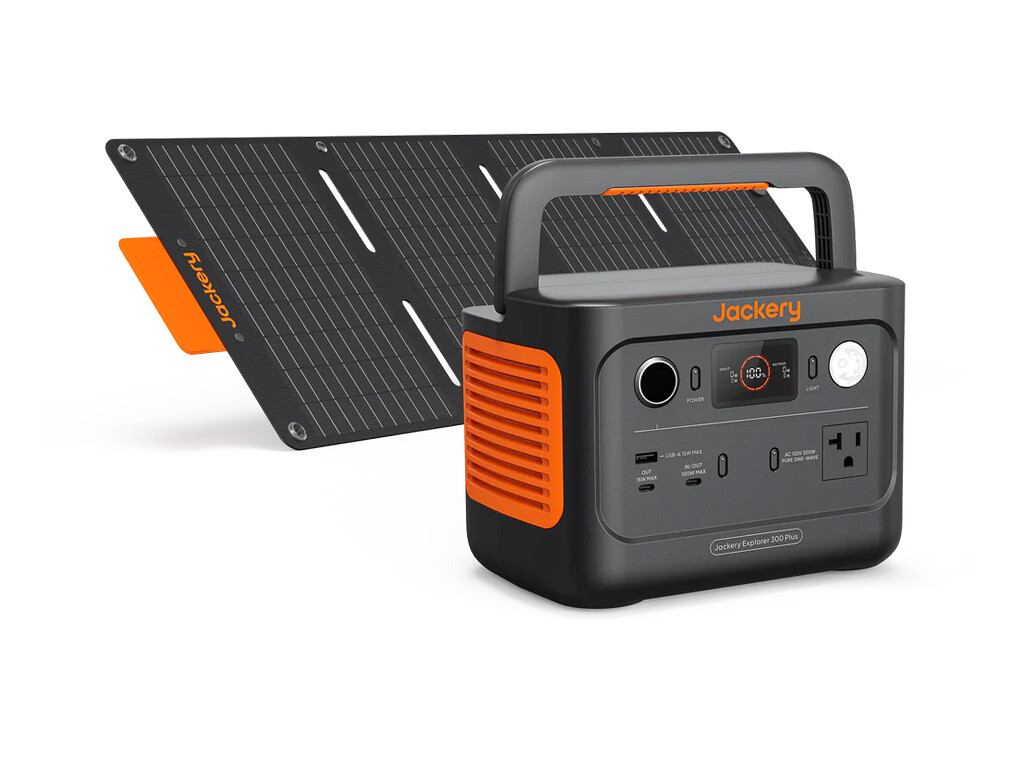
Solar inputs are almost identical, but the River 3 does have a slight advantage. 110W for EcoFlow and 100W for Jackery. The EcoFlow also has marginally higher specs for voltage and current, which can be critical when you’re trying to maximize charging without damaging the power station.
You can use a basic car charger from the car’s 12V cigarette lighter outlet without a problem. Sometimes we recommend other car chargers for power stations, but since these batteries are so small, there’s no need.
Charging Verdict: The EcoFlow River 3 has faster charging rates, especially from a wall outlet. The Jackery Explorer 300 Plus can still charge in about 3 hours. This may not impact your decision much.
| Product | EcoFlow RIVER 3 | Jackery Explorer 300 Plus |
|---|---|---|
| AC Input | 320W | 120W |
| AC Recharge Hours (Est.) | 0.9h | 2.9h |
| Solar Input | 110W | 100W |
| Solar Recharge Hours (Est.) | 2.7h | 3.5h |
| Solar Input 1 Volts Min | 11V | 12V |
| Solar Input 1 Volts Max | 30V | 27V |
| Solar Input 1 Amps | 8A | 5A |

Which Is a Better Size?
If there’s one area where compact power stations excel, it’s the weight and dimensions. And these are two ideal choices, both at the industry’s best and both weighing around 8lbs (3.6kg).
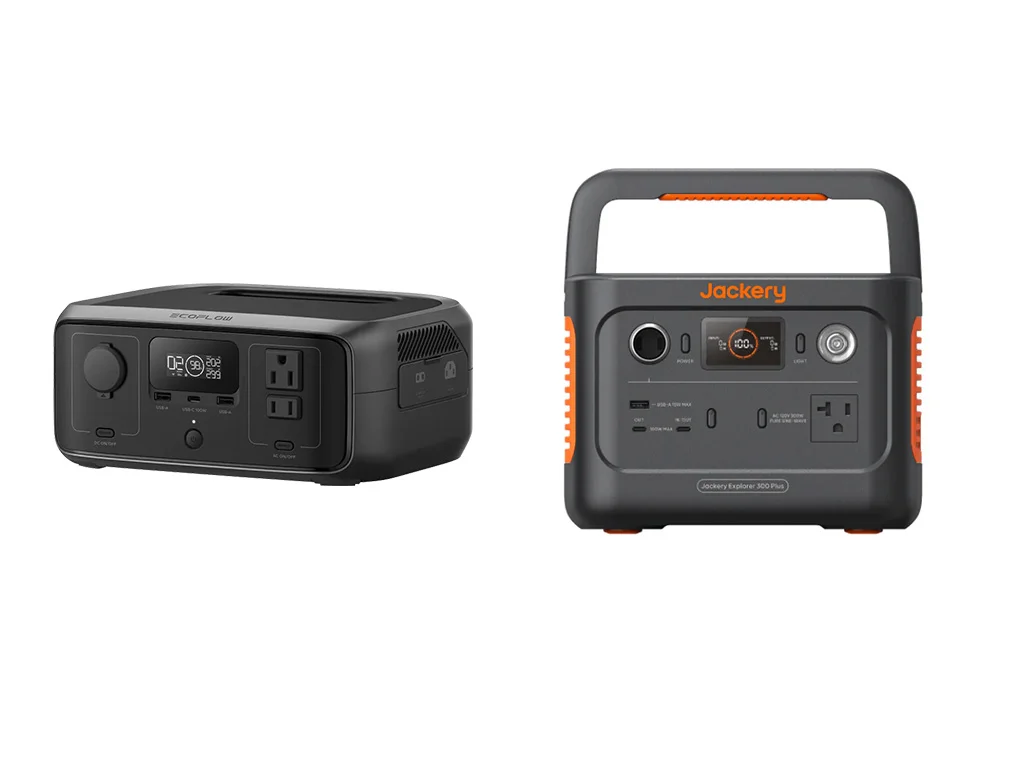
Despite having a similar size, we find the EcoFlow River 3 shape and design more appealing. Its footprint is about the size of a standard piece of paper, and it has a short height with a flat top. The Jackery has a slightly smaller footprint but is about 2 inches (5cm) taller.
We also prefer the handle on the River 3 which is integrated into the backside. It’s completely out of the way and hidden yet sturdy. There’s nothing wrong with Jackery’s handle. It can stay out of the way while making it easy to carry. It is folding and there aren’t signs of it being particularly fragile, but whenever you can avoid a moving part (and failure point), the better.
Size Verdict: Although either choice is a great size, the EcoFlow River 3 has a preferable design with a stationary handle. The 300 Plus has no problems with its size and features a folding handle.
| Product | EcoFlow RIVER 3 | Jackery Explorer 300 Plus |
|---|---|---|
| Weight (lbs) | 7.8lbs | 8.27lbs |
| Weight (kg) | 3.5kg | 3.75kg |
| Dimensions (in) | 10×8.3×4.4in | 9.1×6.1×6.6in |
| Dimensions (mm) | 254x211x112mm | 230x155x167mm |
Final Verdict: EcoFlow River 3 vs. Jackery 300 Plus
This is one of the closest power station reviews our team has come across. The main functions and features are so similar that most people will have difficulty recognizing a difference in real-world usage. The 300W inverter with a <20ms UPS function is shared by both.
If you start to look deep, the small differences show up. The Jackery Explorer 300 Plus has a pretty long list of superior features:
- Up to 5 years of warranty coverage; only 2 years for the EcoFlow River 3
- Slightly larger battery is slightly larger.
- Two USB-C ports; only 1 for the EcoFlow (although it has one more USB-A port)
There’s a major tradeoff though. You have to pay for these marginal advantages, sometimes much more depending on current prices.
On top of the lower price, the EcoFlow also has a sleek design and much faster AC charging speeds. Its solar input is also slightly better overall.
Final Verdict: Due to its lower price, the EcoFlow River 3 is our preferred choice over the Jackery Explorer 300 Plus. While the Jackery has some advantages including a longer warranty, these are two very similar power stations. The small differences do not outweigh the major price disparity.
|
|
EcoFlow RIVER 3 |
R3 on EcoFlow R3 on Amazon |
|
|
Jackery Explorer 300 Plus Portable Power Station |
300 Plus on Jackery 300 Plus on Amazon |
Get 5% off most EcoFlow orders with the discount code SOLARWAY5OFF.
Full Comparison Charts
Now we’ll go over big comparison charts to give you a full side-by-side look at the specs.
EcoFlow River 3 vs. Jackery Explorer 300 Plus
Here is the full spec comparison of the River 3 and 300 Plus, as well as links to the official user manuals:
| Product | EcoFlow RIVER 3 | Jackery Explorer 300 Plus |
|---|---|---|
| Battery | 245Wh | 288Wh |
| AC Output | 300W | 300W |
| AC Output Peak | 600W | 600W |
| AC Input | 320W | 120W |
| AC Recharge Hours (Est.) | 0.9h | 2.9h |
| Solar Input | 110W | 100W |
| Solar Recharge Hours (Est.) | 2.7h | 3.5h |
| Warranty | 2 years | 3-5 years |
| Weight (lbs) | 7.8lbs | 8.27lbs |
| Weight (kg) | 3.5kg | 3.75kg |
| Dimensions (in) | 10×8.3×4.4in | 9.1×6.1×6.6in |
| Dimensions (mm) | 254x211x112mm | 230x155x167mm |
| Solar Input 1 Watts | 110W | 100W |
| Solar Input 1 Volts Min | 11V | 12V |
| Solar Input 1 Volts Max | 30V | 27V |
| Solar Input 1 Amps | 8A | 5A |
| Battery Type | LiFePO4 / LFP | LiFePO4 / LFP |
| Battery Cycles | >3,000 | >3,000 |
| 120V Outlets | 2 | 1×2.5A |
| UPS / EPS | 20ms | 20ms |
| USB-A Ports | 2x12W | 1x15W |
| USB-C Ports | 1x100W | 1x100W; 1x15W |
| Cigarette Lighter | 1x126W | 1x120W |
| Connectivity | WiFi / Bluetooth | WiFi / Bluetooth |
| User Manual | User Manual | User Manual |
| Buy Now | Buy R3 | Buy 300 Plus |
| Buy on Amazon | Buy on Amazon | 300 Plus on Amazon |

Compare Any Power Station
Here’s a tool we’re very proud to offer. You can compare any three power stations across not only EcoFlow and Jackery, but also other top brands like Bluetti and Anker.
Select your three power stations from the drop-down menus, as well as the group of specs you want to see. Then click the button and a table will show up with the data.
Select Power Stations
Select up to three power stations to compare:
|
|
EcoFlow RIVER 3 |
R3 on EcoFlow R3 on Amazon |
|
|
Jackery Explorer 300 Plus Portable Power Station |
300 Plus on Jackery 300 Plus on Amazon |
Get 5% off most EcoFlow orders with the discount code SOLARWAY5OFF. See our EcoFlow Sales, Codes, and Prices page to get the best price.
Wrap Up
Sometimes these power station comparisons offer two great choices without material differences. You can’t go wrong choosing either. And that’s the case here.
The Jackery 300 Plus has some advantages like a longer warranty and a slightly larger battery. Yet the EcoFlow River 3 offers a nearly identical experience and faster AC charging at a lower price. Due to the similar overall capabilities, we recommend the River 3 since it offers a better value.
Here’s our full EcoFlow River 3 Review. You can also browse our other comparisons: