
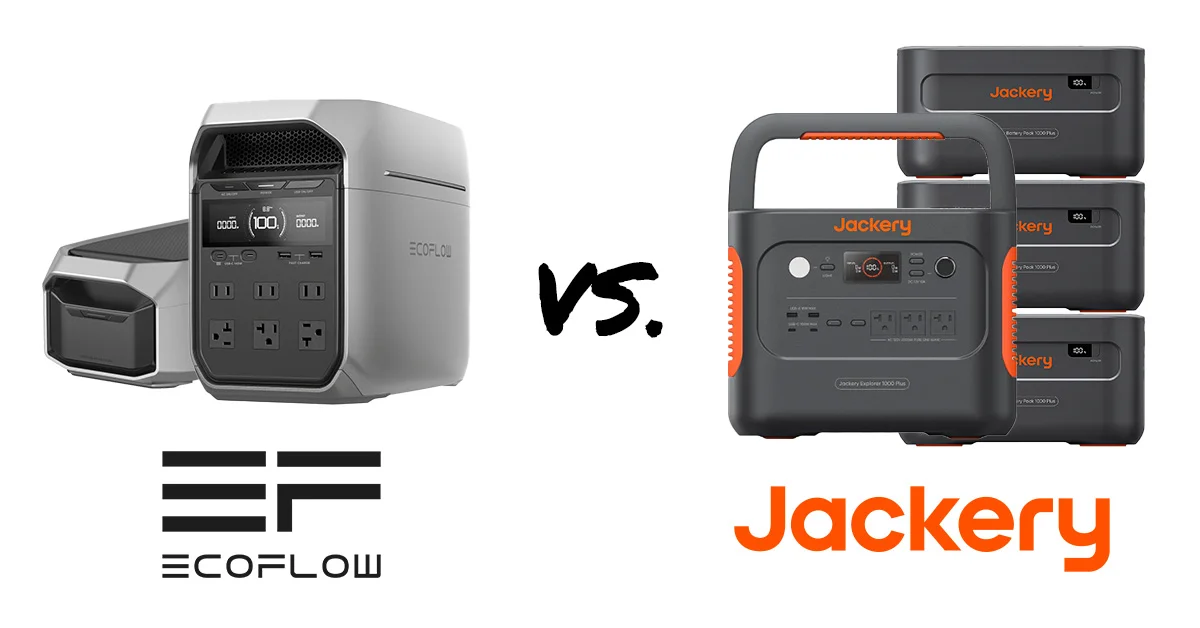
Whether you’re on an adventure or dealing with a short home power outage, a reliable power station can deliver what you need. As long as you pick the right one. In this comparison of the EcoFlow DELTA 3 Plus vs. Jackery Explorer 1000 Plus, we’ll plug into the details to discover the best option.
Forget the bold marketing claims and other nonsense. This is the power station comparison with the specs and information you can understand. By going over the details in real terms, you’ll make the right choice for your situation. We also have a tool that helps you compare these options to a long list of top power stations.
Let’s see how the EcoFlow DELTA 3 Plus vs. Jackery Explorer 1000 Plus comparison turns out.
We carefully select the products and services we link to. If you buy through our links, we may earn a commission. There’s no extra cost to you and it helps us provide this information.
Power Station Comparison
These two power stations are some of the best on the market. They’re powerful yet portable. Both have modular battery packs and a remarkable list of features. And they come from top-tier brands you can trust.
Let’s first look at the similarities and differences between the EcoFlow DELTA 3 Plus vs. Jackery Explorer 1000 Plus. We’ll dig deep to see which you should go with.
There is a full comparison chart for both power stations down below, as well as a place to select any power station to compare.
Here’s a short list of our other articles that might help with your decision too:
- EcoFlow Comparison Charts
- Jackery Comparison Charts
- EcoFlow DELTA 3 Plus Guide
- How to Understand Power Station Specs
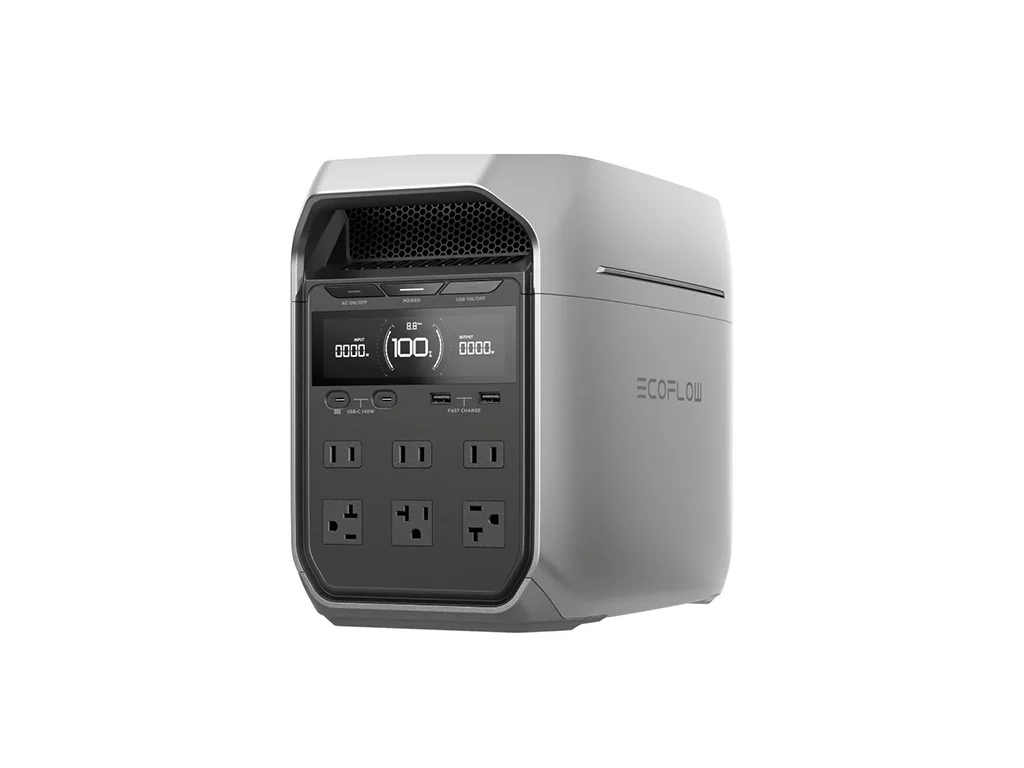
Similarities: Very Close Matchup
These are two very closely matched power stations. Both are ideal for high-powered camping trips with a portable fridge, lights, and other small electronics. They can also work for limited home backup use, providing hours of emergency power for critical appliances like your phones, laptop, WiFi router/modem, television, and even a fridge.
Both have a modular design that allows for extra battery capacity to meet your needs. And they have great charging rates, including solar panel inputs, which means you don’t have to spend much time waiting for the batteries to fill.
The DELTA 3 Plus and Explorer 1000 Plus also have similar limits. They both lack high-amp outputs, making them less than ideal for big power needs like supplying your entire home or large RV with electricity.
Here are the highlights of the ways these two power stations are quite similar:
- Power inverters are both right at or under 2kW, enough to power most appliances just not heavy-duty needs.
- LiFePO4 battery design is almost identical with ~1kWh internal and up to 5kWh through external battery packs.
- Fast charging speeds, 4 USB ports, app connectivity, and 5-year warranty coverage.
This list of similarities between the EcoFlow DELTA 3 Plus and Jackery Explorer 1000 Plus is extensive. It is worth noting that these aren’t perfectly identical, however.
The Jackery unit has a slightly bigger inverter and internal battery, while the EcoFlow has a slightly larger max battery capacity and solar charging.
| Product | EcoFlow DELTA 3 Plus | Jackery Explorer 1000 Plus |
|---|---|---|
| Battery | 1,024Wh | 1,265Wh |
| Battery (System Max) | 5,120Wh | 5,056Wh |
| AC Output | 1,800W | 2,000W |
| AC Output Peak | 3,600W | 4,000W |
| AC Input | 1,500W | 1,800W |
| Solar Input | 1,000W | 800W |
| Battery Type | LiFePO4 / LFP | LiFePO4 / LFP |
| USB-A Ports | 2x36W | 2x18W |
| USB-C Ports | 2x140W | 2x100W |
| Cigarette Lighter | 1x126W | 1x120W |
| Connectivity | WiFi / Bluetooth | WiFi / Bluetooth |
| Buy Now | Buy D3P | Buy 1000 Plus |
| Buy on Amazon | Buy on Amazon | 1000 Plus on Amazon |

Differences That Might Break the Tie
The main differences between the DELTA 3 Plus and the Explorer 1000 Plus are the things that can make or break your decision. But you do have to split hairs to find differences that matter.
One of the biggest difference is in the way these handle external battery packs:
- Jackery: Use up to 3 smaller and more affordable battery packs can grow your system over time.
- EcoFlow: Can only use one connected battery pack so it’s a bigger upfront investment but more simplicity.
This battery difference is a toss up as to which is better. If you want to keep things simple and streamlined — and have the room in your budget for a large single battery — EcoFlow offers that. You can choose between a variety of EcoFlow extra batteries, with the Pro 3 Battery being the newest and largest.
But if you want your system to be able to grow over time and use cheaper, smaller battery packs, Jackery does a better job. They’re about 1/3 the price of the largest EcoFlow Extra Battery.
Once we get past that battery difference, we can inspect the rest of the power station specs and features. Here is where the EcoFlow DELTA 3 Plus has some features that are better than the Jackery:
| Product | EcoFlow DELTA 3 Plus | Jackery Explorer 1000 Plus |
|---|---|---|
| 120V Outlets | 6 | 3×16.7A |
| UPS / EPS | 10ms | – |
| DC 5521 (Barrel Plug) | 2x38W 3A | – |
| IP Rating | IP65 | – |
The UPS transfer time difference might not seem like much, but it might be bigger deal that it looks. A <10ms transfer time has a much better chance at keeping your computers or sensitive electronics powered up without rebooting during a grid outage. The IP65 rating also showcases important protections that help calm your nerves. A little water or dust isn’t going to destroy the EcoFlow DELTA 3 Plus.
We can also point out that the manufacturer’s suggested retail price is higher for the Jackery ($1,199) compared to the EcoFlow ($799). However, power station prices and sales fluctuate all the time and the actual pricing is usually similar.
Use the EcoFlow discount code SOLARWAY5OFF to get 5% off most EcoFlow orders. This is an exclusive discount we’re happy to provide to Solar Waypoint readers. See our EcoFlow Sales and Prices post for current info.
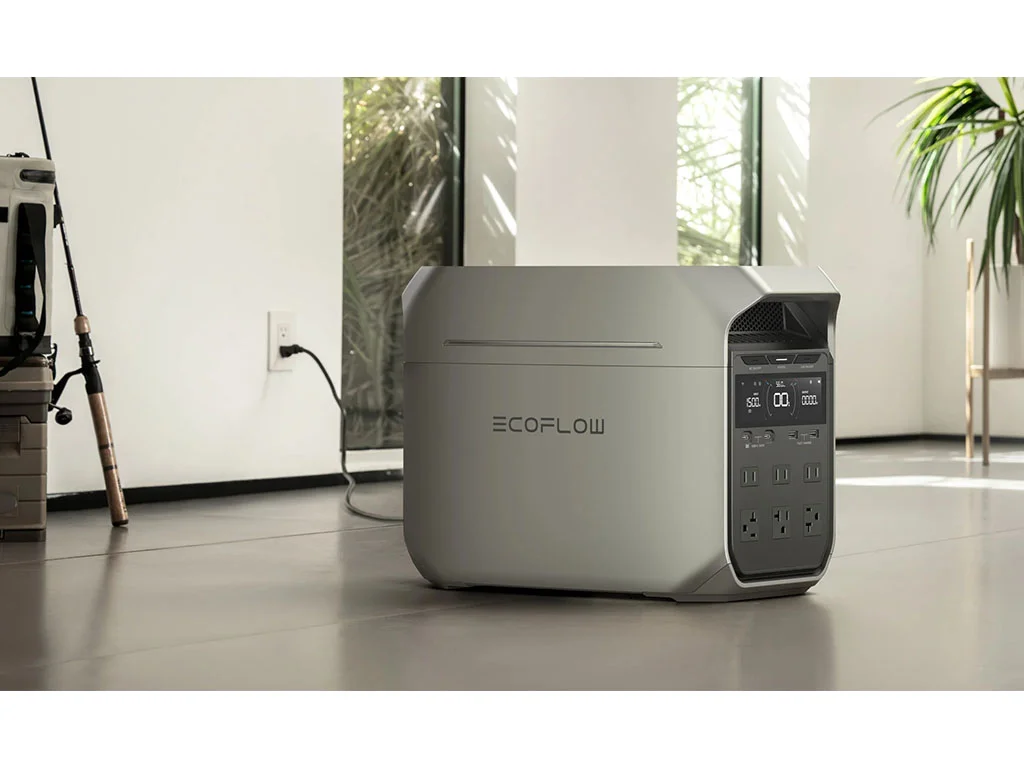
Which Is Better?
These two power stations are remarkably similar. So much so, we recommend checking out the current price of both to see what’s the best value at the time you’re shopping.
The Jackery Explorer 1000 Plus is better if you want:
- Larger internal battery and more powerful AC inverter
- Smaller external battery packs that can daisy-chain together
- <20ms UPS and 3 AC outlets are sufficient
The EcoFlow DELTA 3 Plus is the right choice for those that want:
- The most external battery capacity with one large extra battery
- IP65 water and dust resistance
- <10ms UPS with more AC outlets, plus 5521 DC connections
- 1.8kWh inverter with 3.6kW surge rating is sufficient
|
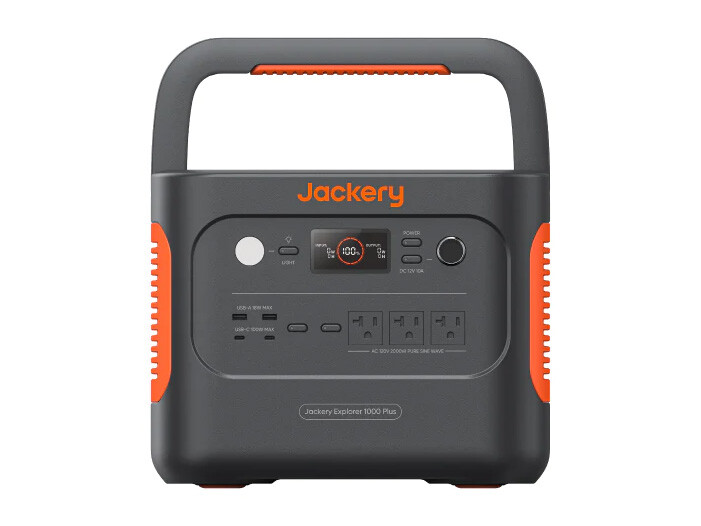
Jackery Explorer 1000 Plus Portable Power Station |
1000 Plus on Jackery 1000 Plus on Amazon |
|
|
EcoFlow DELTA 3 Plus |
D3P on EcoFlow D3P on Amazon |
Full Comparison Charts
There are two parts to this section. First we’ll give you the full comparison chart of the specs for the EcoFlow DELTA 3 Plus vs. Jackery Explorer 1000 Plus.
After that, we have a tool where you can choose any three power stations to compare from our extensive list of EcoFlow, Jackery, Bluetti, Anker, and BougeRV options.
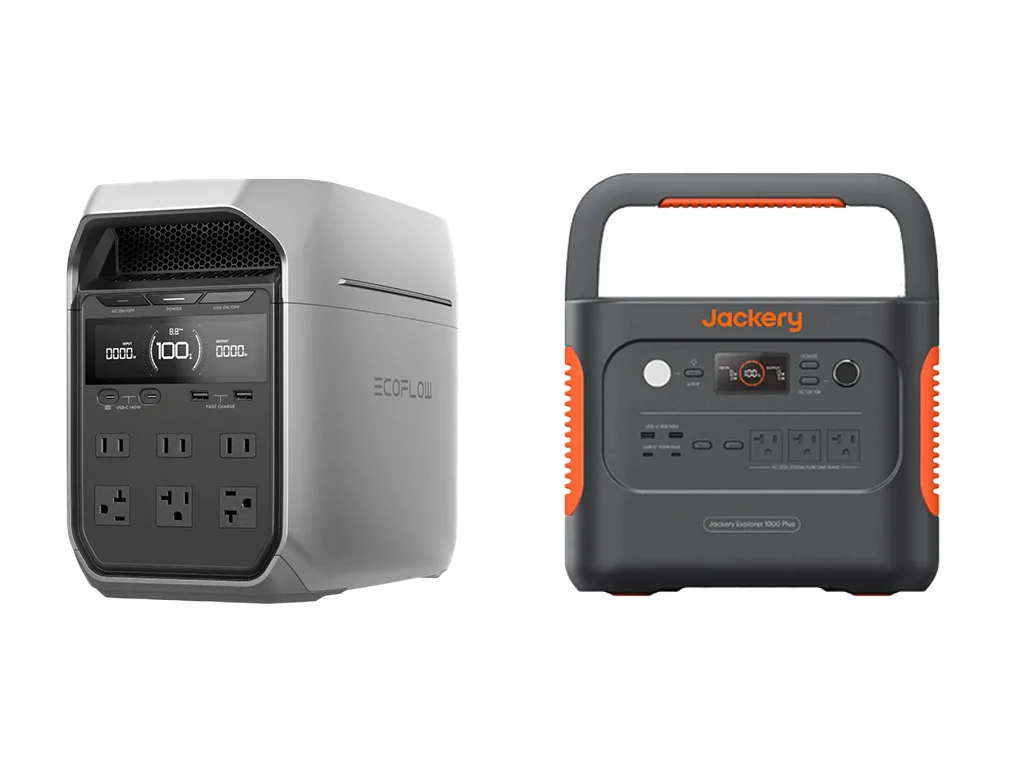
DELTA 3 Plus vs. Explorer 1000 Plus
Here is the chart to compare this EcoFlow to the Jackery power station:
| Product | EcoFlow DELTA 3 Plus | Jackery Explorer 1000 Plus |
|---|---|---|
| Battery | 1,024Wh | 1,265Wh |
| Battery (System Max) | 5,120Wh | 5,056Wh |
| AC Output | 1,800W | 2,000W |
| AC Output Peak | 3,600W | 4,000W |
| AC Input | 1,500W | 1,800W |
| AC Recharge Hours (Est.) | 0.8h | 0.8h |
| Solar Input | 1,000W | 800W |
| Solar Recharge Hours (Est.) | 1.2h | 1.9h |
| Warranty | 5 years | 3-5 years |
| Weight (lbs) | 27.6lbs | 32lbs |
| Weight (kg) | 12.5kg | 14.5kg |
| Dimensions (in) | 8.0×15.7×11.2in | 14×10.2×11.1in |
| Dimensions (mm) | 202x398x284mm | 356x260x283mm |
| Solar Input 1 Watts | 500W | 400W |
| Solar Input 1 Volts Min | 11V | 12V |
| Solar Input 1 Volts Max | 60V | 60V |
| Solar Input 1 Amps | 15A | 11A |
| Solar Input 2 Watts | 500W | 400W |
| Solar Input 2 Volts Min | 11V | 12V |
| Solar Input 2 Volts Max | 60V | 60V |
| Solar Input 2 Amps | 15A | 11A |
| Battery Type | LiFePO4 / LFP | LiFePO4 / LFP |
| Battery Cycles | >4,000 | >3,000 |
| 120V Outlets | 6 | 3×16.7A |
| UPS / EPS | 10ms | – |
| USB-A Ports | 2x36W | 2x18W |
| USB-C Ports | 2x140W | 2x100W |
| Other DC (Anderson or other) | – | – |
| DC 5521 (Barrel Plug) | 2x38W 3A | – |
| Cigarette Lighter | 1x126W | 1x120W |
| Connectivity | WiFi / Bluetooth | WiFi / Bluetooth |
| IP Rating | IP65 | – |
| User Manual | User Manual | User Manual |
| Buy Now | Buy D3P | Buy 1000 Plus |
| Buy on Amazon | Buy on Amazon | 1000 Plus on Amazon |

Compare Any Power Station
Now it’s time for a choose-your-own battle. Choose up to 3 power stations from the drop-down lists, then the group of specs you want to see. Click the button and a new table will populate.
Select Power Stations
Select up to three power stations to compare:
|
|
Jackery Explorer 1000 Plus Portable Power Station |
1000 Plus on Jackery 1000 Plus on Amazon |
|
|
EcoFlow DELTA 3 Plus |
D3P on EcoFlow D3P on Amazon |
Wrap Up
We have compared two excellent midrange power stations. The EcoFlow DELTA 3 Plus holds an edge out over the Jackery due to its superior <10ms UPS transfer time, IP65 rating, and slightly higher maximum battery capacity. But the Jackery Explorer 1000 Plus is a solid system with a more powerful inverter, larger internal battery, and smaller modular system for lower-cost expansion.
Which is the right choice? The EcoFlow usually comes out ahead, especially if it’s priced lower.
Once you have your power station, the next step is figuring out how many solar panels you need. Don’t forget to plug the specs into our tool to make sure you can safely connect the panels to your power station. We’ll help you understand the details to protect your power station, while also figuring out the best connections, series vs. parallel.


