

Let’s face it, not all power stations are created equal. When you need reliable energy and are willing to pay for it, you should know the one you get will live up to the hype. This Bluetti offers top-tier performance while this Anker has a more portable design. So which one deserves your money?
In this power station comparison between the Bluetti AC300 and Anker F2600, we’ll uncover the reality behind the specs. Forget the rose-tinted glasses and find out what these can power and for how long. Real information using real terms you can understand. After this, you’ll confidently know which is right for your needs or if you should choose another option.
We carefully select the products and services we link to. If you buy through our links, we may earn a commission. There’s no extra cost to you and it helps us provide this information.
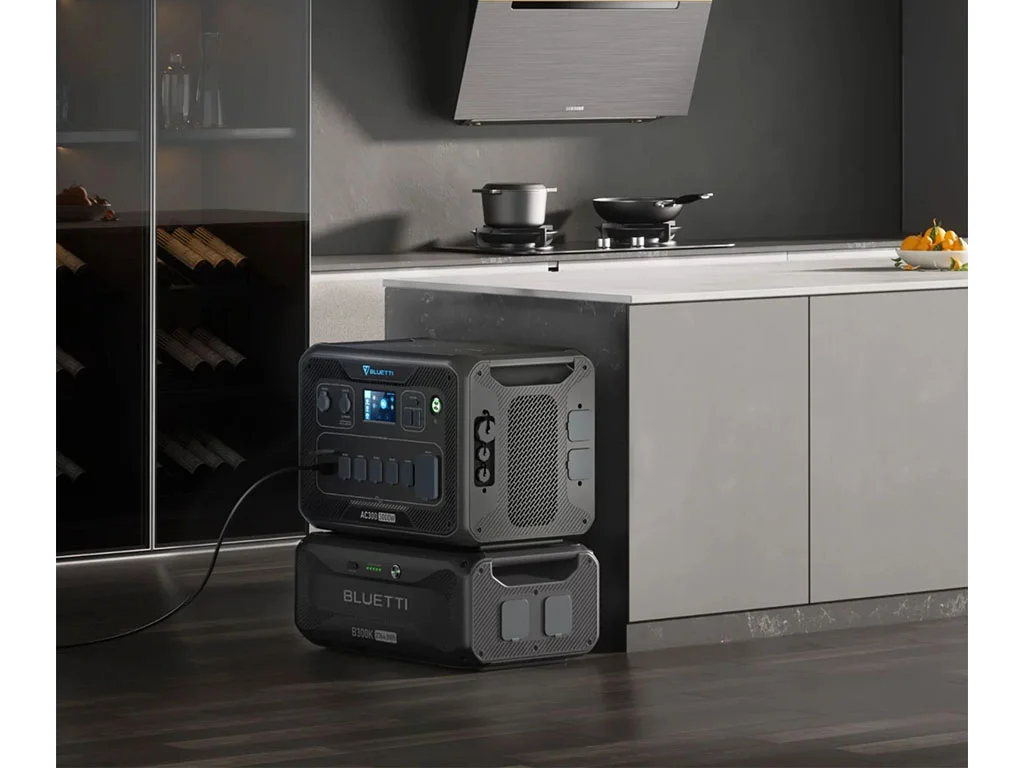
Quick Breakdown: Bluetti Battery Domination
These two brands offer a lot of enticing options. Bluetti and Anker have years of experience and know how to meet your energy needs at home and while on the road. The produce high-quality devices that feature long-lasting batteries and the right amount of connections.
In some ways, these two power stations from Bluetti and Anker are fairly similar. The battery capacity and inverter ratings are in the same ballpark, along with price. They both have high-amp outlets and 20ms UPS functions. You can use them for emergency backup power at home or to bring freedom to your RV adventures.
That’s a short list of the things they have in common. Now it’s time to see where the differences are at. Do you have any idea of what’s ahead?
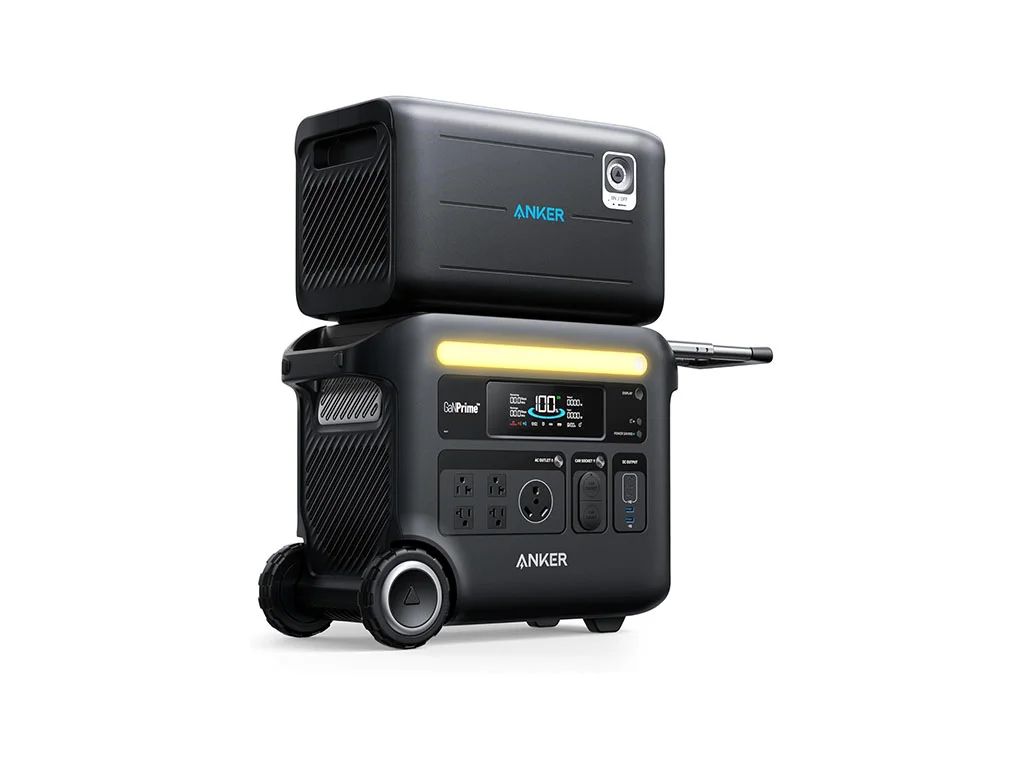
But when push comes to shove, the Bluetti AC300 has much more to offer, such as:
- More power and serious modular expansion potential (up to 22kWh battery vs. 4kWh for Anker)
- Better charging rates and inputs (2.4kW solar input vs 1kW for Anker)
- Superior outputs and connections, including multiple high-amp choices
Even though it’s not as robust as the AC300, the Anker F2600 is not a bad power station. In fact, it has some advantages, including:
- More portable design with integrated 2.6kWh battery
- High-amp AC output and more USB-C ports than the Bluetti
- Longer warranty (5 years vs 2 years for Bluetti)
Price is where things start to get very interesting. To start with, both are an excellent value with super-competitive prices per battery Wh.
And as you’d expect, the MSRP of the superior Bluetti AC300 is higher than the F2600. When you get more stuff you should pay more money, right?
However, the price per Wh is where push comes to shove. That’s how we equalize the pricing between two power stations with different specs. And in this case, the price per Wh is nearly identical. When Bluetti has sales or discounts applied, it can be lower per Wh. You can get a more capable system for less money. In other words, the Bluetti is a better value. Although it might depend on when you buy it.
We recommend the Bluetti AC300 over the Anker Solix F2600. Not only does the Bluetti offer more power and modular expansion that blows the F2600 out of the water, it’s usually a better value too. The Anker F2600 has some attractive features, including an integrated battery and more portable design. Plus Anker offers an extra year of warranty coverage.
If you want an Anker unit with more power, you’ll have to jump up to the Anker F3800. It’s a great option that offers more modular expansion.

|
Bluetti AC300 |
AC300 on Bluetti AC300 on Amazon |
|
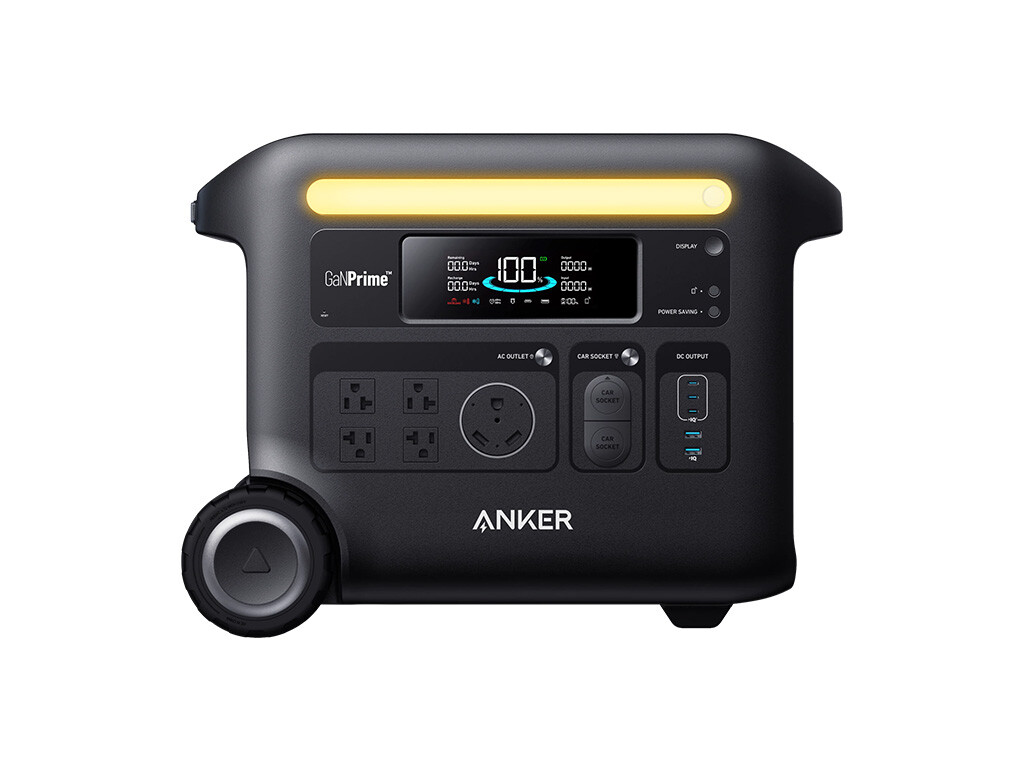
Anker SOLIX F2600 |
F2600 on Anker F2600 on Amazon |
Power Showdown: Bluetti AC300 vs. Anker F2600
What matters most is how these power stations perform in real-world situations. We’ll go through the specs that matter most while translating them into meaningful takeaways. This is the detailed part that provides a very close look at these two power stations as seen through our expert team’s eyes. We also give quick touches on some useful background information, while linking to pages with a more thorough explanation.
Our solar calculators are some of the things that most people will need to use at some point. If you don’t want to go into that today, we recommend bookmarking the pages for later use.
Here’s how we’ll break down this in-depth comparison of these power stations:
- Inverter Power and List of Connections
- Battery Capacity and Longevity
- Charging Inputs and Speeds
- Weight and Dimensions
- Full Spec Charts
- Which Should You Buy? Final Verdict
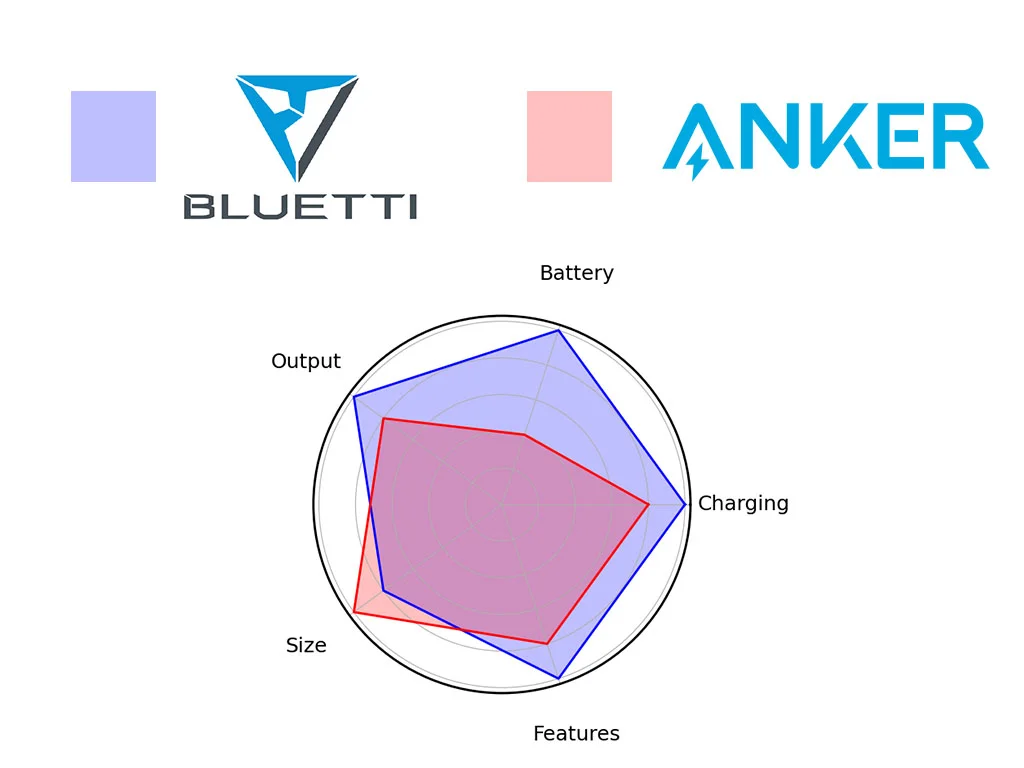
Powering Up: Inverters and Outputs Unleashed
When considering the Bluetti AC300 and Anker F2600, one of the most crucial components is the inverter. This device converts the battery’s DC (direct current) power into AC (alternating current) power, which is what many household appliances need. The power of the inverter determines what kind of devices your power station can run and how many it can handle at once.
For some power stations, the inverter isn’t quite a crucial. When you’re using a compact one camping, you can use a lot of USB devices and the 12V car port. But for these larger units, the inverter is essential. It’s what you need to power almost any home appliance that can’t use USB.
The Bluetti AC300 features a 3,000W inverter with a 6,000W peak, allowing it to easily power everything from small gadgets to large appliances. On the other hand, the Anker F2600 has a 2,400W inverter, suitable for slightly lighter loads but still capable of handling many common devices.
Here are some examples of device wattages to compare to these power stations:
- Low-watt devices: Laptops, WiFi routers, small device chargers (~50-100W each).
- Medium-watt devices: Full-size fridges, TVs, desktop computers, large fans (~200-500W each).
- High-watt devices: Microwaves, coffee makers, space heaters (~1,000-1,500W each).
With a 3,000W inverter, you can run a full-size fridge (~500W) and still power a TV (~200W) and charge multiple laptops without overloading the system. However, running high-watt devices together, like a space heater (~1,500W) and a microwave (~1,000W), can quickly max out the inverter, leaving little room for other devices.
Start thinking about the devices you want to run. Either look at the device for its specific wattage, use the above estimates, or Google the typical wattage. Remember that watt-hours is total energy use over time. For the purposes of the inverter, you’re more worried about maximum watts drawn.
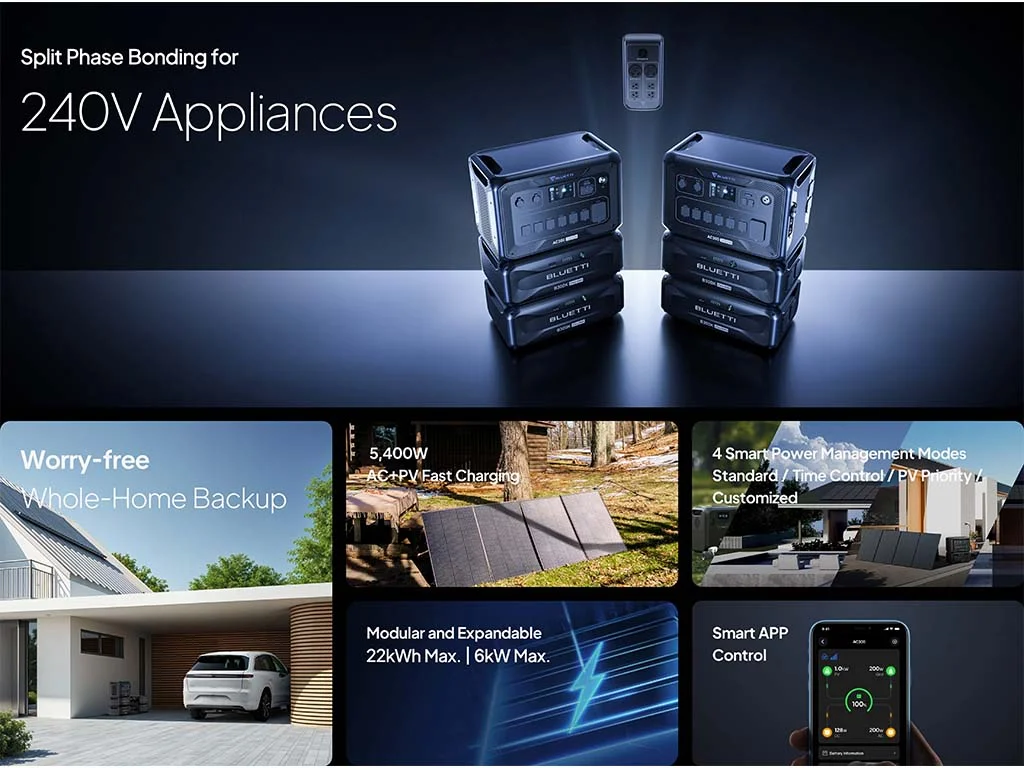
For more power-hungry setups, such as running multiple large appliances simultaneously or backing up a whole home, the Bluetti AC300 has the option to link additional units for more inverter capacity. You can turn the single-unit 3kW into 6kW with two units working together. And you create 240V output. The Anker F2600 lacks this expandability, a major drawback for larger energy needs. This split-phase potential is something our expert team always finds exciting. Being able to double-up power is like a hidden secret that unlocks huge power.
If you’re using this for whole-home backup power, make sure to look into getting a transfer switch and critical loads panel. They can offer a seamless integration with your existing home circuits and main power panel.
Both units come equipped with a range of outlets, allowing you to plug in almost anything:
- Standard AC outlets: Great for larger devices like fridges, TVs, or even power tools.
- High-amp AC outlets: Use to power a home transfer switch or for your RV’s shore power input
- USB ports: Charging phones, tablets, and small electronics. The Anker F2600 features two more USB-C ports while the Bluetti AC300 has two more USB-A ports and two wireless charging pads.
As you can see, these are similar overall with the outputs. Bluetti’s wireless charging pads are a nice touch. The AC300 also has a 30-amp Anderson DC port, perfect for powering a DC fuse box.
The Bluetti AC300 and Anker F2600 also include UPS function with fast transfer times of 20 milliseconds or less. You won’t notice a blink during a switch from grid to battery power, a seamless backup system for your most critical devices like computers or medical equipment.
To be clear, the UPS is not what’s used all the time to provide backup power. It’s a specific function that only happens with some of the outlets on the power station. And it’s designed for very fast switchover, so that you can have things like your computer, a server rack, or a medical device powered up all the time. The grid outlet on one side and your essential device on the other. Most of the time, the power station just sends power through. But when the grid fails, it rapidly switches to battery. That’s the UPS.
Output Verdict: The Bluetti AC300 takes the inverter category easily with a higher single-unit inverter rating and the ability to double output power with a second unit. It throws in two wireless charging pads and a high-amp DC connection as well. The Anker F2600 brings a slightly smaller inverter – which is still quite capable – but it lacks any expansion. Its main advantage is that it has two USB-C ports while the AC300 only has one.
| Product | BLUETTI AC300 | Anker Solix F2600 |
|---|---|---|
| AC Output | 3,000W | 2,400W |
| AC Output (System Max) | 6,000W | 2,400W |
| 120V Outlets | 7 total (6x20A; 1x30A) | 4x20A, 1x30A |
| UPS / EPS | 20ms | 20ms |
| USB-A Ports | 2x15W; 2x18W | 2x12W |
| USB-C Ports | 1x100W | 3x100W |
| Other DC (Anderson or other) | 30A | – |
| Cigarette Lighter | 1x240W | 2x120W |
| Wireless Charging Pad | 2x15W | – |
| Connectivity | WiFi / Bluetooth | WiFi / Bluetooth |
Powering the Future: Battery Capacity and Lifespan
Battery capacity is one of the key factors that determine how long your power station can keep things running. Measured in watt-hours (Wh), this spec gives you a real sense of what each device can handle. However, real-world use introduces some inefficiencies – around 20% – due to factors like wire resistance, heat loss, and inverter performance.
With the 2,765Wh capacity of the Bluetti AC300, you can power a 60W laptop for about 36 hours. The Anker F2600 has slightly less battery capacity at 2,560Wh, taking off a couple hours of that laptop’s runtime.
Most of the time you’ll be running more devices with power stations of this size. Perhaps it’s a camping trip with multiple phones, a portable fridge, some lights, and other portable electronics. This may average around 150W of continuous power. And both power stations will last about 14 hours.
If you are using it for home power and have a full-size fridge, television, WiFi router/modem, some lights, and a handful of phones or tablets, then you’re probably looking at closer to 600W continuous power. The runtime from these two is about 3.5 hours.
But that’s not the end of the story. You can add extra battery units to make these last MUCH longer.
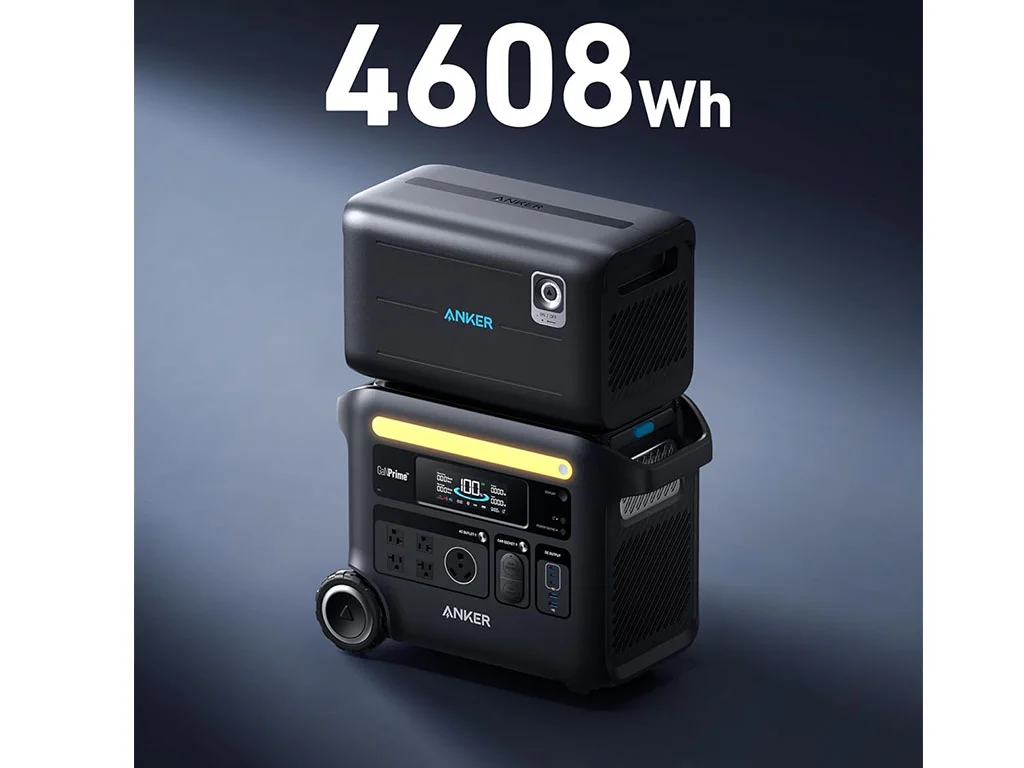
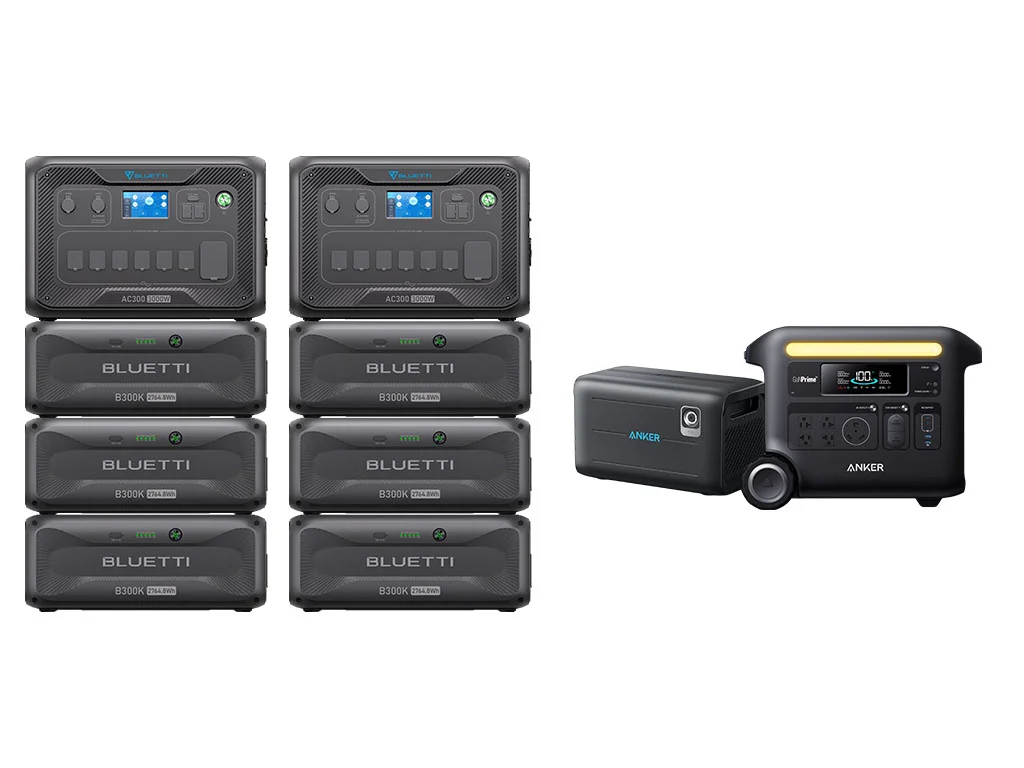
And this is where the Bluetti truly separates itself from this Anker power station. With the Anker unit, you can add one extra battery that doesn’t even double the capacity (4.6kWh total). Yet the Bluetti AC300 can take four B300K battery units for each AC300. That’s 11kWh per AC300. If you connect two AC300 units together, you can reach 22.2kWh maximum battery capacity.
At that level of battery capacity, you can run that 600W of whole-home backup power for nearly 30 hours! Without any charging. Anker’s max reaches about 6 hours. It’s not even remotely close.
This is one of the MOST important differences here. Even if you aren’t planning on it now, being able to add more batteries down the line will help your investment be a solid one for years to come. We HIGHLY recommend going with the Bluetti if you think there’s any chance your power needs will grow. Would you rather spend your money on a system that will work 5 years down the line? Or do you want to start all over and have to get a bigger Anker? The choice is clear. If not, at least consider a bigger Anker system that also offer modular expansion.
These products use advanced LiFePO4 (LFP) batteries. They can be fully charged and discharged 3,000 times before their capacity begins to noticeably degrade. That’s about 8 years of daily use before performance starts to dip. They’re long-term investments backed by extensive warranty coverage of Bluetti’s 4-year warranty and Anker’s 5-year warranty.
Battery Verdict: While the single-unit battery is very similar, the Bluetti AC300 offers magnitudes more of battery expansion with extra units. It’s a system that can grow over time, matching your needs and your budget. The Anker F2600 is still an excellent choice for those who need reliable, portable power for shorter stints.
| Product | BLUETTI AC300 | Anker Solix F2600 |
|---|---|---|
| Battery | 2,765Wh | 2,560Wh |
| Battery (System Max) | 22,118Wh | 4,608Wh |
| Warranty | 4 years | 5 years |
| Battery Type | LiFePO4 / LFP | LiFePO4 / LFP |
| Battery Cycles | >3,000 | >3,000 |
| Buy Now | Buy AC300 | Buy F2600 |
| Buy on Amazon | AC300 on Amazon | F2600 on Amazon |

Charging Speeds and Input Options
Whether you’re recharging from the grid, solar panels, or even a vehicle, the faster your power station charges, the quicker you’re back in business.
You might think that as long as you connect the same amount of solar or the same amount of power from any source, either power station will charge based on that. But you’d be mistaken. Each power station has build-in charge controllers. These take the power from an outside source and send it to the battery. And these little gatekeepers make a big difference in charging speed. They also tell you things like the maximum voltage of the solar panels you can connect and more of the crucial tiny details.
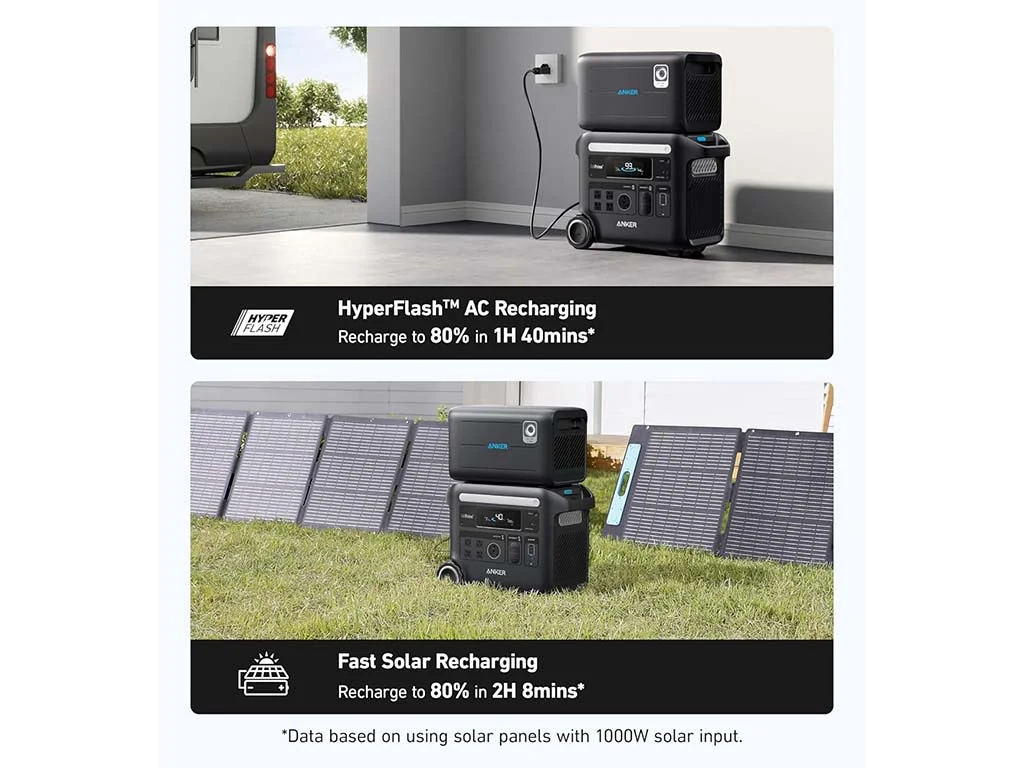
The Bluetti AC300 supports up to 3,000W of AC input, allowing it to fully recharge in just 1.2 hours from a high-amp or high-voltage outlet. Its solar input is equally impressive with up to 2,400W of power for a full charge in about 1.5 hours under optimal conditions. We also love this Bluetti’s high voltage limits on the solar inputs, making it much easier to maximize the solar charging without damaging the power station.
The Anker F2600 beats many options from other brands and at other power levels. But it has slower changing across the board when compared to the Bluetti AC300. 1,440W AC input is about half the Bluetti’s but the Anker will still charge in about 2 hours. Its solar input maxes out at 1,000W (about 3 hours of peak sunlight).
Really, both of these are fairly solid. But when you consider adding extra batteries to the Bluetti, that faster solar comes into play. That’s why this charging speed is so crucial. If you’re only planning on one battery and more limited solar (1,000W or less), then it doesn’t matter much. Then you’re looking at a more level playing field.
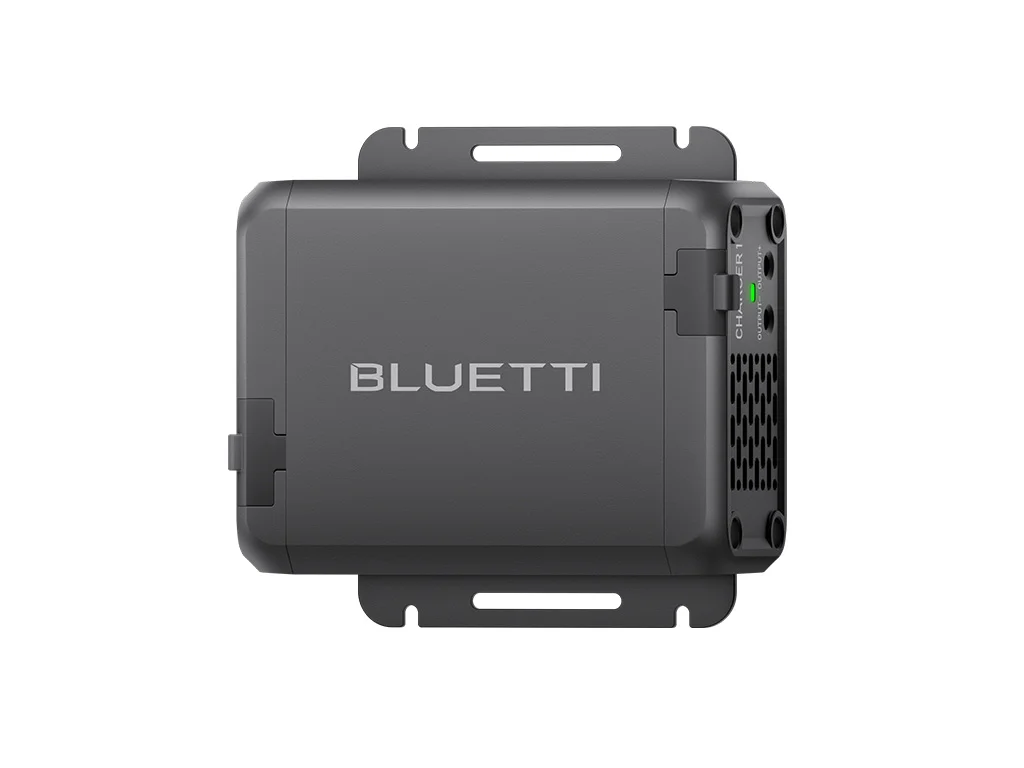
On top of that, Bluetti also has the advantaged Bluetti Alternator Charger 1. This turns any vehicle into a 560W power source for the Bluetti. You can even use this with the Anker since Bluetti designed this to leverage a universal MC4 output as seen on many solar panels. It also has adjustable voltage.
Charging Verdict: The Bluetti AC300 has faster AC and solar charging speeds by a wide margin, as well as adequately high voltage limits for the solar inputs. There’s nothing wrong with the Anker F2600’s inputs, especially since the battery expansion is so much more limited. But it isn’t in the same category as this Bluetti.
|
BLUETTI Alternator Charger 1 |
Charger on Bluetti |
| Product | BLUETTI AC300 | Anker Solix F2600 |
|---|---|---|
| AC Input | 3,000W | 1,440W |
| AC Recharge Hours (Est.) | 1.1h | 2.1h |
| Solar Input | 2,400W | 1,000W |
| Solar Recharge Hours (Est.) | 1.4h | 3.1h |
| Solar Input (System Max) | 4,800W | 1,000W |
| Solar Input 1 Watts | 1200W | 1000W |
| Solar Input 1 Volts Min | 12V | 11V |
| Solar Input 1 Volts Max | 150V | 60V |
| Solar Input 1 Amps | 12A | 20A |
| Solar Input 2 Watts | 1200W | – |
| Solar Input 2 Volts Min | 12V | – |
| Solar Input 2 Volts Max | 150V | – |
| Solar Input 2 Amps | 12A | – |
Size and Portability: Weight and Dimensions
Whether you’re hitting the open road or getting ready for a big storm headed to your home, portability matters. The size and weight impacts how easy it is to move, set up, and store in different scenarios.
You might be surprised to learn that some power stations in this category hit the scale at over 100 lbs (45 kg). These batteries alone are very heavy. When you add in all of the inverter, connections, chargers, and other safety features, it adds up quickly.
Thankfully, these two are not like that.
Here is one place where it might look like Anker isn’t better at first glance. It is heavier, after all. But that’s only because it includes the integrated battery pack. The Bluetti AC300 requires an external battery, which adds weight and bulk, making it less portable. The Anker is one sleek unit, ready to go anywhere.
Portability Verdict: The Anker F2600 wins in portability thanks to its all-in-one design, making it easier to transport and use for mobile setups like RVs or camping. The Bluetti AC300 is bulkier and less ideal for frequent movement, but its modular design is still very nice for keeping weight down so you can move it around easier.
| Product | BLUETTI AC300 | Anker Solix F2600 |
|---|---|---|
| Weight (lbs) | 47.6lbs | 69.7lbs |
| Weight (kg) | 21.6kg | 31.6kg |
| Dimensions (in) | 20.5×12.5×14.1in | 20.7×15.5×9.8in |
| Dimensions (mm) | 520x320x358mm | 525x395x250mm |
Specs Comparison Chart
Here is a full spec comparison chart for these Bluetti and Anker power stations:
| Product | BLUETTI AC300 | Anker Solix F2600 |
|---|---|---|
| Battery | 2,765Wh | 2,560Wh |
| Battery (System Max) | 22,118Wh | 4,608Wh |
| AC Output | 3,000W | 2,400W |
| AC Output (System Max) | 6,000W | 2,400W |
| AC Input | 3,000W | 1,440W |
| AC Recharge Hours (Est.) | 1.1h | 2.1h |
| Solar Input | 2,400W | 1,000W |
| Solar Recharge Hours (Est.) | 1.4h | 3.1h |
| Solar Input (System Max) | 4,800W | 1,000W |
| Warranty | 4 years | 5 years |
| Weight (lbs) | 47.6lbs | 69.7lbs |
| Weight (kg) | 21.6kg | 31.6kg |
| Dimensions (in) | 20.5×12.5×14.1in | 20.7×15.5×9.8in |
| Dimensions (mm) | 520x320x358mm | 525x395x250mm |
| Solar Input 1 Watts | 1200W | 1000W |
| Solar Input 1 Volts Min | 12V | 11V |
| Solar Input 1 Volts Max | 150V | 60V |
| Solar Input 1 Amps | 12A | 20A |
| Solar Input 2 Watts | 1200W | – |
| Solar Input 2 Volts Min | 12V | – |
| Solar Input 2 Volts Max | 150V | – |
| Solar Input 2 Amps | 12A | – |
| Battery Type | LiFePO4 / LFP | LiFePO4 / LFP |
| Battery Cycles | >3,000 | >3,000 |
| 120V Outlets | 7 total (6x20A; 1x30A) | 4x20A, 1x30A |
| 240V Outlets | – | – |
| UPS / EPS | 20ms | 20ms |
| USB-A Ports | 2x15W; 2x18W | 2x12W |
| USB-C Ports | 1x100W | 3x100W |
| Other DC (Anderson or other) | 30A | – |
| Cigarette Lighter | 1x240W | 2x120W |
| Wireless Charging Pad | 2x15W | – |
| Connectivity | WiFi / Bluetooth | WiFi / Bluetooth |
| User Manual | User Manual | User Manual |
| Buy Now | Buy AC300 | Buy F2600 |
| Buy on Amazon | AC300 on Amazon | F2600 on Amazon |
Final Verdict: Our Recommendation
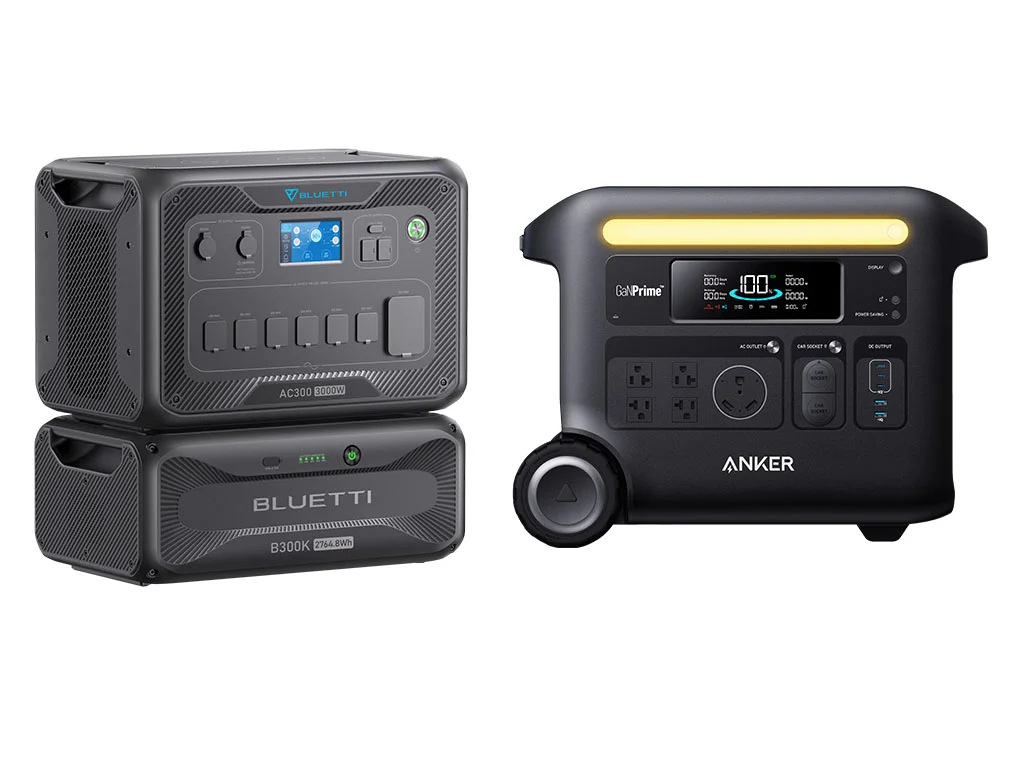
After weighing the Bluetti AC300 against the Anker F2600, there’s an undisputed champ to take the title. The Bluetti AC300 hits hard with a higher inverter rating, larger expandable battery capacity, and faster charging speeds. It throws in a high-amp DC output and wireless charging pads as the cherry on top.
The Anker F2600 offers an integrated design with better portability. Our favorite advantage for it is the longer warranty. But we do also like the extra USB-C port.
| Bluetti AC300 | Jackery 2000 Plus |
|---|---|
Key Takeaways:
- Inverter: Bluetti’s 3,000W beats Anker’s 2,400W for heavy-duty tasks. And you can double the Bluetti with a second AC300 unit.
- Battery: Bluetti offers substantially more expandable capacity, while Anker is simpler but smaller.
- Charging: Bluetti charges faster with higher AC and solar input.
- Portability: Anker’s single-unit design is more portable.
- Price: Since they are usually around the same per Wh price, the Bluetti’s superior features make it the better value.
Final Recommendation: The Bluetti AC300 takes our top pick in this power station comparison, and it’s by a wider margin than many of our matchups. The modular expansion offered by Bluetti just isn’t matched. The Anker F2600 is better for users who value portability and simplicity in a more mobile setting. If you need more power from Anker, you’ll need to climb the ladder up to the F3800, which is more comparable to the Bluetti AC500.
|
|
Bluetti AC300 |
AC300 on Bluetti AC300 on Amazon |
|
|
Anker SOLIX F2600 |
F2600 on Anker F2600 on Amazon |
Final Wrap Up
The Bluetti AC300 stands tall with its higher power output, faster charging speeds, and expandable battery capacity. The Anker F2600 delivers better portability with its all-in-one design and still includes a capable inverter and decent battery. Unfortunately for Anker, it’s just not a close matchup when put head-to-head against the AC300.
Looking for more detailed insights? Be sure to check out our Bluetti AC300 review and our Anker Comparison Chart. Or head over to another popular comparison article:
Empower your next outage or adventure with the right power station. Get it now and confidently watch your lights stay on as the neighborhood goes dark.


