
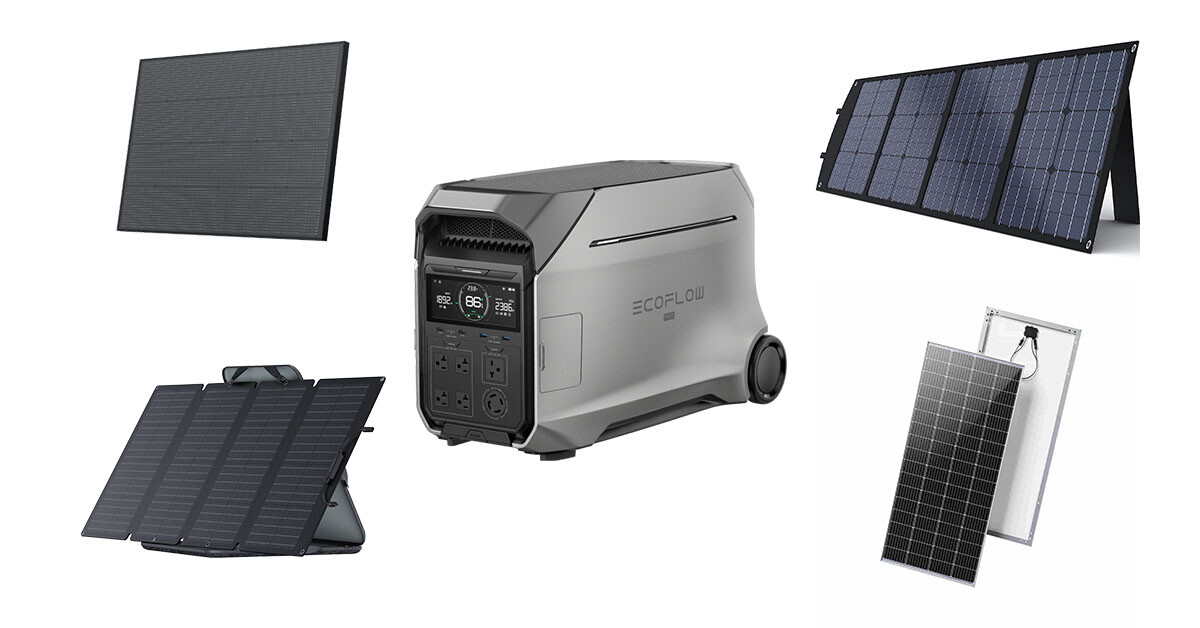
Once you have your eyes set on the EcoFlow Delta Pro 3, the next step is figuring out which solar panels to get. The things to consider when looking for the best solar panels for the Delta Pro 3 are:
- How many solar panels can the Delta Pro 3 safely handle?
- What compatible solar panels are the best fit and a good value?
- How to connect any solar panels to the DP3?
This guide carefully walks you through these steps so you can confidently get the right solar panels for your new EcoFlow Delta Pro 3 power station.
We carefully select the products and services we link to. If you buy through our links, we may earn a commission. There’s no extra cost to you and it helps us provide this information.
Disclaimer: Connecting solar panels should always be done with care. This guide is for educational purposes. All systems are unique and should be carefully reviewed before connecting.
EcoFlow Delta Pro 3: Solar Input Specifications
Every power station has limits to how much solar power it can accept. To avoid damaging the unit and creating a potential dangerous situation, it’s critical to understand this limit and stay within it.
The Delta Pro 3 solar input specifications are:
- 2,600W total, spread across two inputs connections
- High-PV Input: 1,600W at 30V-150V and 15A (XT-60 adapter)
- Low-PV Input: 1,000W at 11V-60V and 20A (XT-60i adapter)
You may be familiar with the wattage ratings. But the voltage and amperage ratings are the fine details that matter most. And here’s how those are all related:
- Watts = Volts x Amps
You never want to exceed the maximum voltage for either input. For the EcoFlow Delta Pro 3, that’s 150V for the high-PV and 60V for the low-PV. These are critical limits. The Voc of the panels, the number of series connections, and the temperature all influence the voltage.
The amperage limits are more flexible as amps are pulled into the unit (while voltage is pushed). Some experts say that you can go as far over this limit as you want. Others say 1.5x (150%) is a reasonable limit. The EcoFlow Delta Pro 3 User Manual states:
- “Ensure the total solar current (Imp) is CLOSE TO the maximum input current (Imax) of the PV input port.”
The limits for the DP3 are 15A for high-PV and 20A for low-PV. The panels ratings and the number of parallel connections have the most impact on the current (amperage).
To get this right, you’ll need to follow the appropriate amount of series vs. parallel connections. We provide this information for each solar panel we recommend. Series connections are panels connected together from the negative terminal of one panel to the positive terminal of another. Parallel connections use special splitters adapters to join multiple positive or negative terminals. The end of this article has a more thorough explanation.
These details can be hard to understand. Feel free to forget about it all. We’ve done the work and figured out what panels you can use with your EcoFlow Delta Pro 3.
Here’s a table repeating these specs. The “System Max” value is for when you use multiple Delta Pro 3 power stations together (3 units).
| Specification | EcoFlow DELTA Pro 3 |
|---|---|
| Solar Input | 2,600W |
| Solar Input (System Max) | 7,800W |
| Solar Input 1 Watts | 1600W |
| Solar Input 1 Volts Min | 30V |
| Solar Input 1 Volts Max | 150V |
| Solar Input 1 Amps | 15A |
| Solar Input 2 Watts | 1000W |
| Solar Input 2 Volts Min | 11V |
| Solar Input 2 Volts Max | 60V |
| Solar Input 2 Amps | 20A |
| User Manual | User Manual |
| Buy Now | Buy Now |
| Buy on Amazon | Buy on Amazon |
Delta Pro 3: Best Solar Panels
There is a wide world of Delta Pro 3 compatible solar panels. As long as you stay within the input limits and finish off the end with the appropriate XT-60 or XT-60i connector, you can use any solar panel you want.
We’ve carefully curated this list of the best solar panels for this power station. We separate it into categories that include both rigid and portable EcoFlow solar panels, as well as solar panels from other brands.
Here is a summary of our top overall options (click to jump down to details):
- EcoFlow 175W Rigid Solar Panels
- EcoFlow 220W NextGen Bifacial Portable Solar Panels
- Renogy 200W Solar Panel (Portable or Rigid)
You can also choose larger 400W panels. These can be a little difficult to line up with the DP3’s input specifications, but larger panels are great for reducing clutter while still producing a lot of energy.

|
EcoFlow 175W Rigid Solar Panel |
Buy on EcoFlow Buy on Amazon |

|
EcoFlow NextGen 220W Bifacial Portable Solar Panel |
Buy on EcoFlow |

|
Renogy 200W Solar Panel |
Buy on Renogy Buy on Amazon |
EcoFlow Fixed Solar Panels
Pairing the Delta Pro 3 with matching EcoFlow panels makes things very easy. All warranty and customer service under one roof, from a brand that knows what they’re doing.
It’s best to go with fixed or rigid panels over portable ones. They are built to last a lot longer and generally have higher reliability. You can mount rigid ones on movable structures to get the best of both worlds.
Our picks for the best fixed EcoFlow Solar Panels are:
- EcoFlow 175W Rigid Solar Panels
- EcoFlow 400W Rigid Solar Panels
- EcoFlow 100W Flexible Solar Panels
EcoFlow 175W Rigid Solar Panels
Our top overall pick as the best solar panels for the EcoFlow Delta Pro 3 are the EcoFlow 175W Rigid Solar Panels. These panels fit the Delta Pro 3’s inputs very well and offer a truly-impressive 25% efficiency using TOPcon solar cells.
These are quite literally some of the best solar panels in the world at that 25% rate. Most consumer panels are between 21% to 23%.
They are designed to last more than 30 years. EcoFlow includes 5-year warranty coverage to make sure they don’t fail too early. There’s a very good chance they’ll even outlast the EcoFlow Delta Pro 3 with its long-lasting expected battery life of 80% for 4,000 cycles.
Not only are these downright incredible panels, they also match the DP3’s inputs extremely well. And this is a critical aspect to consider when shopping for Delta Pro 3 solar panels.
The specifications for the EcoFlow 175W Rigid Solar Panels include a Voc of 25.5V and short-circuit amperage of 8.3A. Let’s compare these to the Delta Pro 3’s input specs and walk through the safe amount of panels for each:
- High-PV Input: Up to 10 panels (1,750W) configured in 5S2P for anything above about 5F (-15C). For frigid climates, up to 8 panels (1,400W) configured 4S2P. Here’s what 4S2P that looks like:

- Low-PV Input: Up to 4 panels (700W) configured 2S2P for anything above about 5F (-15C). For frigid climates, up to 2 panels (350W) configured 1S2P. Here is what 2S2P looks like:

If you use 14 of these 175W EcoFlow Solar Panels, that’s 2,450W of potential power coming off the solar panels. This is nearly the maximum for both Delta Pro 3 solar inputs.
For those that want to use EcoFlow rigid panels and maximize the Dela Pro 3 solar inputs, the 175W EcoFlow Rigid Panels are a great choice. You can use anywhere from 1 to 14 panels (or more if you want to overpanel).
|
|
EcoFlow 175W Rigid Solar Panel |
Buy on EcoFlow Buy on Amazon |
| Specification | EcoFlow 175W Rigid Solar Panel |
| Solar Output | 175W |
| Open Circuit Voltage (Voc) | 25.5V |
| Short Circuit Amperage | 8.3A |
| Operating Voltage | 21.9V |
| Operating Amperage | 8A |
| Temp Coefficient Voc | -0.25% |
| Weight | 20.5lbs 9.3kg |
| Dimensions | 46.3x30x1.2in 1176x762x30mm |
| Buy Link | Buy on EcoFlow |
| User Manual | EcoFlow 175W User Manual |
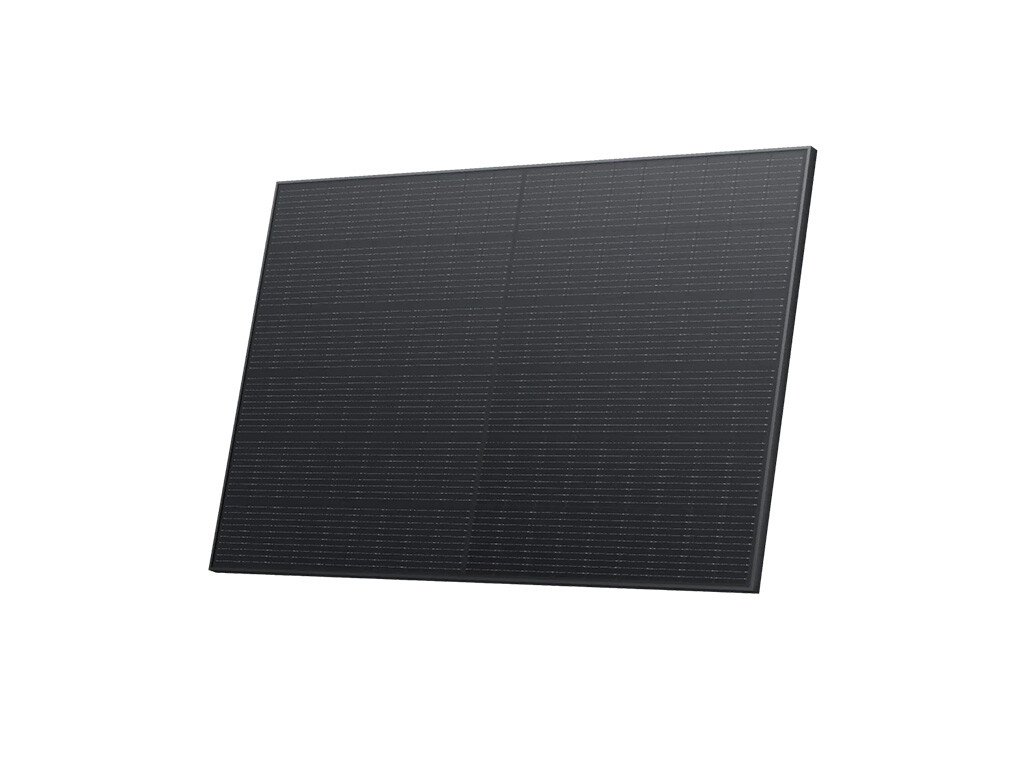
EcoFlow 400W Rigid Solar Panels
Another excellent choice of solar panels for the EcoFlow Delta Pro 3 are the 400W EcoFlow Rigid Panels. What we like most about EcoFlow’s largest rigid solar panels are:
- Impeccable design and reputation
- Less hassle and fewer connection points
- Powerful panels ready to deliver big energy
You’ll struggle to find a better solar panel than this massive 400W option from EcoFlow. This panel is rated at 23% efficiency, still one of the top performing panels around.
When it comes to warranty coverage, this is another standout area for the 400W EcoFlow panel. It includes an impressive 10-year warranty. It’s the longest out of any offered by EcoFlow, designed to match the lifetime of all of the LiFePO4 power stations (including the Delta Pro 3).
There are some downsides to this solar panel:
- A single 400W panel is large, weighing 48.1lbs (21.8kg)
- The safe amount of series connections is less than ideal for the Delta Pro 3
The largest downside is the series connection restrictions. The overall result is that you can’t maximize the solar charging. Our recommendation is up to 3 panels in series for the high-PV and only 1 panel for the low-PV, generating a total of 1,600W.
The 400W panels have a Voc rating of 37.1V. You can go over the Delta Pro 3’s high-PV limit of 150V with 4 in series at any temperature lower than 77F (25C). So 3 panels in series is the max for most people. Connected 3 panels in series looks like this:

The low-PV input has a maximum voltage of 60V, so you cannot connect 2 in series at all. We recommend just one 400W EcoFlow Panel to the low-PV input, generating 400W.
Some may consider adding more panels with parallel connections, which will result in overpaneling (expected current above that allowed by the DP3). We suggest finding panels that have a better fit for the voltage input instead. Exceeding amperage without using all of the available voltage is not ideal.
Overall, the 400W EcoFlow Rigid Solar Panels are great for people that want 1,200W to 1,600W of solar to the DP3. Connect up to 3 in series to the high-PV input. And if desired, add 1 panel to the low-PV input. It’s a clean install with very few connections that generates a respectable amount of energy.
|
|
EcoFlow 400W Rigid Solar Panel |
Buy on EcoFlow Buy on Amazon |
| Specification | EcoFlow 400W Rigid Solar Panel |
| Solar Output | 400W |
| Open Circuit Voltage (Voc) | 37.1V |
| Short Circuit Amperage | 13.79A |
| Operating Voltage | 31V |
| Operating Amperage | 12.9A |
| Temp Coefficient Voc | -0.35% |
| Weight | 48.1lbs 21.8kg |
| Dimensions | 67.8×44.6×1.38in 1722x1134x35mm |
| Buy Now | Buy on EcoFlow |
| User Manual | EcoFlow 400W User Manual |

EcoFlow 100W Flexible Solar Panels
Our last option for EcoFlow fixed and mountable panels is the EcoFlow 100W Flexible Solar Panel. These are a great fit if you want panels to mount on a curved surface as found on a boat or RV.
What’s best about these solar panels is:
- 23% efficiency is incredible for flexible panel
- 258° flexibility so you can match any curve
- Insanely lightweight at just 5.1lbs (2.3kg) each
The ratings for the EcoFlow 100W flexible solar panels are 100W with a Voc of 20.3V and short-circuit current of 6.3A. These fit the DP3 fairly well, offering up to 1,800W in total without exceeding any input.
For the EcoFlow Delta Pro 3, you can connect this amount of 100W EcoFlow Flexible Solar Panels:
- High-PV Input: Up to 12 panels (1,200W) without overpaneling, using 6S2P connections. If you’re comfortable going with 25% over the DP3’s amps, you can jump up to 18 panels (1,800W) using a 6S3P configuration.
- Low-PV Input: Up to 6 panels (600W) without overpaneling, using a 2S3P configuration. If you’re comfortable going with 26% over the DP3’s amps, you can use two more panels (800W) using 2S4P.
We recommend these EcoFlow 100W Flexible Solar Panels for those that need flexible panels and are good with up to 18 panels (1,800W). The overpaneling situations aren’t too excessive by most standards, so you can possibly go up to 26 panels (2,600W) if desired.
A 6S3P solar array looks like this:

|
|
EcoFlow 100W Flexible Solar Panel |
Buy on EcoFlow Buy on Amazon |
| Specification | EcoFlow 100W Flexible Solar Panel |
| Solar Output | 100W |
| Open Circuit Voltage (Voc) | 20.3V |
| Short Circuit Amperage | 6.3A |
| Operating Voltage | 17.1V |
| Operating Amperage | 5.9A |
| Temp Coefficient Voc | -0.33% |
| Weight | 5.1lbs 2.3kg |
| Dimensions | 41.5×24.1×1.0in 1055x612x25mm |
| Buy Now | Buy on EcoFlow |
| User Manual | EcoFlow 100W Flexible User Manual |
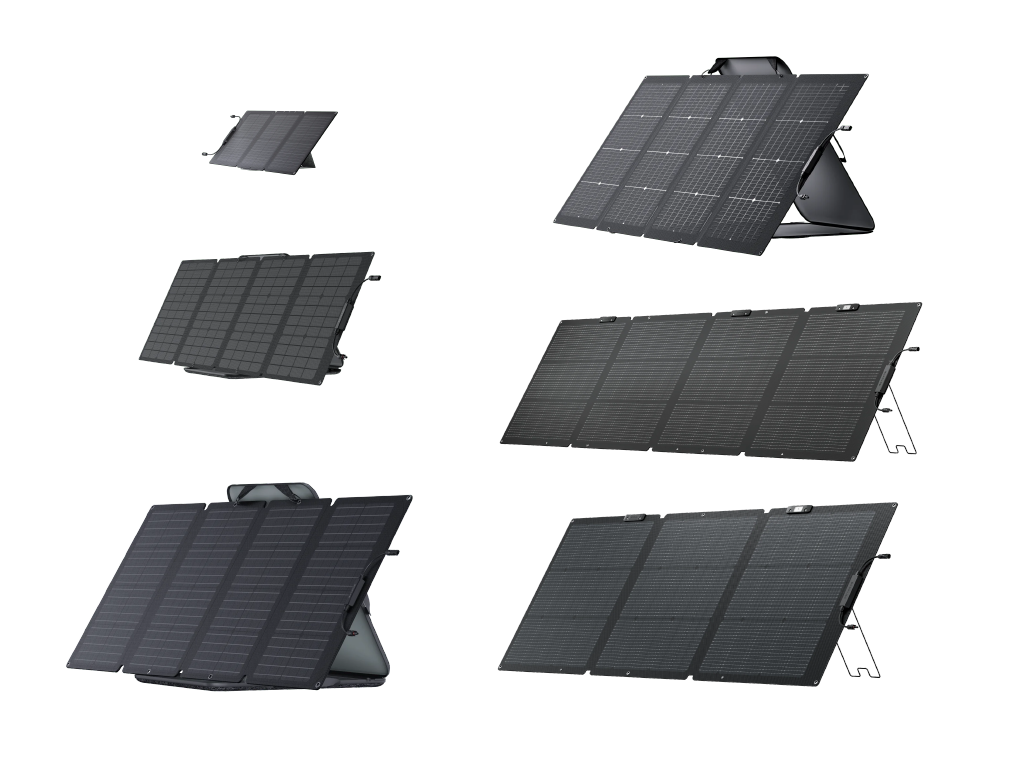
EcoFlow Portable Solar Panels
Portable solar panels are another excellent option to charge the EcoFlow Delta Pro 3. These are best when compact storage size is a priority. EcoFlow’s portable solar panels are some of the best around, especially the NextGen and bifacial options.
Portable panels are not as durable as mountable panels, as shown by the 12-month EcoFlow warranty. If the folding aspect and compact storage is not a necessity, rigid panels are a better investment.
There’s a wide selection of EcoFlow Portable Solar Panels. Our top three for the EcoFlow Delta Pro 3 include:
- EcoFlow 400W NextGen Portable Solar Panels
- EcoFlow 220W NextGen Bifacial Portable Solar Panels
- EcoFlow 160W NextGen Portable Solar Panels

EcoFlow 400W Portable Solar Panels
If you can handle the folded dimensions (41.7×24.4×1.0in / 1058x620x25mm) and the weight (35.3lbs / 16.0kg), the EcoFlow 400W Portable Panels are amazing to dish out max power for your Delta Pro 3 without handling a billion different panels and cables.
In usual EcoFlow standards, these 400W panels have 22.6% efficiency and are made with monocrystalline silicon cells. They have a Voc rating of 48V and a short-circuit current of 11A. And their reputation is excellent, hitting power generation inline with their ratings.
If you are using them in warm weather of at least 60F (15.5C), then you can use 5 of these powerful solar panels to crank out an impressive 2,000W for your Delta Pro 3. That includes:
- High-PV: 3 panels for 1,200W in 3S1P configuration for 60F (15.5C) and up; 2S for cooler temps.
- Low-PV: 2 panels for 800W in 1S2P configuration (slight 20% overpaneling); or 1 panel without any overpaneling. Cannot use 2 in series.
The downside of these panels is that you’ll never quite max out the EcoFlow Delta Pro 3’s solar input. The voltage just doesn’t line up that well. But hitting 2,000W with just 5 panels is a nice place to be – as long as you’re only using it in warm weather.
For many people, 3 of these panels is a great setup. You connect 2 in series to the high-PV port and 1 to the low-PV port. That gives you 1,600W that the Delta Pro 3 can take in every drop of. And it’s just 3 panels to haul around.
We see the EcoFlow 400W Portable Solar Panels as a great solution for those with the adequate storage space for large portable panels because:
- Use fewer panels than other sizes, making setup and takedown much faster
- Can generate a hefty amount of power in a small amount of space
|
|
EcoFlow 400W Portable Solar Panel |
Buy on EcoFlow Buy on Amazon |
| Specification | EcoFlow 400W Portable Solar Panel |
| Solar Output | 400W |
| Open Circuit Voltage (Voc) | 48V |
| Short Circuit Amperage | 11A |
| Operating Voltage | 41V |
| Operating Amperage | 9.8A |
| Temp Coefficient Voc | -0.33% |
| Weight | 35.3lbs 26kg |
| Dimensions Folded | 41.7×24.4×1.0in 1058x620x25mm |
| Dimensions Unfolded | 41.7×93.1×1.0in 1058x2365x25mm |
| Buy Now | Buy on EcoFlow |
| User Manual | EcoFlow 400W Portable User Manual |

EcoFlow 220W NextGen Bifacial Portable Solar Panels
When the 400W portable panels are just too big, the next best option is the 220W Bifacial Solar Panels from EcoFlow. These fit the system very well and offer a more manageable size. You can hit up to 10 panels on the Delta Pro 3, generating up to 2,200W, without exceeding the current or voltage.
The bifacial aspect means that they’ll absorb energy from both sides of the panel. The backside will provide up to 25% more power than a traditional one-sided panel. The more reflective the surface, the closer to this 25% figure you’ll hit. Grass is around 7% boost. Other materials fall somewhere between those two figures.
This design also makes them incredibly small and lightweight. It’s made with one thin piece of tempered glass, about 5 times tougher, half the thickness, and 10% smaller than comparable panels. They also feature a waterproof rating above most others, hitting IP68.
Bottom line: These are some compact and lightweight yet amazing panels.
These EcoFlow portable panels have an integrated stand, making it so you don’t have to fumble with any extra pieces or stands. Just set it out and you’re ready to go.
For the Delta Pro 3, you can use up to 8 panels without any overpaneling. This gives you 1,760W with just the frontside. When you add in the bifacial aspect, it could jump to 2,200W.
Here’s how you can use 8 panels of the 220W NextGen Bifacial EcoFlow Panels with the EcoFlow Delta Pro 3:
- High-PV: Up to 6 panels for 1,320W in series at temperatures above 5F (-15C).
- Low-PV: Up to 2 panels for 440W connected in series
If you feel comfortable overpaneling, you could add two more panels with a parallel connection to the low-PV input. This stays within about 20% of the DP3’s max current input (15A). That would be 10 panels in total.
Overall, the 220W EcoFlow Bifacial Portable Solar Panels are a great choice for those who need to maximize charging in a compact and lightweight unit.
|
|
EcoFlow NextGen 220W Bifacial Portable Solar Panel |
Buy on EcoFlow |
| Specification | EcoFlow NextGen 220W Bifacial Portable Solar Panel |
| Solar Output | 220W |
| Open Circuit Voltage (Voc) | 21.5V |
| Short Circuit Amperage | 12.4A |
| Backside W / A | 175W / 9.9A |
| Operating Voltage | 18.4V |
| Operating Amperage (Front / Back) | 11.9A / 9.5A |
| Temp Coefficient Voc | -0.25% |
| Weight | 15.4lbs 7kg |
| Dimensions Folded | 24.2×23.2×1.3in 615x590x32mm |
| Dimensions Unfolded | 24.2×84.8×1.0in 615x2155x25mm |
| Buy Now | Buy on EcoFlow |
| User Manual | EcoFlow 220W Bifacial User Manual |

EcoFlow 160W NextGen Bifacial Portable Solar Panels
EcoFlow has smaller portable panels, including both 60W and 110W, that can work for those that only need a little solar charging while on the go. But we recommend the 160W EcoFlow Bifacial Portable Panels as the smallest size because the Delta Pro 3 has such a large battery and solar input.
These smaller panels are great for those who aren’t interested in maxing out the unit. They aren’t bifacial, but they still hit very impressive figures all around, including:
- Up to 22% efficiency
- Super lightweight system at just 12.3lbs (5.6kg) each
- Standard 12 month EcoFlow warranty
Are these worth getting for the Delta Pro 3? They might be. While they don’t max out the system and they’re unlikely to recharge the entire battery, a few of these panels still offer significant power.
For example, if you have just 3 of these panels, you can theoretically generate over 450W. Over the course of one sunny day, you’re looking at nearly 2,000Wh of boosted energy. That’s enough to recharge a cell phone about 150 times! Or it can run a home fridge for a day or more.
Here’s the maximum amount of these panels you can run with the EcoFlow Delta Pro 3:
- High-PV: 6 panels connected in series for temperatures above 5F (-15C)
- Low-PV: 4 panels connected with 2S2P configuration
A 2S2P configuration looks like this:
This provides 10 panels for up to 1,600W of solar charging. And it’s without overpaneling, suitable for most weather conditions you’re likely to use portable panels in. If it’s lower than 5F (-15C), take one panel off the high-PV series.
Dealing with more than 10 portable panels sounds like a nightmare. But if you want to do it and you’re comfortable with 20% overpaneling, you could add another string of 6 panels to the high-PV port for 12 panels connected 6S2P. That’s 16 panels in total, for 2,560W.
If you think you’ll want to grow your solar system, consider getting bigger panels. Using two different size panels can be very tricky without seriously limiting the larger panels.
Otherwise, these EcoFlow 160W NextGen Bifacial Solar Panels can be a great portability-first choice.
|
|
EcoFlow NextGen 160W Portable Solar Panel |
Buy on EcoFlow |
| Specification | EcoFlow NextGen 160W Portable Solar Panel |
| Solar Output | 160W |
| Open Circuit Voltage (Voc) | 21.3V |
| Short Circuit Amperage | 9.1A |
| Backside W / A | 125W / 7.1A |
| Operating Voltage | 18.6V |
| Operating Amperage (Front / Back) | 8.6A / 6.7A |
| Temp Coefficient Voc | -0.25% |
| Weight | 11.2lbs 5.1kg |
| Dimensions Folded | 24.2×23.1×1.3in 615x586x32mm |
| Dimensions Unfolded | 24.2×64.1×1.0in 615x1628x25mm |
| Buy Now | Buy on EcoFlow |
| User Manual | EcoFlow 160W Bifacial User Manual |
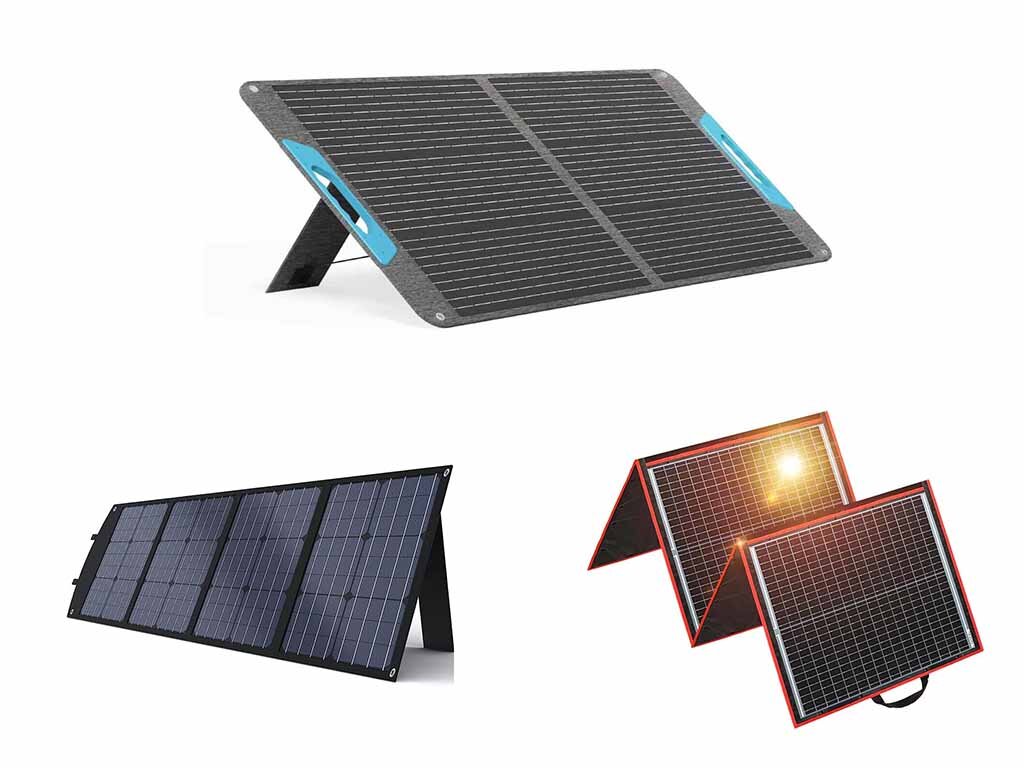
Other Solar Panels for the EcoFlow Delta Pro 3
You do not have to use EcoFlow solar panels with the EcoFlow Delta Pro 3. While the brand makes excellent panels, the price point is a little higher than most competitors. It’s worth checking out the competition.
The way you use any panels with the Delta Pro 3 is by using the same adapters you’d use for the EcoFlow panels. These change the MC4 connectors found on nearly every solar panel under the sun to the XT-60 or XT-60i adapter. We recommend getting this adapter from EcoFlow, but these are available online.
Here are out top choices of non-EcoFlow panels that are compatible with the Delta Pro 3:
- Renogy 200W Portable Solar Panel
- JJN 200W Bifacial Rigid Solar Panels
- DOKIO 160W Portable Solar Panel
- BALDR 120W Portable Solar Pane
Renogy 200W Solar Panels – Rigid or Portable
When it comes to brands that strike the right balance between price and quality, Renogy regularly appears near the top. And when you want solar panels to use with the EcoFlow Delta Pro 3, the Renogy 200W Solar Panels are a great fit.
These solar panels are available in nearly identical specifications as both rigid mountable panels and portable folding panels. So the choice is yours. The biggest difference is that the portable ones have higher efficiency at 23.5%.
The rigid panels are a little low at 19.2%. But the real-world reports of the rigid are still quite impressive. And Renogy backs them with a 10-year warranty, plus an extra Performance Warranty specifying that they will produce over 80% Output at 25 Years. The rigid panels are built to withstand the test of time.
In either case, here are how many Renogy 200W Solar Panels you can use with a Delta Pro 3:
- High-PV: Up to 5 in series for 1,000W at all temps. If you want to overpanel by about 33% (~20A vs. 15A input), then you can add another full string of 5 panels in a 5S2P configuration, shooting up to 2,000W.
- Low-PV: Up to 4 panels in 2S2P configuration. This is very minimally overpaneled, but provides up to 800W.
We love these panels for those that want around 9 panels and 1,800W. If that’s not enough, going with the high-PV overpaneling can include up to 14 panels (2,800W). Overall, it’s hard to find a better match of solar panels for the EcoFlow Delta Pro 3. And these Renogy panels are simply a great value with an excellent reputation all-around, in both the 200W Renogy Rigid Solar Panels and the 200W Renogy Portable Solar Panels.
A 5S2P configuration looks like this:

|
|
Renogy 200W Solar Panel |
Buy on Renogy Buy on Amazon |

|
Renogy 200W Portable Solar Panel |
Buy on Renogy Buy on Amazon |
| Specification | Renogy 200W Rigid Solar Panel | Renogy 200W Portable Solar Panel |
| Solar Output | 200W | 200W |
| Open Circuit Voltage (Voc) | 23V | 23.4V |
| Short Circuit Amperage | 11.05A | 10.5A |
| Operating Voltage | 19.2V | 20.16V |
| Operating Amperage | 10.42A | 9.92A |
| Weight | 24.46lbs 12kg | 17.6lbs 8kg |
| Dimensions Folded | N/A | 25.1×21.1×2.2in 635x536x55mm |
| Dimensions Unfolded | 58.7×27.5×1.38in 1491x699x35mm | 94.1×21.1×0.2in 2390x536x4mm |
| Connectors | MC4 | MC4 |
| Buy Now | Buy on Renogy | Buy on Renogy |
| User Manual | Renogy 200W Rigid User Manual | Renogy 200W Portable User Manual |

JJN 200W Bifacial Rigid Solar Panels
Bifacial rigid panels are always a hit. They offer a long-lasting solution that maximizes solar power, especially on reflective surfaces. These JJN 200W Bifacial Rigid Solar Panels are another top choice to use with the Delta Pro 3.
The best thing about these JJN 200W Bifacial Rigid Solar Panels is that you get two 200W panels (400W total) for a steal of a price. They use 10BB solar cells and can withstand brutal conditions. And they hit over 22% efficiency with a stellar reputation and excellent customer satisfaction.
These are all around excellent panels for those looking outside of EcoFlow.
The bifacial capability can increase energy production by up to 20%. So each 200W solar panel can theoretically generate up to 240W. As always, real world figures of the panels will be a little lower. But you can always expect a little boost from the backside of these panels.
The only catch to these panels is that they’re a little tough to maximize the low-PV input since the Voc is just about half the max voltage. Unless you’re always in warm weather, this can quickly exceed the 60V maximum with the Voc rating of these panels at 28.1V. The short-circuit amperage is 9.12A.
What these can do extremely well is generate 1,200W without going over either input, or boosting up to 2,000W with about 21% overpaneling on the high-PV side. Here are the details for how these panels are compatible with the Delta Pro 3:
- High-PV: Up to 4S at nearly any temperature. Can add another string in parallel (4S2P) if you’re alright with a little overpaneling. This means up to 1,600W for the high-PV input. If temps are always above 50F (10C), you could consider a fifth panel in each series.
- Low-PV: Unfortunately, most people likely want to stay away from series connections, but you can add 2 in parallel while staying within limits entirely. If your temps are always above 50F (10C) you could consider another in each series.
The JJN 200W Bifacial Rigid Solar Panels are great for those looking for solar panels compatible with the EcoFlow Delta Pro 3 power station.
|
|
JJN 200W Bifacial Rigid Solar Panel |
Buy on Amazon |
| Specification | JJN 200W Bifacial Rigid Solar Panel |
| Solar Output | 200W |
| Open Circuit Voltage (Voc) | 28.1V |
| Short Circuit Amperage | 9.12A |
| Operating Voltage | 23.4V |
| Operating Amperage | 8.55A |
| Weight | 24.9lbs 11.3kg |
| Dimensions Unfolded | 53.7×30.3×1.4in 1364x770x36mm |
| Buy Now | Buy on Amazon |

DOKIO 160W Portable Solar Panels
When it comes to portable solar panels for the EcoFlow Delta Pro 3, the DOKIO 160W Panels are an excellent choice. Although this is not as well-known of a brand, there is a significant track-record behind these panels. They’re also a great value.
The DOKIO 160W Portable Solar Panels have a Voc rating of 20.5V and a short-circuit current of 9.14A. Once again, these fit the DP3 inputs just about as well as you can.
Another benefit of these panels is that they come with an XT-60 adapter. They also come with a small charge controller, which means you can use these for other batteries. You don’t need the charge controller for use with the DP3 because it has one built in. But this can be very nice to use with other systems or to use with something like your car battery.
The downside is that they’re portable panels that aren’t the most durable. They also don’t get up to the rated output as well as other higher-quality brands. These are a value option.
With 10 of these panels, you can produce up to 1,600W without any overpaneling. For a lot of people, this is going to be more than enough. But if you want, you can overpanel on the high-PV input by about 21% and then use up to 16 panels, hitting very close to the Delta Pro 3’s max 2,600W solar input.
Here’s the way to use these panels with the DP3:
- High-PV: Up to 6 panels connected in series (960W) to stay within the amp limit. If you want to overpanel by as much as 21%, you could connect 12 panels in 6S2P configuration for 1,920W.
- Low-PV: Up to 4 panels connected in 2S2P configuration (640W).
If you’re looking for more affordable portable panels, the DOKIO 160W Solar Panels can work very well with your DP3.
|
|
DOKIO 160W Portable Solar Panel |
Buy on Amazon |
| Specification | DOKIO 160W Portable Solar Panel |
| Solar Output | 160W |
| Open Circuit Voltage (Voc) | 20.5V |
| Short Circuit Amperage | 9.14A |
| Operating Voltage | 18V |
| Operating Amperage | 8.89A |
| Weight | 7.28lbs 3.3kg |
| Dimensions Unfolded | 69×20.9×1.1in 1750x530x28mm |
| Buy Now | Buy on Amazon |

BALDR 120W Portable Solar Panels
Another solid choice for solar panels compatible with the Delta Pro 3 are the BALDR 120W Portable Solar Panels. While these actually can get very close to maximizing the DP3 solar input, we see these as a good solution for those that want a little solar power every now and then – not a constant and powerful source.
What we like about these panels is:
- Hard to beat price point, which comes with many adapters including XT-60
- Plenty of satisfied customers
- Lightweight portable panel easy to deploy anywhere
The downside of these panels is that you’re also paying for the charge controller you don’t need (just like the DOKIO option) and their 120W rating might be a little higher than what you should expect. Unfortunately, this is a fairly common occurrence with solar panels from less-reputable companies, and a good reason to stick with brands like EcoFlow or Renogy.
Nonetheless, these aren’t a bad option for those that want a little burst of solar power while on the go. Or if you’re just getting started.
For the EcoFlow Delta Pro 3, you can connect:
- High-PV: Up to 12 panels (1,440W) with 6S2P configuration without overpaneling.
- Low-PV: Up to 6 panels (720W) with 2S3P configuration without overpaneling.
We don’t really imagine anyone using 18 of these panels with the DP3 as that sounds like one hell of a headache to manage that many portable panels. This is more to confirm what the max panels in series are for safety reasons.
But for those with minimal solar needs, these BALDR 120W Portable Solar Panels could do the trick.
|
|
BALDR 120W Portable Solar Panel |
Buy on Amazon |
| Specification | BALDR 120W Portable Solar Panel |
| Solar Output | 120W |
| Open Circuit Voltage (Voc) | 22V |
| Short Circuit Amperage | 6.6A |
| Operating Voltage | 18V |
| Operating Amperage | 6.6A |
| Weight | 10.25lbs 4.65kg |
| Dimensions Unfolded | 65.4×20.5×1.0in 1660x520x25mm |
| Buy Now | Buy on Amazon |

More Non-EcoFlow Solar Panel Options
Without going into too much detail, here are three other recommendations for solar panels to use with the Delta Pro 3, without exceeding the input rating in voltage or amperage:
- Renogy 400W Portable Solar Panel (Voc = 42.3V; Short-circuit Current: 11.8A):
- High-PV: 3 series down to 0F (-18C)
- Low-PV: 1 series (any temp)
- Renogy 150W CIGS Flexible Solar Panel (Voc = 23.75V; Short-circuit Current: 9.34A)
- Great for partial shade
- High-PV: 5S1P for 750W
- Low-PV: 2S2P for 600W

How to Connect Solar Panels to the Delta Pro 3
Connecting solar panels to the EcoFlow Delta Pro 3 is straightforward but requires attention to detail to ensure optimal performance. The Delta Pro 3 has two solar input ports: a high-PV input and a low-PV input, each with its own specifications. Using the correct connectors is crucial to maximizing your solar charging capabilities.
For the high-PV input, you’ll use the XT-60 connector. This input can handle up to 1,600W, with a voltage range of 30V-150V and a maximum current of 15A. When connecting solar panels:
- Ensure the total voltage of your series connection stays within the 30V-150V range.
- Use the XT-60 connector to link your solar panels to the high-PV input.
The low-PV input requires an XT-60i connector, which can handle up to 1,000W, with a voltage range of 11V-60V and a maximum current of 20A. This connector is necessary because the Delta Pro 3 uses it to differentiate between solar panel input and car charging. Without the XT-60i, the power station might limit solar charging to a much lower level.
To connect solar panels to the low-PV input:
- Ensure the total voltage of your series connection stays within the 11V-60V range.
- Use the XT-60i connector to link your solar panels to the low-PV input, ensuring the system correctly identifies the source and maximizes charging efficiency.
Get these XT-60/XT-60i adapters straight from EcoFlow to ensure you get high-quality ones that do the job. Or check out other solar adapters online if you’re just getting the High-PV’s XT-60 as that’s not as likely to be a problem.

Series and Parallel Connections
To properly connect your EcoFlow Delta Pro 3 solar panels, you’ll need to understand series vs. parallel connections. You can always head over to our full post on How to Connect Solar Panels: Series vs. Parallel. And you can use our How Many Solar Panels Can You Use calculator, which provides an image matching your configuration.
But let’s do a quick review here. The most important things to know are:
- Series connections: These add the voltages across all panels in the series, but use the amperage equal to one panel (the lowest in the series). Series connections are when you connect the positive terminal of one solar panel to the negative terminal of another, which can be continued down a string of series.
- Parallel connections: These add the amperage across the panels connected in parallel, but use the voltage equal to the one panel (the lowest in the parallel connection). Parallel connections are when you use special splitter adapters to bring a group of positive or negative connections together, such as 2-to-1, 3-to-1, etc.
Here is an example of 3 panels connected in series (the result is voltage equal to 3 times one panel, but amperage equal to just one panel):
And here is how you connect 3 panels in parallel (the result is voltage equal to one panel, but amperage equal to 3 times one panel):

You can do all sort of mixtures between series and parallel connections, which often helps get the most out of each solar input. If you want to do 3 series connections and 3 parallel connections, that would mean 9 panels come together in this configuration (3S3P). The output would be equal to the single-panel voltage times 3 and the single-panel amperage times 3. It looks like this:
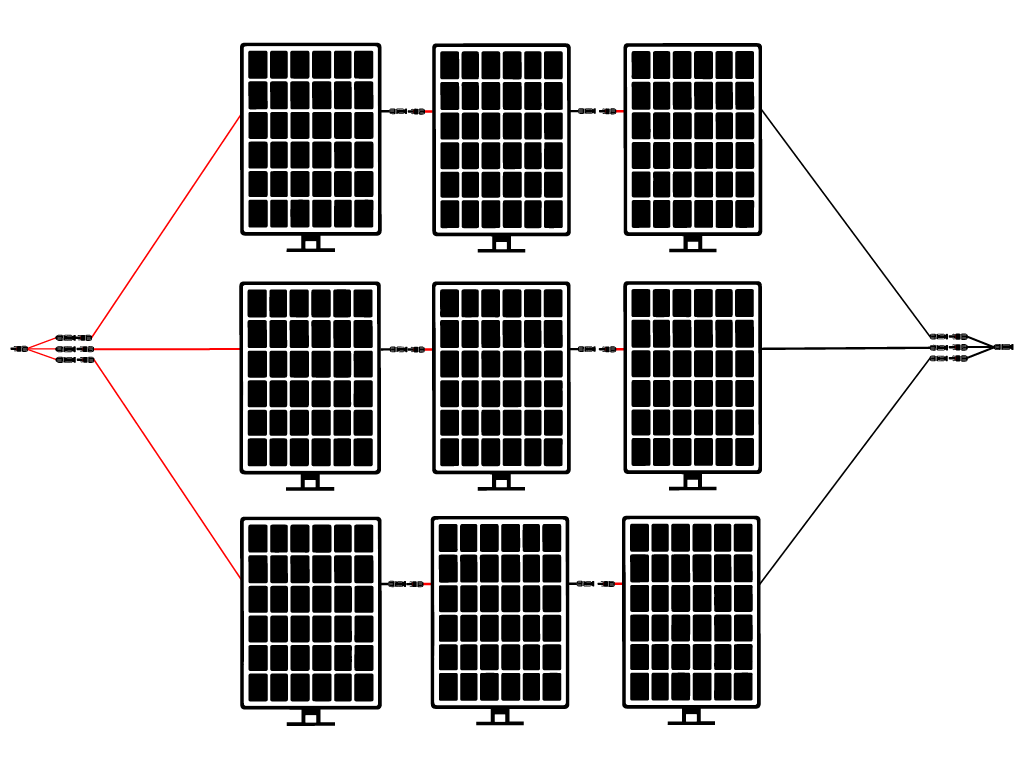
There are many different ways to connect solar panels. Usually, you want to use as many series connections as you can to maximize voltage, then move on to see if any parallel connections make sense by adding strings of series connections together.
For example, the EcoFlow 175W Rigid Panels can use up to 10 panels in the Delta Pro 3 high-PV Input. But you can’t do that all in series because the voltages of each panel would add together and it would go above the DP3’s 150V maximum. So what you can do is split it up into 2 strings of 5 panels connected in series. Then you stay under the 150V output. And since you can connect two in parallel without going over the amperage, you can connect 2 of these 5-panel strings with a parallel connection.
The end result is what’s known as a 5S2P array, for 5 series connections (the most in one string) and 2 parallel connections (connecting the two 5-panel strings). Here is a diagram of 5S2P:
For the low-PV input of the same scenario, you want to only do 2 series connections because the voltage must stay below 60V. But you can still do 2 parallel connections. This can use a 2S2P (2 series, 2 parallel) solar array, which looks like this:
Series connections do not require additional adapters because they just connect one panel to another in a string. But parallel requires the right adapter for the number of connections coming together. Here is a table of some parallel adapters:

|
BougeRV Solar Parallel MC4 Connector 2-to-1 Adapter |
Buy on BougeRV Buy on Amazon |

|
BougeRV Solar Parallel MC4 Connector 3-to-1 Adapter |
Buy on BougeRV Buy on Amazon |

|
BougeRV Solar Parallel MC4 Connector 4-to-1 Adapter |
Buy on BougeRV Buy on Amazon |

Wrap Up: Best Solar Panels for EcoFlow Delta Pro 3
Choosing the best solar panels for the EcoFlow Delta Pro 3 involves considering power generation needs, durability, and compatibility.
For maximum efficiency and a long lifespan, the EcoFlow 175W Rigid Solar Panels are ideal due to their high efficiency (25%) and robust design, allowing up to 14 panels to nearly max out the Delta Pro 3’s 2,600W solar input. For a compact and portable option, the EcoFlow 220W NextGen Bifacial Portable Solar Panels are excellent, offering dual-sided energy absorption and up to 2,200W in ideal conditions. Lastly, the Renogy 200W Solar Panels provide a balanced mix of affordability and performance, suitable for both rigid and portable setups, supporting up to 14 panels with minimal overpaneling.
If you want to see how other panels fit into the DP3’s input, head over to our calculator that helps figure out How Many Panels Can You Use?


