

The EcoFlow Delta Pro Ultra vs. Tesla Powerwall debate is heating up as more people seek reliable backup power and off-grid solutions. To answer which one is better requires careful consideration.
In this comparison, we’ll break down the critical differences and similarities between these two power systems. By translating complicated specs into plain language, you’ll be able to easily identify which is right for your situation.
Whether you’re prepping for a blackout or lowering your energy bills, this EcoFlow Delta Pro Ultra vs. Tesla Powerwall comparison has the info you need.
We carefully select the products and services we link to. If you buy through our links, we may earn a commission. There’s no extra cost to you and it helps us provide this information.

Short Summary: Backup Batteries and Brains
These products aren’t just another device to join your home. They’re capable of serving as the heart of your entire electrical system, delivering whole-home battery power to everything from small electronics to major appliances. Each of these heavyweights excels in different ways and we’re here to see how.
For those who prize portability and flexibility, the EcoFlow Delta Pro Ultra delivers with ease. This compact beast serves as an excellent home battery system yet retains the ability to provide massive power anywhere you want it. Here’s a shortlist of the Delta Pro Ultra advantages:
- Simple plug-and-play design with portable use capabilities
- Lower minimum cost and better per Wh cost after installation
- Superior online UPS
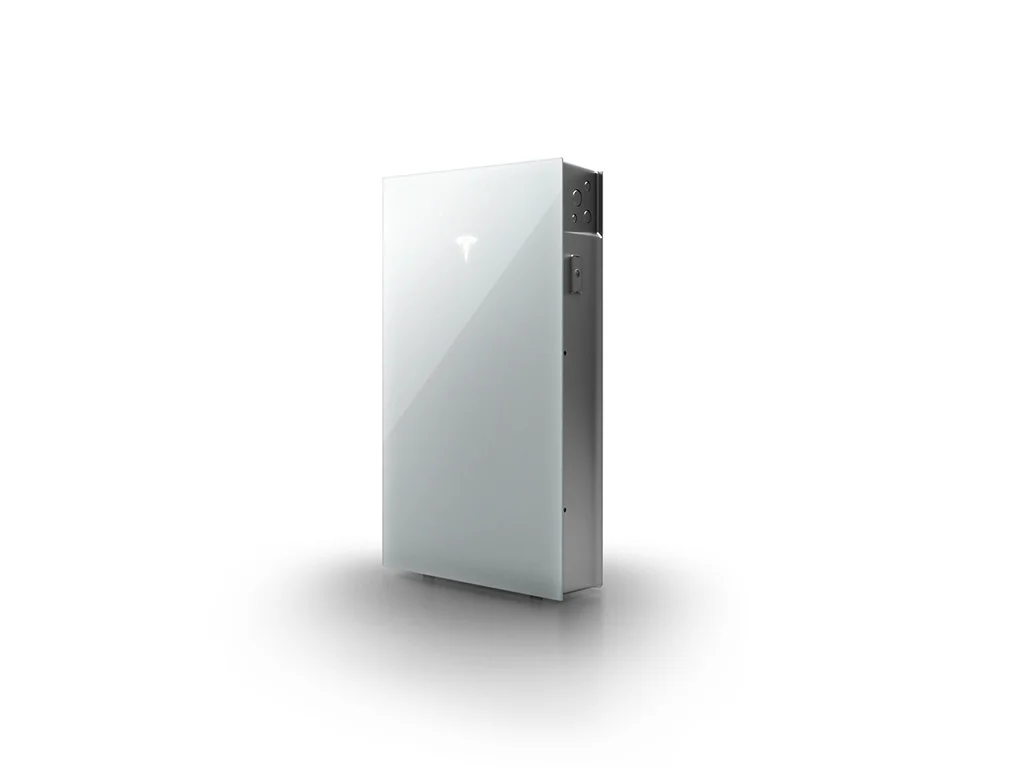
Meanwhile, the Tesla Powerwall stakes its claim on the more serious home backup front, offering high output and maximum solar capabilities. It’s built to stay put and deliver long-term, powerful performance. While it’s more expensive and requires a more sophisticated (and expensive) installation, the Powerwall is an incredible home energy solution with:
- Impressive maximum AC output
- Higher solar charging inputs
- Longer warranty period
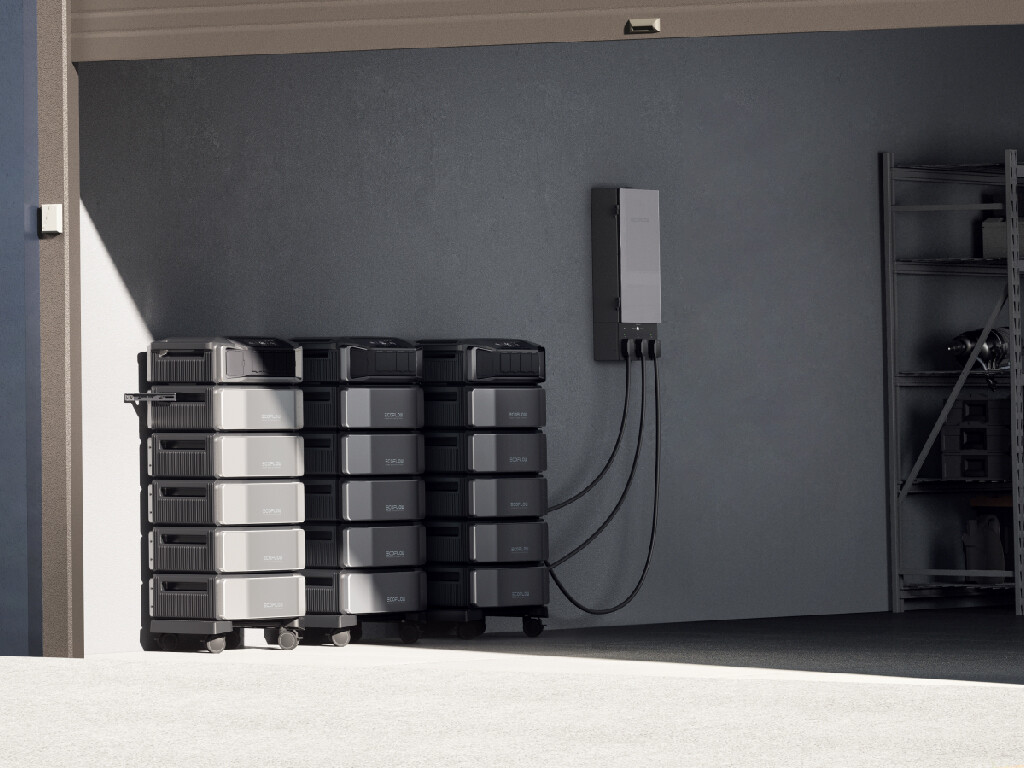
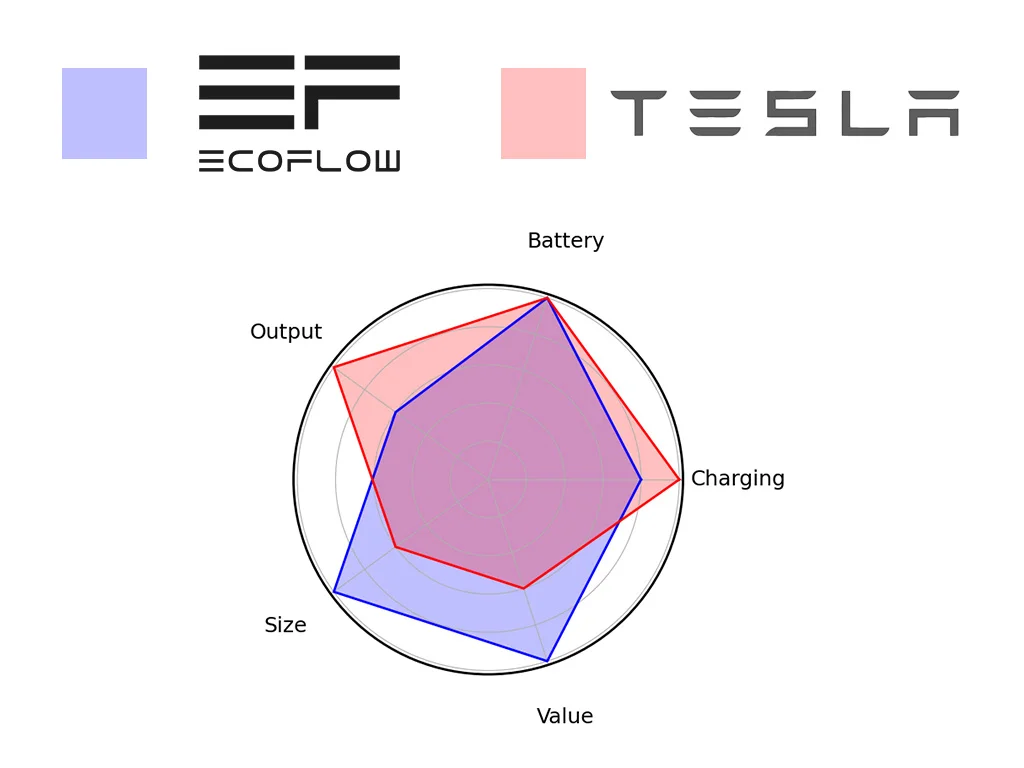
When it comes to value, the Delta Pro Ultra has the overall affordability win, especially when factoring in installation costs. The Tesla Powerwall not only has a much higher single-unit cost, it also requires an expensive specialized setup that pushes its price per Wh closer to $1.20. This is significantly more than the Delta Pro Ultra per Wh, which often hits around $0.85 per Wh. That’s about 30% higher cost for the Powerwall after accounting for battery size differences, even though the Powerwall also lacks features found on the Pro Ultra.
For many people, the EcoFlow Delta Pro Ultra is the better choice because it offers the power you need at a better price per Wh. And it includes the ability to bring that power anywhere. The Tesla Powerwall stands tall above the Delta Pro Ultra when it comes to brute AC power and insane solar charging. But you have to pay a premium and it’s entirely stuck in place.
Get 5% off most EcoFlow orders with SOLARWAY5OFF discount code.

|
EcoFlow DELTA Pro Ultra |
DPU on EcoFlow DPU on Amazon |
|
Tesla Powerwall |
Buy on Tesla |
Deep Dive Comparison: EcoFlow Delta Pro Ultra vs. Tesla Powerwall
To pick the right one, it’s important to understand how these units align with your energy needs. We’ll break down the key features while providing you with the information necessary to actually understand what they mean.
Here’s what we’ll cover:
- Compare Inverter Power and Outputs
- Battery Size and Capacity
- Charging Inputs and Speeds
- Portability and Size
- Spec Comparison Chart
- Final Verdict: Which Is Better and Why
Power It All: Inverter and Outlets Breakdown
The key to home power from a battery backup lies in the inverter. This nifty piece of tech transforms the stored DC power in the battery into AC power, which is what most of our home appliances use. Whether you’re running a fridge during a blackout or charging your gadgets while camping, the size of the inverter determines how much juice your power station can deliver at one time.
Both of these units have powerful inverters. The EcoFlow Delta Pro Ultra boasts a 7,200W AC output with one unit and up to 21,600W when maxed out with three units. By comparison, the Tesla Powerwall offers an impressive 11,500W alone or an eye-watering 46,000W when grouped with up to four more Powerwall main units.
Now, how do these ratings translate to real-world use? Here’s a quick look at the running wattage of common devices:
- Low-watt devices: Phones, laptops, lights, WiFi routers (10W to 100W)
- Medium-watt devices: TVs, fridges, desktop computers (200W to 800W)
- High-watt devices: Power tools, microwaves, coffee makers (1,000W to 2,000W)
- Heavy-duty appliances: Whole home air conditioners, electric dryers (3,000W and up)
To see if the inverters can handle your devices, you have to add up everything you want to use at the same time. Either energy solution here can handle almost limitless low-watt devices and most of the medium-watt ones you need. The high-watt can start to hit some limits if you use many at the same time.
Running heavy-duty items like an electric dryer or whole-home air conditioner – especially at the same time – is where the single-unit inverter specs start to feel tight. You can add more units to hit 21.6kW with the Pro Ultra, which is likely more than most people would ever need. We usually recommend two Pro Ultras for home backup. The 46kW of the max Powerwall system is absolutely bonkers and you’ll only need that if you have truly exceptional power needs, likely involving a commercial operation.
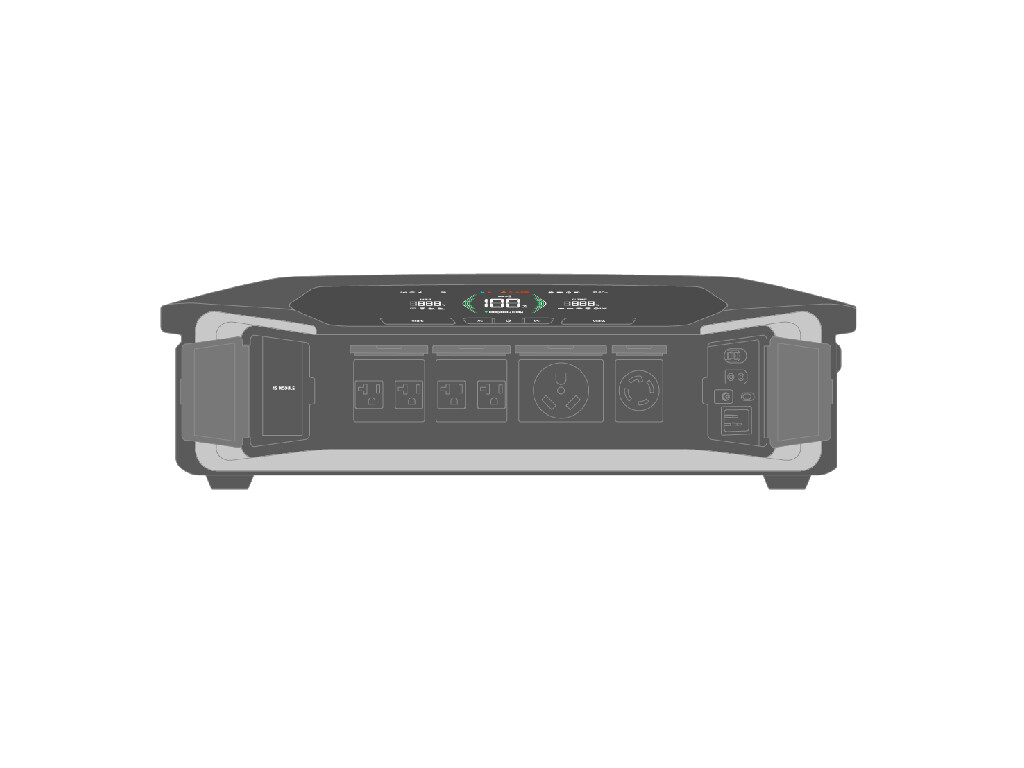
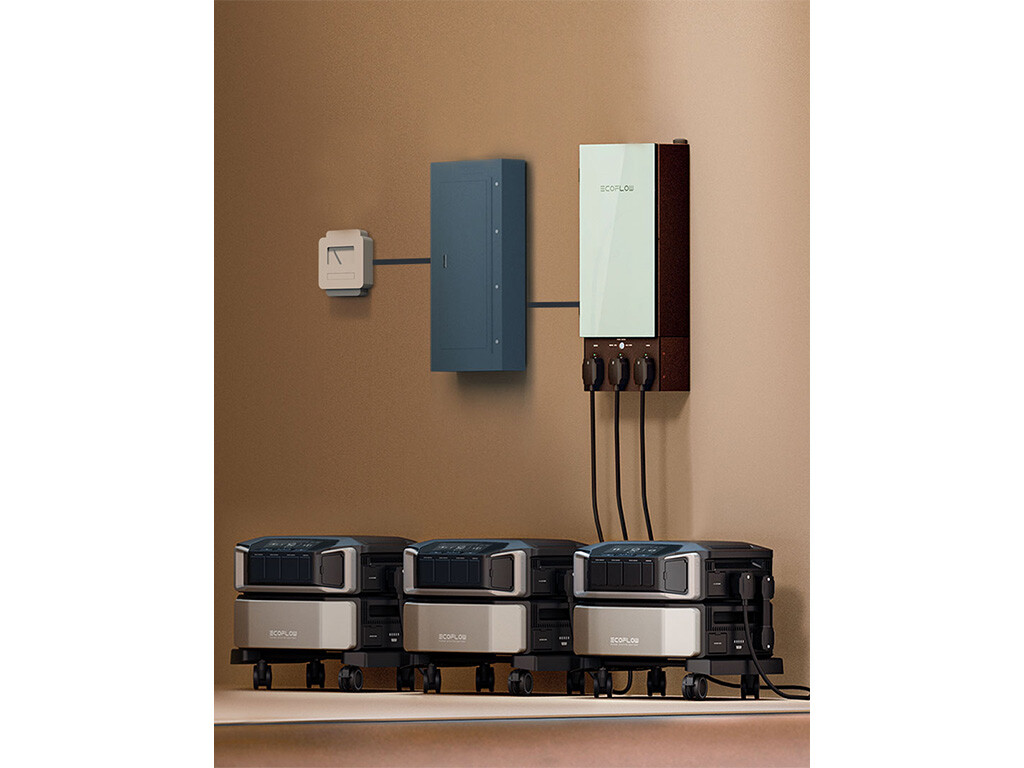
Let’s talk about outlets. The Delta Pro Ultra features a variety of ports designed for everything from small gadgets to heavy-duty appliances. For home backup power, you’ll use the high-amp and high-voltage outputs that can power a home transfer switch, such as the EcoFlow Smart Home Panel 2. The Pro Ultra also has multiple standard AC outlets, DC ports, USB-A, USB-C, and a 30-amp DC port. It’s a versatile option that can keep almost anything running whether you’re at home or in the middle of wilderness.
In contrast, the Powerwall sticks to integrating directly with home systems. The exact system design depends on your desires and situation, but you’ll select the appropriate Tesla products then wire them all together permanently. No powering devices directly from it. Just your home circuits.
The Delta Pro Ultra has some outlets with an online uninterruptible power supply (0ms UPS) and others with <20ms transfer time. The Powerwall is built for integrated home use and doesn’t specify its exact transfer time. People report lights flickering and computers crashing when using the Powerwall during a grid failure. You may need to supplement this system with a dedicated UPS at the device location.
Output Verdict: The Tesla Powerwall has much higher raw output but only offers a complicated direct home integration setup. And it lacks fast enough UPS function to keep critical devices powered up. The EcoFlow Delta Pro Ultra can meet serious home energy needs, including heavy-duty appliances, and it stands out for its flexibility, portability, and variety of plug-and-play outlets. You can use almost any transfer switch including the intelligent EcoFlow option.
| Product | EcoFlow DELTA Pro Ultra | Tesla Powerwall |
|---|---|---|
| AC Output | 7,200W | 11,500W |
| AC Output (System Max) | 21,600W | 46,000W |
| 120V Outlets | 5 (4x20A, 1x30A) | – |
| 240V Outlets | 1x30A | – |
| UPS / EPS | 0ms / 20ms | Not Specified |
| USB-A Ports | 2x15W | – |
| USB-C Ports | 2x100W | – |
| Other DC (Anderson or other) | 1x378W (30A) | – |
| Connectivity | WiFi / Bluetooth / 4G | Wi-Fi / Ethernet / 4G |
Power for Days: Battery Capacity Breakdown
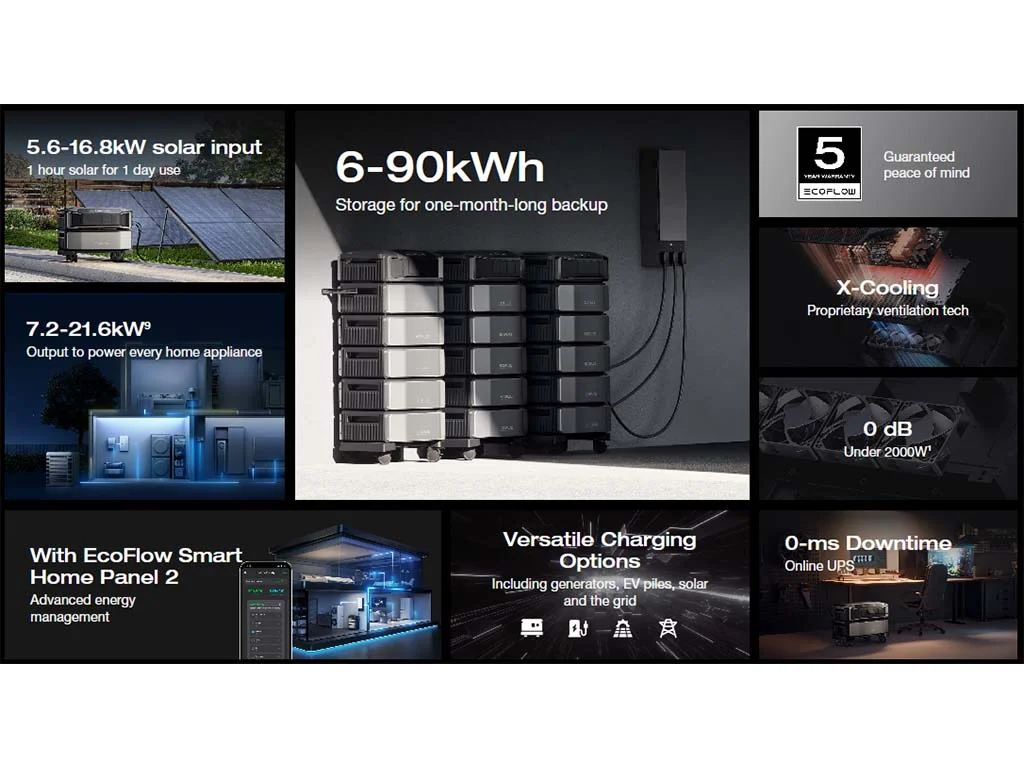
Measured in watt-hours (Wh), battery capacity tells you how much energy the station can store and deliver to your devices. The EcoFlow Delta Pro Ultra starts with one battery unit offering 6,000Wh, while the Tesla Powerwall starts at 13,500Wh.
Powering a 60W laptop? Based on the entry-level power specs, the Delta Pro Ultra will keep it going for around 80 hours while the Powerwall will go for 180 hours (accounting for a 20% efficiency loss due to wires, inverter use, and heat). Want to run a 1,000W appliance? Expect about 4.8 hours from one Pro Ultra battery or 10.8 hours from one Powerwall unit.
Yet that’s not the full story. Both units support battery expansion. And since the EcoFlow has a better price per Wh, you can reach that same time for less money.
The Delta Pro Ultra can reach a max system capacity of 90,000Wh with extra battery packs, while the Powerwall maxes out at 94,500Wh. These are nearly identical in this regard, with both significantly extending usage time even for serious power needs.
The Delta Pro Ultra features LiFePO4 batteries rated for over 3,000 cycles, meaning you could use it daily for about 8 years before seeing significant degradation. The Powerwall offers similar longevity but comes with a longer warranty, covering 10 years of use. EcoFlow’s warranty is 5 years for this model.
Battery Verdict: Although the starting Powerwall battery is larger, the EcoFlow Delta Pro Ultra offers cheaper per Wh pricing and nearly the same 90kWh maximum capacity. The Powerwall’s 10 year warranty is much longer than the EcoFlow’s 5-year, although the Pro Ultra features a battery that’s rated for at least 8 years of daily use.
| Product | EcoFlow DELTA Pro Ultra | Tesla Powerwall |
|---|---|---|
| Battery | 6,000Wh | 13,500Wh |
| Battery (System Max) | 90,000Wh | 94,500Wh |
| Warranty | 5 years | 10 years |
| Battery Type | LiFePO4 / LFP | LiFePO4 / LFP |
| Battery Cycles | >3,000 | Not Listed |
| Buy Now | Buy DPU | Buy Now |
| Buy on Amazon | EcoFlow DPU on Amazon | – |
Charging Fast: Inputs and Speeds
Charging speed is crucial for anyone who needs to quickly top off their power station between uses. Whether you’re bracing for a power outage or trying to keep it going during a long blackout, how fast you can recharge your station can make all the difference.
The EcoFlow Delta Pro Ultra and Tesla Powerwall offer AC power and solar charging. The Delta Pro can also leverage car charging and fuel generators.
Here’s a quick look at the charging speeds of both options:
- EcoFlow Delta Pro Ultra:
- AC input: Up to 7.2kW
- Solar input: 5,600W through two inputs, offering 450V and 150V maximums
- Tesla Powerwall:
- AC input: Up to 5kW (increases to 8kW with the right expansion units)
- Solar input: 20,000W through six MPPT charge controllers with 480V maximums each
The AC input is similar for these two, although the direct wiring of the Powerwall will make it easer to get the super-high wattage from an AC source. Common outlets only deliver 1,800W so the Delta Pro Ultra will need to find high-amp or high-voltage outlets to reach its potential from AC.

Solar charging for the Tesla Powerwall is practically unlimited. This is a serious advantage it has. The Powerwall was more specifically designed to incorporate whole-home solar arrays as well as grid sources. It replaces the usual grid-tied solar systems and ensures it can handle all the solar you want to get.
The Delta Pro Ultra can use a lot of solar, especially when you go with three DPU units. But it’s not quite seamless or capable, even though it’s the most solar input from any portable power station around.
A nice touch for the Delta Pro Ultra is that you can simply plug in other charging sources if needed, including an inverter fuel generator or a universal car alternator charging for power stations, like the Pecron 500W DC Charger or the Bluetti 560W Alternator Charger 1.
Charging Verdict: The Tesla Powerwall leads in solar charging, making it the clear winner for solar-powered homes with very large arrays. However, the EcoFlow Delta Pro Ultra includes fast charging options with the best specs you can find for a portable power station.
| Product | EcoFlow DELTA Pro Ultra | Tesla Powerwall |
|---|---|---|
| AC Input | 7,200W | 5,000W |
| AC Recharge Hours (Est.) | 1h | 3.2h |
| Solar Input | 5,600W | 20,000W |
| Solar Recharge Hours (Est.) | 1.3h | 0.8h |
| Solar Input (System Max) | 16,800W | 80,000W |
| Solar Input 1 Watts | 4000W | 6 x 3,400W |
| Solar Input 1 Volts Min | 80V | 60V |
| Solar Input 1 Volts Max | 450V | 480V |
| Solar Input 1 Amps | 15A | 13A |
| Solar Input 2 Watts | 1600W | – |
| Solar Input 2 Volts Min | 30V | – |
| Solar Input 2 Volts Max | 150V | – |
| Solar Input 2 Amps | 15A | – |
How Portable Are These Power Stations?
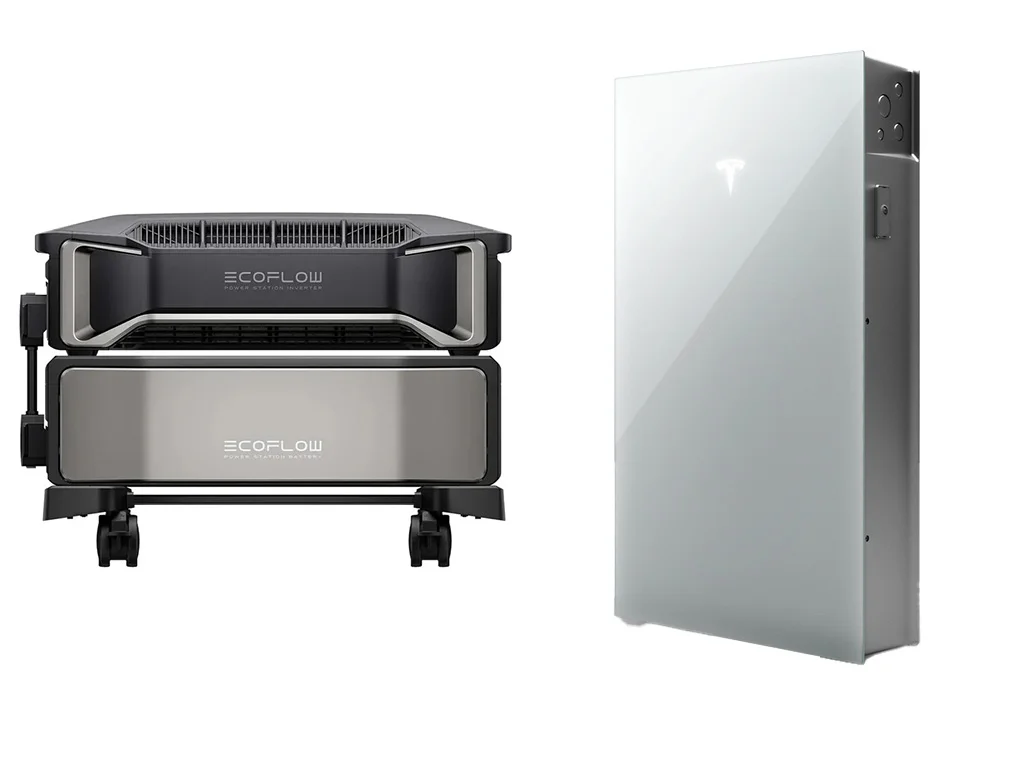
The EcoFlow Delta Pro Ultra is designed with portability in mind. Weighing 70 lbs (31.7 kg) and featuring wheeled carts with a telescopic handle, it’s easier to roll around than you might expect for its size. The battery units are heavy (excess of 100 lbs), but no matter what, you can still move these as you need to. You just might need an extra pair of hands.
In comparison, the Tesla Powerwall is a behemoth at 291 lbs (132 kg). It is exclusively designed for stationary use. Its large, wall-mounted design is ideal for home backup, but forget about bringing it on a trip. It’s staying put. Even when you move to a new home, its installation costs (often in excess of $5,000) will put a stop to that. Just not worth it.
Portability Verdict: The EcoFlow Delta Pro Ultra is the only portable option in this comparison. If you want the ability to take your backup power to another location, whether temporarily or permanently, the Delta Pro Ultra is the right call. The Tesla Powerwall is fixed in place and requires a sophisticated installation that removes any chance of moving this without wasting significant resources.
| Product | EcoFlow DELTA Pro Ultra | Tesla Powerwall |
|---|---|---|
| Weight (lbs) | 70lbs | 291lbs |
| Weight (kg) | 31.7kg | 132kg |
| Dimensions (in) | 27.2×18.9×8.4in | 43.5x24x7.6in |
| Dimensions (mm) | 690x481x214mm | 1105x609x193mm |
Specs Comparison Chart
Check out the EcoFlow Delta Pro Ultra vs. Tesla Powerwall comparison chart below to see the full specs of both power stations in detail.
| Product | EcoFlow DELTA Pro Ultra | Tesla Powerwall |
|---|---|---|
| Battery | 6,000Wh | 13,500Wh |
| Battery (System Max) | 90,000Wh | 94,500Wh |
| AC Output | 7,200W | 11,500W |
| AC Output (System Max) | 21,600W | 46,000W |
| AC Input | 7,200W | 5,000W |
| AC Recharge Hours (Est.) | 1h | 3.2h |
| Solar Input | 5,600W | 20,000W |
| Solar Recharge Hours (Est.) | 1.3h | 0.8h |
| Solar Input (System Max) | 16,800W | 80,000W |
| Warranty | 5 years | 10 years |
| Weight (lbs) | 70lbs | 291lbs |
| Weight (kg) | 31.7kg | 132kg |
| Dimensions (in) | 27.2×18.9×8.4in | 43.5x24x7.6in |
| Dimensions (mm) | 690x481x214mm | 1105x609x193mm |
| Solar Input 1 Watts | 4000W | 6 x 3,400W |
| Solar Input 1 Volts Min | 80V | 60V |
| Solar Input 1 Volts Max | 450V | 480V |
| Solar Input 1 Amps | 15A | 13A |
| Solar Input 2 Watts | 1600W | – |
| Solar Input 2 Volts Min | 30V | – |
| Solar Input 2 Volts Max | 150V | – |
| Solar Input 2 Amps | 15A | – |
| Battery Type | LiFePO4 / LFP | LiFePO4 / LFP |
| Battery Cycles | >3,000 | Not Listed |
| 120V Outlets | 5 (4x20A, 1x30A) | – |
| 240V Outlets | 1x30A | – |
| UPS / EPS | 0ms / 20ms | Not Specified |
| USB-A Ports | 2x15W | – |
| USB-C Ports | 2x100W | – |
| Other DC (Anderson or other) | 1x378W (30A) | – |
| Connectivity | WiFi / Bluetooth / 4G | Wi-Fi / Ethernet / 4G |
| User Manual | User Manual | User Manual |
| Buy Now | Buy DPU | Buy Now |
| Buy on Amazon | EcoFlow DPU on Amazon | – |

Our Final Verdict: Which Power Solution Wins?
After weighing all the key factors, it’s time to crown the winner in the EcoFlow Delta Pro Ultra vs. Tesla Powerwall showdown. At the end of the day, what matters most of all are your needs and how these fit into those.
We recommend the EcoFlow Delta Pro Ultra over the Tesla Powerwall for a few hard-to-beat reasons. First, it comes in at a better value with a lower per Wh cost, lower startup price, and cheaper installation. Second, it can still meet the vast majority of home power needs including heavy-duty appliances as it has nearly the same battery capacity potential and a powerful 21.6kW inverter output max. Third, you can bring it elsewhere. Use it in your RV. Power an event in a park. This flexibility goes over the top.
The Tesla Powerwall is best for those who have extremely intensive energy needs and will use massive amounts of solar. But it’s stuck in place and you’re going to pay a premium price for the Tesla option.
| EcoFlow Delta Pro Ultra | Tesla Powerwall |
|---|---|
Here’s a quick recap of the comparison:
- Inverter and Outputs: The Powerwall delivers more raw power for home backup, while the Delta Pro Ultra excels in versatility and portable plug-and-play convenience.
- Battery Capacity: The Powerwall boasts a larger single-unit battery and longer warranty. But the Delta Pro Ultra an nearly match the max battery capacity even though it’s a portable option.
- Charging Speeds: The Powerwall is unmatched with its massive solar input. For most people with smaller solar systems, the Delta Pro Ultra still shines bright and it offers easier charging from a fuel generator. It’s also the only one with any chance or charging while driving.
- Portability: The Delta Pro Ultra is the clear winner here, designed to be easily moved around, while the Powerwall is permanently fixed.
- Value: The EcoFlow Delta Pro Ultra has a much lower entry cost, lower per Wh cost, and more affordable installation cost due to its universal high-amp outputs that can work with any basic transfer switch or the EcoFlow Home Panel. The Tesla is a premium price product, especially after considering the massive installation costs and other gadgets your home likely needs to work with the grid.
Final Verdict: The EcoFlow Delta Pro Ultra is superior for users seeking a portable, versatile power station that can handle both home backup and off-grid adventures. Its portability, fast charging, and flexible battery options make it the best choice for those who value mobility. The Tesla Powerwall is better for users focused on maximizing home energy storage and solar integration. If your goal is seamless, long-term home backup power without regard for use outside of home, the Powerwall is hard to beat.
Get 5% off most EcoFlow orders with SOLARWAY5OFF discount code.
|
|
EcoFlow DELTA Pro Ultra |
DPU on EcoFlow DPU on Amazon |
|
|
Tesla Powerwall |
Buy on Tesla |
Final Summary
Both the EcoFlow Delta Pro Ultra and Tesla Powerwall are powerful solutions for your energy needs. The Delta Pro Ultra stands out for its versatility while still offering the same max battery capacity and enough AC output to meet most home power needs. The Tesla Powerwall with its massive AC output and superior solar charging is the better choice for homeowners with very intensive energy needs.
For more information, check out the individual review for the EcoFlow Delta Pro Ultra. Or see how the EcoFlow Delta Pro Ultra compares to the Anker F3800.
Now is the time to make a choice. Invest in your energy independence and start lowering your utility bills right away.


