

Jackery holds a special place as a founding brand of the power station industry. And it has consistently continued to push forward with impressive updates, including the Jackery Explorer 2000 Plus. This heavy-duty power station starts with an impressive 3,000W inverter and 2,043Wh battery, then it goes into the stratosphere with its expandable battery capacity up to 24.5kWh.
In this review of the Jackery Explorer 2000 Plus, we’ll carefully go over the details by examining the specs, what they actually mean, and how they compare to rivals. We’ll also do a full comparison of the Explorer 2000 Plus to similar power stations from other top brands.
After reading this, you’ll be able to decide if the Jackery Explorer 2000 Plus is the right power station for your needs.
We carefully select the products and services we link to. If you buy through our links, we may earn a commission. There’s no extra cost to you and it helps us provide this information.

Quick Look
You can get pretty carried away with heavy-duty power stations. Ones like the EcoFlow Delta Pro Ultra can take your breath away with capability. But they’ll be heavy on your wallet. When you want a less expensive power station that still bridges the gap between portable power station and home backup system, the Jackery Explorer 2000 Plus hits the spot.
It has a powerful AC inverter that can handle 95% of household needs and a downright insane amount of battery capacity available. Pair these two central components with a long warranty, superb build quality, and all of the ports and outlets you can need, the Explorer 2000 Plus turns into a very attractive option.
The internal battery alone has enough juice to charge a laptop about 30 times or run a home fridge for half of a day. The inverter can handle high-energy devices like an induction cooktop, hairdryer, and a microwave. And it even has a high-amp output that’s ideal for powering an RV or home circuit subpanel.
Here’s a quick look at the specs of the Jackery Explorer 2000 Plus:
- AC Inverter: 3,000W AC output with 6,000W surge
- Battery Capacity: 2,043Wh capacity, expandable to a massive 24,516Wh
- Charging Speeds: Fast charging: 0-100% in 2 hours with wall and solar combined; Up to 1,400W solar input
- Portability: About 60lbs (28kg) and the size of a cooler is reasonable for the capability
- Outlets and Features: 4 USB ports, 5 AC outlets (including high-amp), and a rapid 20ms UPS switchover time
When shopping for a high-capacity power station, it’s important to look beyond raw specs. You want reliability during emergencies, versatility for your life, and the peace of mind that comes with a well-engineered product. The Explorer 2000 Plus addresses these concerns and then some.
And when compared to other similar midrange to heavy-duty power stations, the Jackery stands tall as a full-featured option that typically has a better value. Here’s a quick summary of the Explorer 2000 Plus comparison:
- EcoFlow Delta Pro: Fairly comparable with a slightly bigger internal battery and inverter — plus a high-amp DC output and 240V high-amp AC output — but has less total battery expansion and a longer 30ms EPS function.
- Bluetti AC300: Another similar option with identical inverter and total battery expansion potential, but the Bluetti has a slightly bigger single-unit battery (which is external) and it has both AC and DC high-amp outputs.
- Anker Solix F2600: Less powerful inverter, much less battery expansion potential, but otherwise very similar power station that has a slightly bigger internal battery. Might be much less expensive.
At the end of the day, the Jackery Explorer 2000 Plus is one of the best upper midrange power stations around. Its battery expansion is second to none, and it has almost everything you could need. The lack of a high-amp DC output is its largest downside.
|
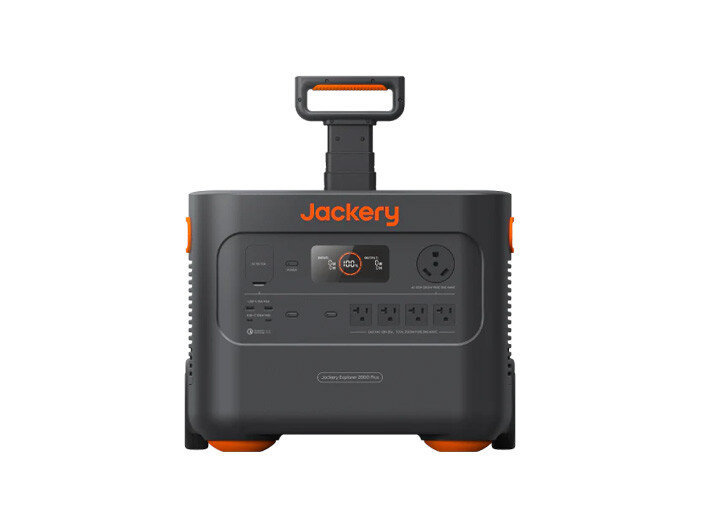
Jackery Explorer 2000 Plus Portable Power Station |
2000 Plus on Jackery 2000 Plus on Amazon |

AC Inverter Power Output
The AC inverter is a vital part of the power station that changes the DC battery power into electricity available from standard AC outlets. And when you have a big power station like this one, the AC inverter is even more important since it’s likely you want to power some big devices that must run on AC power.
With a 3,000W AC inverter, the Jackery Explorer 2000 Plus has what it takes to power appliances, devices, and tools. Even air conditioning units often run at lower watts. And for big startup surges, the Explorer 2000 Plus can reach up to 6,000W for short bursts.
This power station can handle your kitchen appliances so you can keep your food cold and cook it, even on an electric cooktop, during an outage. You can power a whole array of lights and never need power outage candles again. Even run your hairdryer, computer, WiFi gear, and more. And of course, have plenty of room leftover for charging phones and other essential small devices.
Jackery has also designed this to act as a UPS (Uninterruptible Power Supply) device. This means you can keep sensitive gear like a computer or medical device connected to the power station and have it plugged into an outlet. During a power outage, this Explorer 2000 Plus will switchover to battery power within 20ms. This is often quick enough to avoid shutdowns and is as good as it gets for most power stations (including every one on this list).
If you want to use a power station for an RV, this is a great choice. The high-amp AC outlet features a 30-amp style plug and produces up to 25A. This is near instant integration with existing RV electrical systems. Just plug it into the shore power input and you’ve added solar power to your RV.
| Product | Jackery 2000 Plus |
|---|---|
| AC Output | 3,000W |
| AC Output Peak | 6,000W |
| 120V Outlets | 4x20A; 1x25A |
| UPS / EPS | 20 ms |
| Buy Now | Buy 2000 Plus |

Battery Specs
Not only do you need the right AC inverter, you need the right battery to ensure power is always available. Once again, this Jackery power station has what it takes to please.
It starts with the internal battery featuring a LiFePO4 (LFP) cell type with a capacity of 2,043Wh. This is a great type of battery that has exceptional longevity and safety. It should keep at least 80% of its capacity even after charging and discharging it over 3,000 times. That’s about 8 to 10 years of use. And after that, it doesn’t fail entirely. It just holds less energy.
This is a long-term investment that’s ready to deliver. The warranty coverage also backs this up, with up to 5 years available. Jackery sometimes restricts the longest warranty coverage to items sold directly from it. We always recommend making these big purchases directly from the manufacturer to avoid warranty and customer service runarounds anyway.
The internal battery isn’t your limit. You can stack on Jackery Battery Pack 2000 Plus to get up to 24.5kWh of total capacity. This is more than EcoFlow and Anker. Bluetti comes close – but there’s a huge difference. The Bluetti AC300 does not have an internal battery, and its extra batteries can charge at only 200W. The Jackery extra batteries can accept up to 1,400W. For this battery size, the Bluetti one is going to take more than a day while the Jackery will be done in a couple hours.
You can calculate how long your battery will last with a simple formula:
- Find the Watt-hours of the battery capacity
- Divide it by the Watts of the device(s) you want to use
- This equals the approximate number of hours the power station will last
- Take off about 20% due to system inefficiencies
- For example: A 2,000Wh battery can power 200W of devices for about 8 hours (2,000Wh / 200W = 10h – 20% = 8h)
Overall, the battery system of the Jackery Explorer 2000 Plus is exceptional. It has the right chemistry, tons of capacity, and even gives you a suitable amount of charging added. This is one major reason the Explorer 2000 Plus stands high in the market.
| Product | Jackery 2000 Plus |
|---|---|
| Battery | 2,043Wh |
| Battery (System Max) | 24,516Wh |
| Warranty | 3-5 years |
| Battery Type | LiFePO4 / LFP |
| Battery Cycles | >3000 |
| Buy Now | Buy 2000 Plus |

Charging Rates: Watts Matter
As you use the battery, you’ll eventually need to charge it back up. Each power station has ratings for its charging speeds, which are usually divided into AC charging rates for use with standard household outlets from the grid (or fuel inverter generators) and DC charging rates (for solar and other off-grid energy sources).
Here is yet another major category where the Jackery Explorer 2000 Plus nails it. This is not an overly positive review of this power station. We review all sorts of power stations from the best brands and are truly impressed by this unit.
To start with, the AC charging rate is 1,800W. This is the maximum rate available from most household outlets as they are 120V and 15A. And it charges this internal battery in less than 2 hours. The Bluetti and EcoFlow units do have higher specs, but it really doesn’t matter because it’s more than most outlets provide and this Jackery is still a very quick rate.
When it comes to solar, Jackery does a great job at balancing the battery level to solar inputs. The main 2000 Plus unit starts off with 1,400W spread over two inputs, enough to recharge with less than 2 hours of peak sunlight. You can verify this by taking the Watt-hours of the battery, dividing by the Watts of the charging rate, then adding about 20% due to inefficiencies. 2,000Wh battery divided by 1,400W solar rate equals 1.4 hours. Add another 20% and you get 1.7 hours. That is very fast, more than Anker and very similar to EcoFlow.
The Bluetti AC300 is the one with a more robust 2,400W solar input. This seems impressive. And when you consider the battery expansion is about the same as the Jackery (up to 24.5kWh), you might think they’re about the same.
But the Bluetti’s extra batteries can only take 200W of extra solar. So you have a giant 3,000Wh inverter with 200W of solar. 3,000Wh / 200W = 15 hours!
Jackery’s extra batteries all come with another 1,400W of solar input each! And they’re 2,000Wh. We already know that’s about 1.7 hours. Much better.
When you look deep into this, the Jackery Explorer 2000 Plus has ideal charging rates no matter the battery size and energy source.
| Product | Jackery 2000 Plus |
|---|---|
| AC Input | 1,800W |
| AC Recharge Hours (Est.) | 1.4h |
| Solar Input | 1,400W |
| Solar Recharge Hours (Est.) | 1.8h |
| Solar Input (System Max) | 17,000W |
| Solar Input 1 Watts | 700W |
| Solar Input 1 Volts Min | 11V |
| Solar Input 1 Volts Max | 60V |
| Solar Input 1 Amps | 12A |
| Solar Input 2 Watts | 700W |
| Solar Input 2 Volts Min | 11V |
| Solar Input 2 Volts Max | 60V |
| Solar Input 2 Amps | 12A |
| Buy Now | Buy 2000 Plus |
Weight and Dimensions
There’s no doubting this is a pretty big power station. That’s what happens with this size battery and this many features.
Yet this is still a fairly manageable unit, weighing in at a hair over 60lbs (28kg) and about the size of a medium-large cooler. The extra battery units are 42lbs (19kg) and more like a large shoebox like those for boots.
Put these together and you still have a system that can be moved around without a dolly, unlike some of the bigger power stations. It’s nice and square with a flat top too, so you can stack it and won’t waste any storage space, perfect for RVs and vans once again.
| Product | Jackery 2000 Plus |
|---|---|
| Weight (lbs) | 61.5lbs |
| Weight (kg) | 27.9kg |
| Dimensions (in) | 18.6×14.1×14.7in |
| Dimensions (mm) | 473x359x374mm |
| Buy Now | Buy 2000 Plus |
Ports, Outlets, and Other Features
If you can’t connect your devices, the power station is pointless. Let’s take a close look into what ports and outlets the Jackery Explorer 2000 Plus has.
Let’s start with the AC outlets backed by that 3,000W inverter. You have 4 standard AC outlets and a big 30-amp outlet that can supply up to 25A loads. That’s a little confusing, but it’s the size/shape of a 30-amp plug, just rated only for 25-amps. The power station will limit it to 25A automatically.
This not only works for up to 5 device directly connected, it can also be plugged into your RV or be used with a transfer switch and generator inlet at home. It’s an ideal home backup solution with the high-amp output to deliver the big power your home needs.
On top of those AC outlets, there’s a complete bundle of DC ports:
- 2 USB-A ports
- 2 100W USB-C ports
- 1 120W car cigarette lighter port
These are perfect for smaller devices. Any time you can use the DC outlets instead of the AC ones, you should. The inverter consumes a little power itself so your battery won’t last quite a long. It’s fine to use the AC outlets in any case, just expect to see a little loss from the inverter running.
The main interface is a straightforward LCD display with data on power input/output, battery level, and hours remaining. But you can also use either WiFi or Bluetooth to connect to the Jackery app. You can control it from 30 feet away through Bluetooth or across the world on WiFi. It’s the same information, plus more settings and other useful details.
The only thing missing here is a high-amp DC output. If you are going to use a lot of DC devices, this can be a bummer. Both the Bluetti AC300 and the EcoFlow Delta Pro have 30-amp DC outputs through an Anderson port. You can use that to power an entire DC fuse box. This is the biggest flaw with the Jackery unit. You can still use the AC outlets to make up for this, but since the AC inverter uses energy to run, it’s far from ideal.
Overall, the Explorer 2000 Plus has a lot of connection points with the impressive 30-amp AC outlet and enough USB ports. The only thing it lacks is the high-amp DC output.
| Product | Jackery 2000 Plus |
|---|---|
| 120V Outlets | 4x20A; 1x25A |
| 240V Outlets | – |
| UPS / EPS | 20 ms |
| USB-A Ports | 2 x 18W |
| USB-C Ports | 2 x 100W |
| Other DC (Anderson or other) | – |
| DC 5521 (Barrel Plug) | – |
| Cigarette Lighter | 1 x 120W |
| Wireless Charging Pad | – |
| Connectivity | WiFi / Bluetooth |
| Buy Now | Buy 2000 Plus |
Comparison to Other Power Stations
You never want to buy something this expensive without looking at the other options. Here we’ll take an objective look at the competition, pointing out where the Jackery wins out and where it falls short. What’s most important is for you to find the power station that meets you unique needs.
You can also seem more comparisons such as the focused comparison between the EcoFlow Delta Pro vs. Bluetti AC300 and the slightly smaller EcoFlow Delta 2 vs. Bluetti AC200P.

Jackery Explorer 2000 Plus vs. EcoFlow Delta Pro
EcoFlow power stations are tough to compete with, especially the big models like the Delta Pro 3. Both the Jackery Explorer 2000 Plus and EcoFlow Delta Pro are top-tier portable power stations. But they’re not identical.
The EcoFlow Delta Pro offers a higher single-unit battery capacity but less total battery expansion. There is a big problem with this bigger 3.6kWh internal battery. The Delta Pro weighs 99lbs (45kg). This is an entirely different beast compared to the Jackery. And while this helps to contain fewer units, it’s a much bigger pain to move around.
Also, the EcoFlow says faster AC charging, but only if you have an high-amp outlet that can supply more than 1,800W. And very notably, the extra batteries must be attached to the main Delta Pro unit to charge (unless you have the EcoFlow Dual Fuel Generator). As a reminder, the Jackery extra batteries can charge independently with a massive 1,400W of solar each.
One thing the Delta Pro has that we really wish the Jackery had is the 30-amp DC output. For those that want to run a lot of DC devices – like campervans – the Delta Pro is likely the better choice. You don’t want to use the AC inverter for this purpose if you can avoid it.
The Explorer 2000 Plus offers greater expandability with more charging inputs. And it’s much lighter as a single unit. But the EcoFlow Delta Pro has a bigger single-unit battery and can accept high-amp charging, plus throws in the DC high-amp output. These are both great power stations, and what’s best depends on your needs.
| Product | EcoFlow DELTA Pro | Jackery 2000 Plus |
|---|---|---|
| Battery | 3,600Wh | 2,043Wh |
| Battery (System Max) | 21,600Wh | 24,516Wh |
| AC Output | 3,600W | 3,000W |
| AC Output (System Max) | 7,200W | 6,000W |
| AC Input | 3,000W | 1,800W |
| AC Recharge Hours (Est.) | 1.4h | 1.4h |
| Solar Input | 1,600W | 1,400W |
| Solar Recharge Hours (Est.) | 2.7h | 1.8h |
| Solar Input (System Max) | 4,800W | 17,000W |
| Warranty | 5 years | 3-5 years |
| Weight (lbs) | 99lbs | 61.5lbs |
| Weight (kg) | 45kg | 27.9kg |
| Battery Type | LiFePO4 / LFP | LiFePO4 / LFP |
| 120V Outlets | 4 | 4x20A; 1x25A |
| UPS / EPS | 30 ms (EPS) | 20 ms |
| Other DC (Anderson or other) | 1 x 378W (30A) | – |
| Buy Now | Buy DP | Buy 2000 Plus |

Jackery Explorer 2000 Plus vs. Bluetti AC300
Yet another brand any power station enthusiast knows about is Bluetti and its very impressive lineup of solar generators. This brand actually has one of the largest list of options around, so it’s tough to do a true comparison. You might also want to consider the slightly smaller Bluetti AC200Max.
But when it comes to the most similar battery size, inverter rating, and price level, the Explorer 2000 Plus vs. Bluetti AC300 is the most appropriate comparison.
These two power stations are remarkably similar, with identical AC inverter ratings, up to 24.5kWh battery expansion, the same 20ms UPS, and a high-amp AC outlet.
But the Bluetti AC300 beats out this Jackery with a larger 3,000Wh single unit battery (which is external) and faster 2,4000W solar input on the main unit. It also adds in the true 30-amp AC outlet (not limited to 25-amps like the Jackery), plus another 30-amp DC output through an Anderson port. It also has the most AC outlets (7) and a wireless charging pad. There’s no doubting this list of impressive Bluetti features.
But there are some ways the Jackery pulls out ahead, especially if you want to expand the battery capacity and don’t care about the high-amp DC output. The Bluetti extra batteries are limited to 200W solar charging, which is laughably small for each 3,000Wh battery. Jackery batteries have 1,400W inputs.
The warranty coverage is also longer on the Jackery, when bought directly from the manufacturer. Bluetti’s tops out at 4 years while Jackery’s is 5 years.
Unless you need the DC high-amp output of the Bluetti AC300, we stay stick with the Jackery Explorer 2000 Plus.
| Product | BLUETTI AC300 | Jackery 2000 Plus |
|---|---|---|
| Battery | 3,072Wh | 2,043Wh |
| Battery (System Max) | 24,576Wh | 24,516Wh |
| AC Output | 3,000W | 3,000W |
| AC Output (System Max) | 6,000W | 6,000W |
| AC Input | 3,000W | 1,800W |
| AC Recharge Hours (Est.) | 1.2h | 1.4h |
| Solar Input | 2,400W | 1,400W |
| Solar Recharge Hours (Est.) | 1.5h | 1.8h |
| Solar Input (System Max) | 4,800W | 17,000W |
| Warranty | 4 years | 3-5 years |
| Weight (lbs) | 47.6lbs | 61.5lbs |
| Weight (kg) | 21.6kg | 27.9kg |
| Battery Type | LiFePO4 / LFP | LiFePO4 / LFP |
| 120V Outlets | 7 total (6x20A; 1x30A) | 4x20A; 1x25A |
| UPS / EPS | 20 ms | 20 ms |
| Other DC (Anderson or other) | 30A | – |
| Buy Now | Buy AC300 | Buy 2000 Plus |
Jackery Explorer 2000 Plus vs. Anker Solix F2600
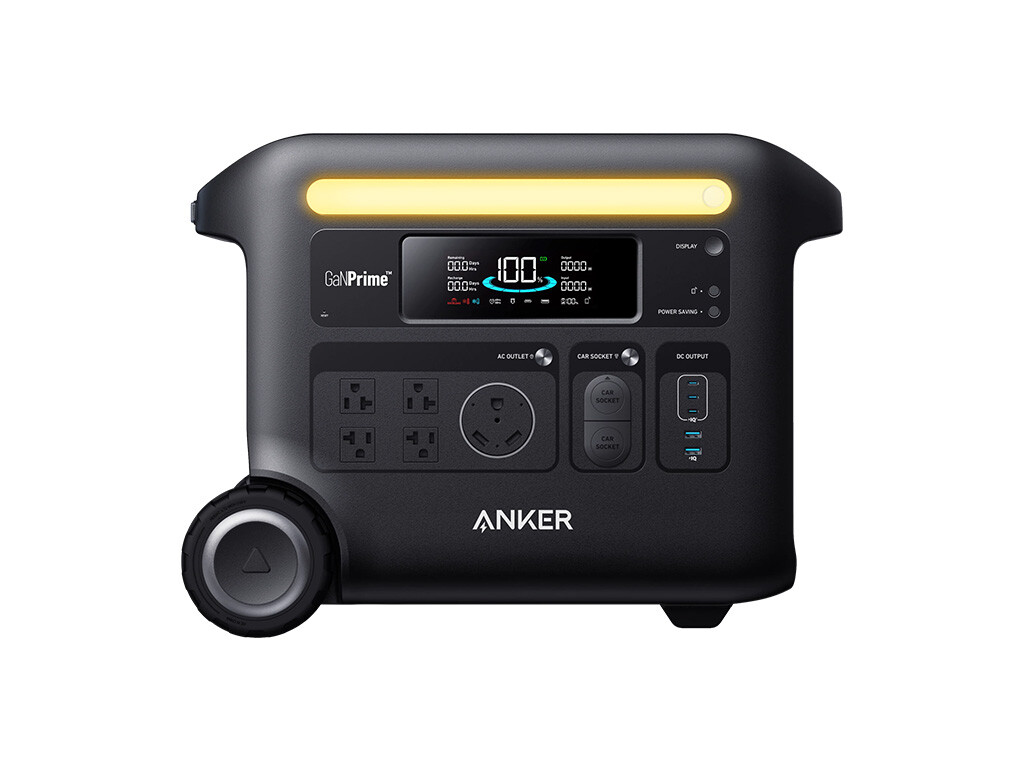
Our last comparison is the Jackery Explorer 2000 Plus vs. Anker Solix F2600. Anker brings may years of battery experience, with a strong reputation in the industry. It also sometimes has low price offers that most other power station brands can’t touch. These prices fluctuate like crazy, so we suggest checking out the price of both of these right away to see what they’re at today.
The catch with this comparison is that the Solix F2600 is very similar to the single-unit Jackery Explorer 2000 Plus. But they’re no match when battery expansion is considered. So if you need more than 4.6kWh of battery, the Jackery wins out since that’s the max for this Anker. You have to jump up to the massive Anker F3800 to get serious battery expansion (up to 53.7kWh in that case).
The Anker has a slightly smaller 2,400W inverter too. This is still a very respectable size, even for home backup. It’s just not quite as big as the Jackery. It might be a problem if you want to run a bunch of lights and small devices, then turn on a microwave or hairdryer. The Jackery can handle this load. This Anker might struggle.
Besides that, these are so close there’s really not much else to talk about. They both do not have the DC output but do have the high-amp AC output. Both have the LiFePO4 battery with long warranty coverage, and the charging speeds are more than sufficient.
In this case, it really comes down to battery needs. If you have big expansion ideas, go with the Jackery. If you can deal with the lack of modular expansion and a slightly smaller inverter, the Anker F2600 can likely save you a big wad of cash.
| Product | Jackery 2000 Plus | Anker Solix F2600 |
|---|---|---|
| Battery | 2,043Wh | 2,560Wh |
| Battery (System Max) | 24,516Wh | 4,608Wh |
| AC Output | 3,000W | 2,400W |
| AC Output (System Max) | 6,000W | 2,400W |
| AC Input | 1,800W | 1,440W |
| AC Recharge Hours (Est.) | 1.4h | 2.1h |
| Solar Input | 1,400W | 1,000W |
| Solar Recharge Hours (Est.) | 1.8h | 3.1h |
| Solar Input (System Max) | 17,000W | 1,000W |
| Warranty | 3-5 years | 5 years |
| Weight (lbs) | 61.5lbs | 69.7lbs |
| Weight (kg) | 27.9kg | 31.6kg |
| Battery Type | LiFePO4 / LFP | LiFePO4 / LFP |
| 120V Outlets | 4x20A; 1x25A | 4x20A, 1x30A |
| UPS / EPS | 20 ms | 20ms |
| Other DC (Anderson or other) | – | – |
| Buy Now | Buy 2000 Plus | Buy F2600 |
Full Specs and User Manual Link
Here is a big table with the specs for the Jackery Explorer 2000 Plus, including a link to the user manual in case you still have more questions.
| Product | Jackery 2000 Plus |
|---|---|
| Battery | 2,043Wh |
| Battery (System Max) | 24,516Wh |
| AC Output | 3,000W |
| AC Output (System Max) | 6,000W |
| AC Output Peak | 6,000W |
| AC Input | 1,800W |
| AC Recharge Hours (Est.) | 1.4h |
| Solar Input | 1,400W |
| Solar Recharge Hours (Est.) | 1.8h |
| Solar Input (System Max) | 17,000W |
| Warranty | 3-5 years |
| Weight (lbs) | 61.5lbs |
| Weight (kg) | 27.9kg |
| Dimensions (in) | 18.6×14.1×14.7in |
| Dimensions (mm) | 473x359x374mm |
| Solar Input 1 Watts | 700W |
| Solar Input 1 Volts Min | 11V |
| Solar Input 1 Volts Max | 60V |
| Solar Input 1 Amps | 12A |
| Solar Input 2 Watts | 700W |
| Solar Input 2 Volts Min | 11V |
| Solar Input 2 Volts Max | 60V |
| Solar Input 2 Amps | 12A |
| Battery Type | LiFePO4 / LFP |
| Battery Cycles | >3000 |
| 120V Outlets | 4x20A; 1x25A |
| 240V Outlets | – |
| UPS / EPS | 20 ms |
| USB-A Ports | 2 x 18W |
| USB-C Ports | 2 x 100W |
| Other DC (Anderson or other) | – |
| DC 5521 (Barrel Plug) | – |
| Cigarette Lighter | 1 x 120W |
| Wireless Charging Pad | – |
| Connectivity | WiFi / Bluetooth |
| User Manual | User Manual |
| Buy Now | Buy 2000 Plus |
| Buy on Amazon | 2000 Plus on Amazon |
|
|
Jackery Explorer 2000 Plus Portable Power Station |
2000 Plus on Jackery 2000 Plus on Amazon |
Wrap Up
Is the Jackery Explorer 2000 Plus right for you? We’re big fans of this power station, despite the fierce competition. It has modular battery expansion like no other, supported with substantial extra charging capacity. The high-amp AC output is perfect for home backup up for a transfer switch and can double as an RV power source quickly and easily. The largest flaw is the lack of a high-amp DC output as found on the similar Bluetti and EcoFlow models.
Ready for the next step? Turn your power station into a solar generator by calculating the amount of solar panels you need.


