
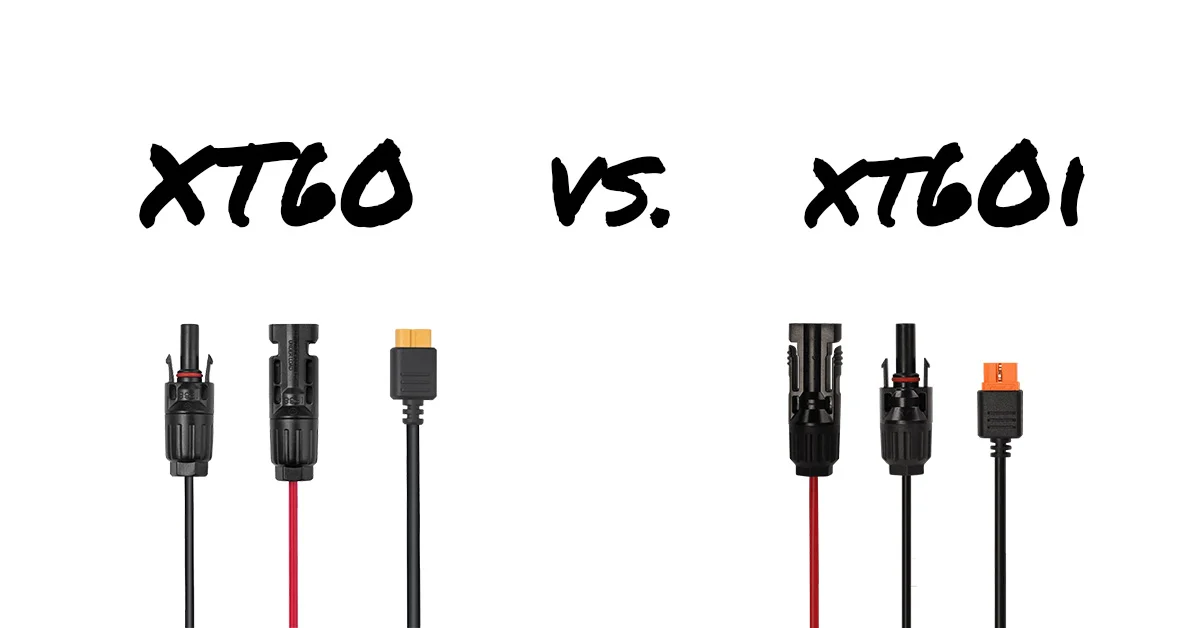
Many power stations use an XT60 connector for the solar panel input. But some power stations from brands like EcoFlow can use the XT60 or XT60i connectors. Although very similar, there are some differences in the XT60 vs. XT60i to be aware of.
In this guide, we’ll walk you through what each of the solar to XT60 and XT60i connectors are. We’ll review what the differences are, when to use both, and what to look for when buying a solar to XT60 adapter. This information will be particularly useful to EcoFlow power stations, but can apply to others as well.
Let’s clear any confusion about the XT60 and XT60i solar charging cables.
We carefully select the products and services we link to. If you buy through our links, we may earn a commission. There’s no extra cost to you and it helps us provide this information.

The Quick Rundown: Using the Right EcoFlow Cable
If you are shopping for an EcoFlow solar charging cable, you’ll have to decide between the XT60 and the XT60i. The listing for the EcoFlow Solar Charging Cable includes some recommendations for each cable type. Here’s what the brand says:
- XT60: Best for RIVER mini/RIVER/RIVER Max/RIVER Pro/RIVER Plus/RIVER Max Plus/DELTA mini/DELTA/DELTA Max (1600)
- XT60i: Best for RIVER 2/RIVER 2 Max/RIVER 2 Pro/DELTA 2/DELTA Max (2000)/DELTA Pro
Unfortunately, these two lists do not cover every EcoFlow power station. But generally its the older models that use the XT60 and the newer ones (with the “2” in the name) that use the XT60i.
But here’s the real deal: It is ideal for newer EcoFlow power stations to use the more advanced XT60i charging cable. However, EcoFlow power stations can use the XT60. If your only use is for solar panels, the XT60 solar charging cable from EcoFlow or other brands should work just fine.
The XT60 has one important limit.
The newer EcoFlow models have solar inputs that are looking for the XT60i extra connection. If you use the XT60, there are rare cases when the power station will limit the charging power rate. They’ll limit the input power to 8A or 10A (instead of whatever the solar panels are producing).
The way around this is to always use the XT60i. But you can use the XT60 with solar panels. If the power station limits charging, you just unplug the XT60 connector and plug it back in. That should reset the charging speed appropriately for the solar panels.
If you check out the car charging cable, you’ll see that it is ONLY available as the XT60i. And that’s really what the purpose of this more advanced cable is. It’s to limit the charging power when the EcoFlow is connected to a car cigarette lighter port. These are low-power outlets and EcoFlow has utilized this connector to ensure safety.
So if you want to know which solar charging cable you can use with solar panels, it’s either. The XT60 is fine, but might have very limited cases when you have to unplug and plug it back in to reset charging rates. The XT60i is ideal for newer EcoFlow models as it should accurately identify the charging source, and as a result, always provide the right charging rate.
If you want to always be certain it’s working well, just get EcoFlow XT60i Solar Charging Cable. It’s the newer cable with a third connector that helps some power stations understand the charging source better.
There’s a little more to this story though. Let’s take a closer look into the XT60 vs. XT60i difference. And we’ll also discuss ways to extend your EcoFlow solar charging cable.
|
|
EcoFlow Solar to XT60/XT60i Charging Cable |
XT60 on EcoFlow XT60 on Amazon |
XT60 vs. XT60i: What Are They?
The XT60 and XT60i connector are nearly identical. They’re both high-amp DC connectors, featuring rectangular shaped housings with a couple notches cut out of one side. The cutouts ensure that the connectors are never plugged in with reverse polarity (positive to negative).
As the name indicates, they’re usually rated to handle a 60A current. This is a pretty powerful amount. But it also depends on the wires used with the connector itself. Smaller gauge wire might not handle the full 60A and therefore some XT60 cables are not rated for the full 60A current.
One final benefit of these XT60 and XT60i connectors is that they’re easy to connect and disconnect. While snug and secure, you can typically unplug them without additional tools.
For all of these reasons, both types of the XT60 charging connector work well to connect solar panels to a power station. That’s why many popular brands like EcoFlow, Bluetti, and other solar companies use them as solar panel connections.
XT60 and XT60i solar charging cables have:
- Universal connectors available
- Ability to handle large DC currents
- Easily connect and disconnect as needed.
So what are the differences between the XT60 and XT60i solar charging cables for EcoFlow?
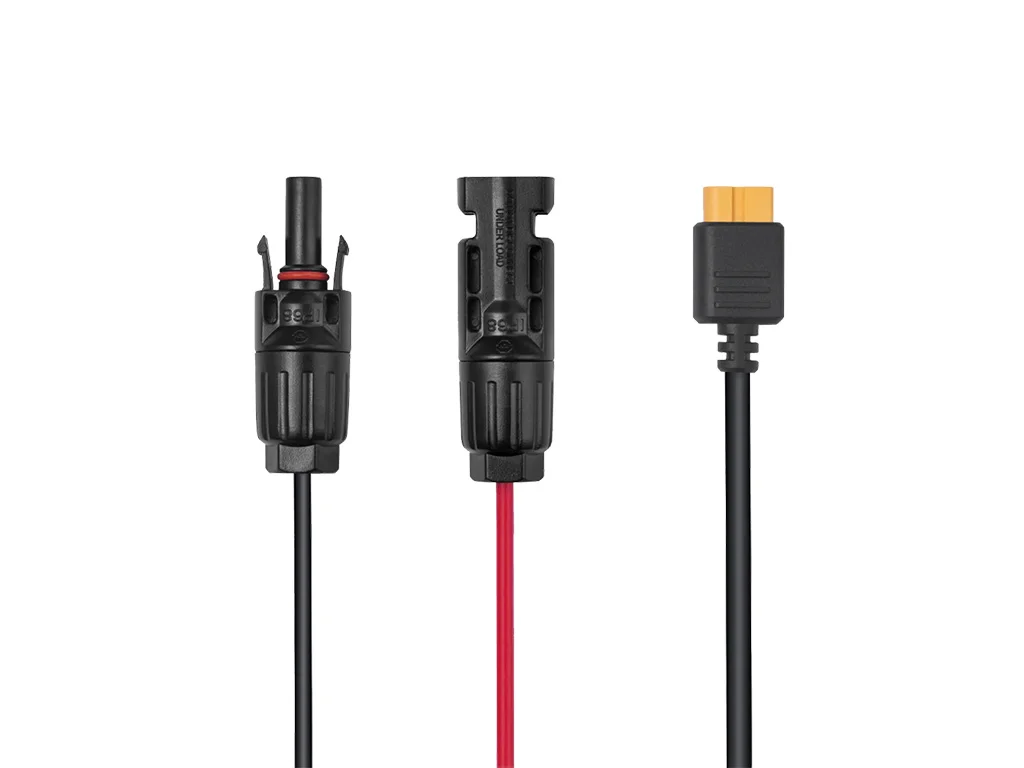
XT60 Cable Connector
The XT60 is the standard style and could be called the “dumb” version. It is a basic DC connector with one positive connection and one negative connection. It is typically yellow.
Due to this simplicity, there are times when it can fail to supply all of the information that the power station needs to successfully charge. There’s a potential issue because the power station might try to limit power for safety. Some power stations, like newer EcoFlow models, will limit charging for safety reasons when using a particular type of charging source.
While the XT60 is a great way to connect a charging source like solar panels to a power station, it’s not suitable for every need. But it can work for almost every solar panel situation. With some challenges that we’ll review below.

XT60i Cable Connector
When a power station needs more information about the charging source, the XT60i comes into play. The “i” in XT60i stands for intelligent. It has a small third connector that allows additional communication between the power station and charging source.
By using this third connector, the XT60i charging cable allows the power station to detect times when it needs to limit charging power. This applies to a situation when the power source connected to the other side of the XT60i is limited.
The XT60i is orange while the regular XT60 is yellow. Also, you can see the small third connection point on the outside of the XT60i adapter, located between the two sides of the body.
For many EcoFlow power stations, using the XT60i instead of the XT60 is crucial for one particular situation. It’s NOT solar charging, believe it not.
Using the XT60i is needed when charging from a car’s cigarette lighter port, for some EcoFlow power stations and other products.
But if you use the XT60 with some EcoFlow inputs that look for the XT60i, there’s a change it will limit solar panel power to 8A or 10A.
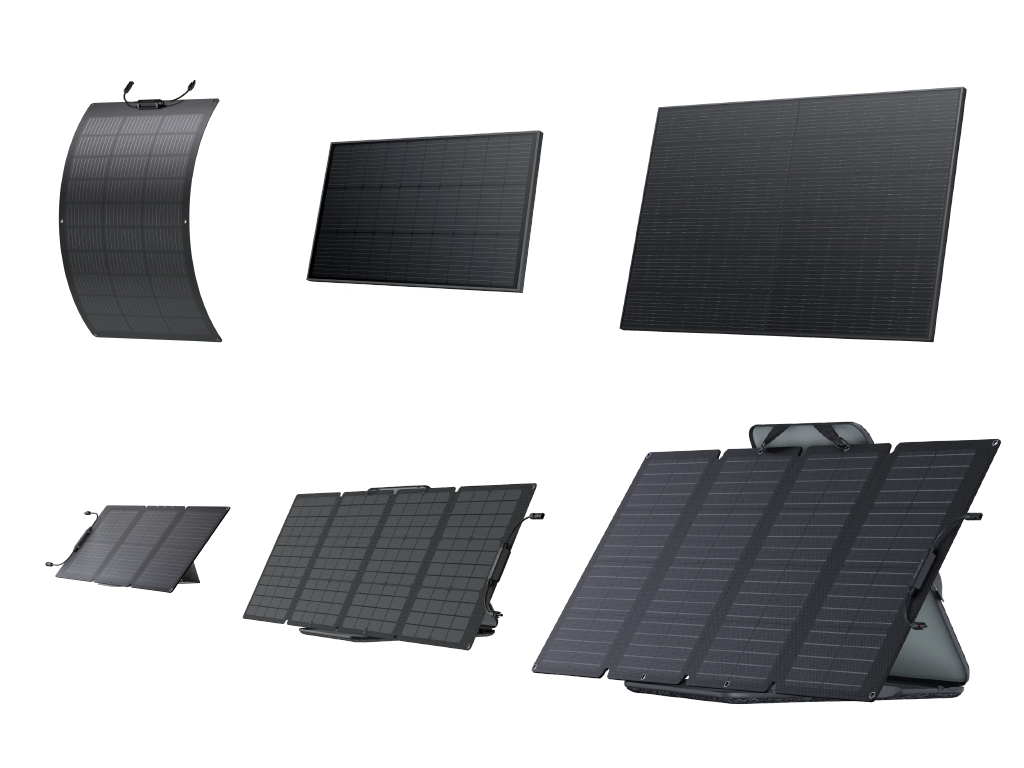
When To Use XT60 Solar Charging Cable: Any Solar Panels
Now for the good news. You can use the regular XT60 solar charging cable for almost all situations, especially when you’re using solar panels to charge. This connector can handle the current up to 60A.
So if you verify that the wire gauge is correct and that the power station uses the XT60 connector type, the XT60 should do the trick.
With some products, including some EcoFlow power stations, there is one catch. There can be times when the power station accidentally limits charging power. This is a protection measure, and from an electrical design perspective, it’s always better to err on the side of caution and limit charging when the device thinks it might pull too much power.
But the fix is easy. If this happens and you notice that your EcoFlow power station is charging slowly with an XT60 connector, just unplug it and plug it back in. That should fix it!
If you want to avoid this, just use the XT60i. It won’t have this problem even with the newer EcoFlow power stations.
Generally, you can always use XT60 connectors with solar panels. But you might have to redo the connection if it accidentally limits charging. This is a very rare situation that many testers are not able to replicate, but it can happen.
That’s one good reason to use the XT60i instead. Let’s go further into the XT60i cable to see why else you need to use this specific connector and cable type.
EcoFlow recommends using the XT60 with its older power stations, including the entire lineup of the original River models (not the updated River 2 models) and the original Delta lineup (Mini, Max 1600, and Delta). These models likely do not have the ability to communicate with the XT60i.

When To Use the XT60i Solar Charging Cable: Car Cigarette LighterPort
Now let’s talk more about the difference between theXT60 and XT60i charging connector and cable. The XT60i allows the power station a little more information to make sure it pulls a safe amount of power. This is usually when it’s connected to a particular power source that could be dangerous if too much power is pulled through.
You can use the XT60i with solar panels. This is the ideal connector to use. The newer EcoFlow power stations have inputs designed to work with this more advanced connector. But it doesn’t really make a difference if you’re using it with solar panels. The power station should always use whatever power the solar panels provide, up to the safe number of solar panels for the power station.
Car cigarette lighter ports are different.
These 12V car ports are usually connected to systems with a very high current, 100A or more in many vehicles. Yet the port itself and the wires connected to it are MUCH smaller, typically only 10A. That’s because the car’s alternator and battery electrical system generates a lot of power for other uses. The cigarette port is designed to be a low-power outlet for small devices.
And that’s the troublesome situation. A power station can absorb a LOT of energy. You don’t want the power station to attempt to pull more than 10A out of the cigarette port. That’s a problem.
When you connect many EcoFlow power stations to the cigarette lighter port, it’s important to use the XT60i cable. This helps the power station understand that this is a limited power source, and in many cases, it will appropriately limit the charging. It usually sticks to 8A so it doesn’t completely max out the 10A port.
The purpose of the XT60i is to avoid pulling too much current from a low-amp source, usually a car cigarette lighter port.
The only problem is that if you do not use the XT60i, there’s a chance the power station will limit power to 8A or 10A by using the XT60. This is why EcoFlow recommends the XT60i for the newer River 2 models and Delta 2 and Delta Pro 3 models (when the low-PV input).

Which EcoFlow Solar Cable Should You Get?
The more universal EcoFlow solar cable connector is the XT60i. This one can be used with all sorts of solar panels, plus you can safely use it with lower current sources like a car’s cigarette lighter port.
By using the XT60i instead of the XT60, you can have a lot more confidence that your power station will have the information it needs to safely pull in the right amount of energy.
On the other hand, the XT60 will be fine with solar panels. This is also suitable to use with high-PV inputs that aren’t made to use with weaker power sources (like the EcoFlow Delta Pro 3’s high-PV input).
The downside to using the XT60 is that there is the chance that low-power inputs will improperly limit charging power. For example, if you use the XT60 (not XT60i) with a low-PV input port of an EcoFlow to connect solar panels. In this situation, the power station can look for the third connector from the XT60i. And when it’s absent, there are some situations that it might limit to 8A or 10A instead of pulling in whatever the solar panels produce.
This problem shouldn’t happen often. And you should be able to fix it and get full solar panel charging just by unplugging the XT60 connector and plugging it back in.
But for this reason, getting the XT60i is useful. It should have a much better chance of always properly identifying the charging source and using the appropriate amount of power to charge your EcoFlow power station.

XT60 and XT60i Cable Recommendations
After spending a big wad of cash on power stations and solar panels, the idea of spending even more money to get a connector can be quite annoying.
This can be a tempting time to find the cheapest one available. After all, it’s just a cable connector. And for the most part, these are all very similar. Right?
Unfortunately, no. There are many XT60 solar cables that are known to fail. Some of the time this is due to a poor connection. If it’s loose, there’s extra resistance, which leads to excess heat. This can cause melting of the connector or worse. Other times, it’s just a low-quality connector that simply fails. A solder point goes wrong or the appropriate wire gauge is not actually used are two problems that might exist.
This is a high-amp cable that is an essential part of your power station and solar generator setup. Don’t let a few bucks get in the way of having a long-lasting system. So let’s check out the best XT60 and XT60i solar charging cables.
Note: You can use MC4 cables to extend the distance of the wire between your panels and the power station first. Then use a short MC4 to XT60 or XT60i adapter right next to the power station. This is usually a cheaper way to go, rather than buying a long XT60 cable.
EcoFlow XT60 and XT60 Solar Charging Cable
For this reason, we encourage you to get a high-quality connector. The ones from the same brand as your power station are usually ideal. Or you can look for third-party ones that come from reputable companies. We recommend these cables:
- EcoFlow XT60 and XT60i Solar Charging Cables: Known for being trustworthy and high quality. Available in both XT60 and 60i, in lengths of ~8ft to ~12ft (2.5m to 3.5m). These are not made for extended lengths due to thinner wire gauge. Look below for those options.
|
|
EcoFlow Solar to XT60/XT60i Charging Cable |
XT60 on EcoFlow XT60 on Amazon |
12AWG and 10AWG XT60 Cable Options
If your panels are dishing out more amps or are further away, then you want to find a connector that’s 12AWG. This helps avoid voltage drop and power loss in the cable itself. And it’s better for safety. 12AWG can handle up to 15A over 10ft runs with very little voltage drop, and is still safe for 15A at up to 30ft (10% voltage drop).
Since this is a high-current situation with solar panels only, you don’t need to use the XT60i. If you want to do so, stick with the EcoFlow option.
Here is our favorite pick for XT60 and XT60i solar charging cable with 12AWG wire:
- Nuofany MC4 to XT60 Adapter Connector Cable 12AWG 10ft: Excellent reliability and reputation, built with thicker 12AWG wires and uses XT60 connector.
There are times when 10AWG is the right call. This is an even thicker wire gauge that helps for long extensions so you can place your solar panels far away from the power station and still not have a voltage drop. It’s a little overkill for many times, but when it comes to electrical, it’s always better to go a step above than below. 10AWG can handle up to 15A for 20ft runs with very little voltage drop, or up to 100ft with 10% drop.
Here is our carefully selected choice for XT60 solar charging cable with 10AWG wire:
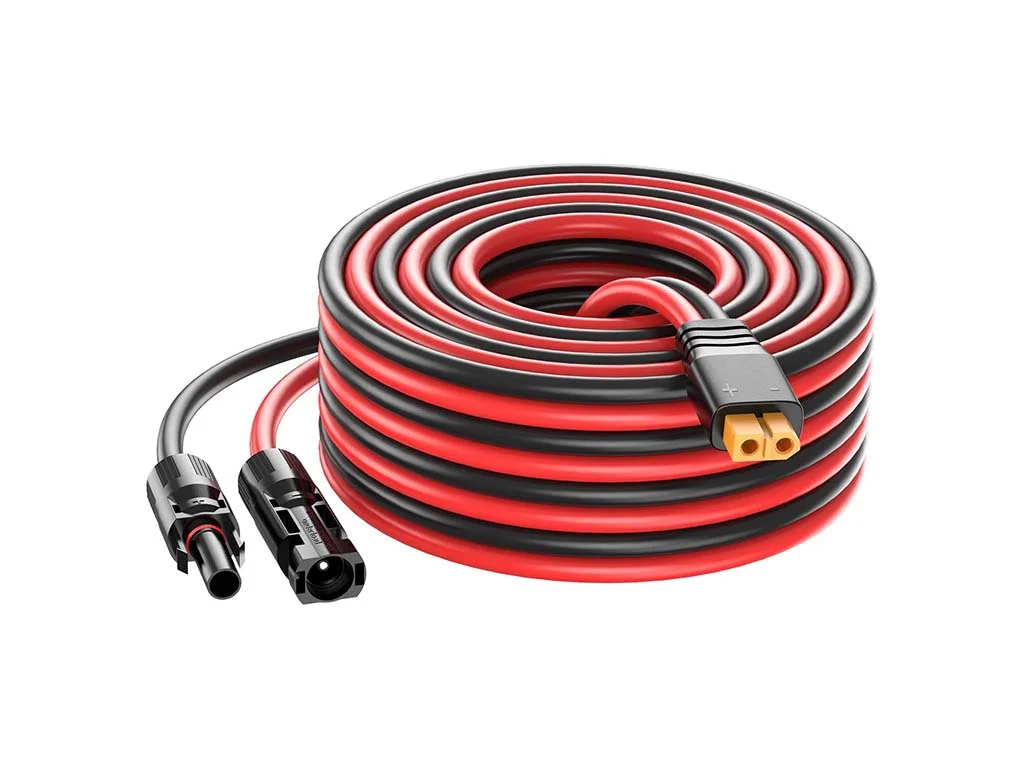
- Bateria Power MC4 to XT60 Cable 10AWG 25ft: Trusted cable supplier with a length solar charging cable for XT60 uses. Not appropriate for times when charging news to be limited through XT60i intelligent connection.
Here’s a table summarizing the best XT60 solar charging cable options:

|
Nuofany MC4 to XT60 Adapter Connector 24in |
Buy on Amazon |
|
Bateria Power MC4 to XT60 Cable 10AWG 10ft |
Buy on Amazon |
Using MC4 Extensions with XT60 Connectors
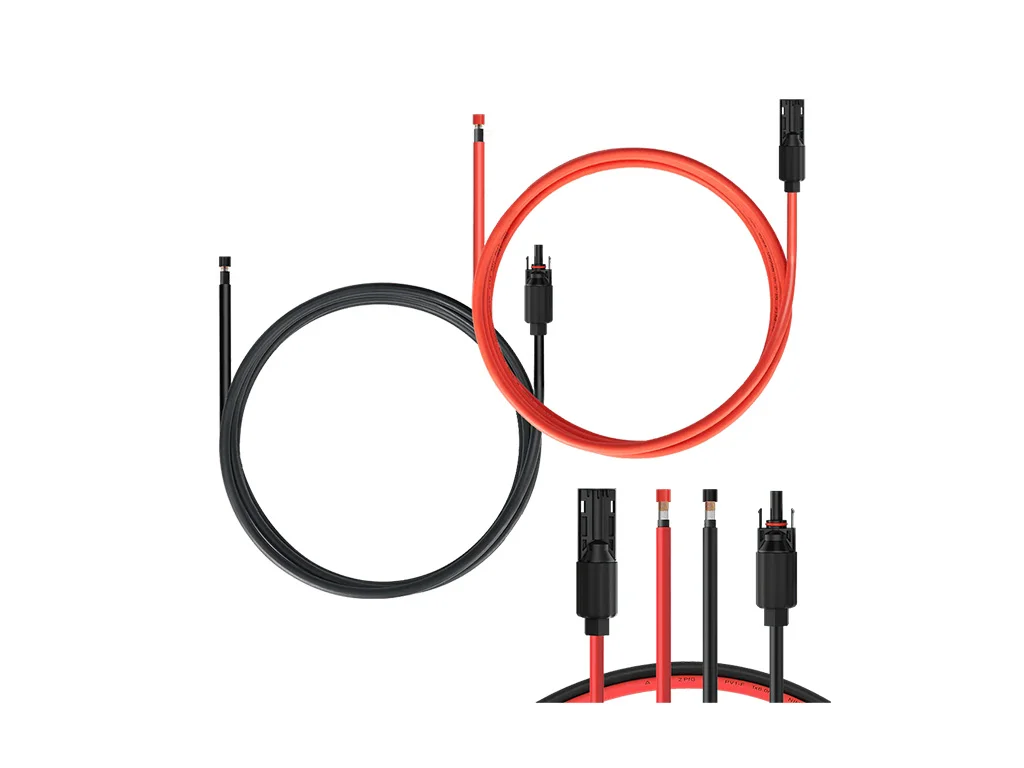
If you want to place your solar panels far away from the XT60 connection point, using MC4 cables and connectors can be a more cost effective way to do so. These are the most common solar panel connection types. They’re easy to work with, affordable, and weatherproof.
Once again, it’s just not worth your time to go with cheap knockoffs. BougeRV is a reputable brand that cares about its products, reputation, and clients. This company helps adventurers and homeowners leverage solar power for all sorts of products.
And BougeRV’s MC4 extension cables are some of the best on the market. They are available in 12AWG, 10AWG, and 8AWG in lengths up to 40ft (12.2m). And they come with everything you need to extend your solar panels with the perfect solar cable.
|
BougeRV MC4 Solar Extension Cable – Up to 8AWG & 40ft |
Buy on BougeRV Buy on Amazon |
Wrap Up: XT60 vs. XT60i Difference
The XT60i solar charging cables have a third connector that is important for using with car cigarette lighter ports and other low-current power sources. The XT60 is the more common connector type that can handle up to 60A and is suitable for solar panel usage when limiting power is not necessary.
You’re likely well on your way to get solar power. But what happens if your outage happens when solar power and sunlight isn’t readily available? That’s when EcoFlow’s Dual Fuel Smart Generator can come to the rescue.
Want to learn more about using solar panels with power stations? Check out these articles:


