

Are you ready to discover the confidence of energy independence? Both of these heavy-duty power stations are up to the task, but they have very different sets of features. Before you drop down your hard-earned money, see how the comparison between the Anker Solix F3800 vs. Jackery Explorer 2000 Plus turns out.
The most important part is getting what’s right for your needs, whether you’re gearing up for a camping trip, outfitting your RV, or looking for a reliable home backup solution. We’ll break down everything from battery capacity to charging speeds and portability, ensuring you have all the details you need to make the right decision.
Let’s dive into the world of portable power with the Anker F3800 and Jackery 2000 Plus, and see which one is truly worth your investment.
We carefully select the products and services we link to. If you buy through our links, we may earn a commission. There’s no extra cost to you and it helps us provide this information.

Quick Take: Anker F3800 or Jackery 2000 Plus?
Sometimes we see power stations that are so identical we have to split hairs to find a difference. Not here. These are both large power stations but they have much different capabilities and features.
Both brands have a lot of battery-focused experience. Jackery is a founding name of the entire power station industry. Anker started with smaller batteries but has now successfully turned into a trusted power station manufacturer. And both companies stand behind these two products with a 5 year warranty.
When comparing the Anker Solix F3800 and the Jackery Explorer 2000 Plus, you’re going to see a clear advantage for both. The Anker is simply more powerful all around while the Jackery still has a lot of power, but is much more portability-focused. And the Jackery has a lower price.
The Anker Solix F3800 is best for large power needs because:
- More battery capacity and AC inverter output
- Multiple high-amp outputs with 120V and 240V capabilities
- Better value per watt-hour
Yet the Jackery Explorer 2000 Plus offers a great choice if you need more portable or more affordable power:
- More lightweight and compact design, easier to transport
- Solar input expands with battery packs
- Much lower price yet still very capable
The 2000 Plus shines in portability and is perfect when mobility matters most.

If you look at the total price, the Jackery 2000 Plus is a much more affordable power station. The MSRP is nearly $2,000 lower than the Anker F3800. However, this is not an equal comparison. By looking at the price per watt-hour of the battery, you can see that the MSRP of both is around $1.05. Yet Anker’s sale price can sometimes hit much lower, down to around $0.75 per Wh.
You also might qualify for the 30% solar tax credit by buying the Anker or the Jackery with at least 3kWh total battery capacity. This is a big chunk of your purchase price straight back to your bottom line. And it includes solar panels, transfer switches, and other accessories needed to create a home backup system.
The truth is that these are both great deals with a lot of value. The Anker is more expensive but comes with more capability, while the Jackery keeps price lower since it has less power.
Conclusion: The Anker Solix F3800 is the better choice if you want more battery capacity, higher output, and flexibility for heavy-duty appliances or home backup. However, if you’re looking for a lightweight, faster-charging option with strong solar compatibility, the Jackery Explorer 2000 Plus is a premium power station that’ll handle of lot of needs while keeping cash in the bank.

|
Anker Solix F3800 |
F3800 on Anker F3800 on Amazon |
|
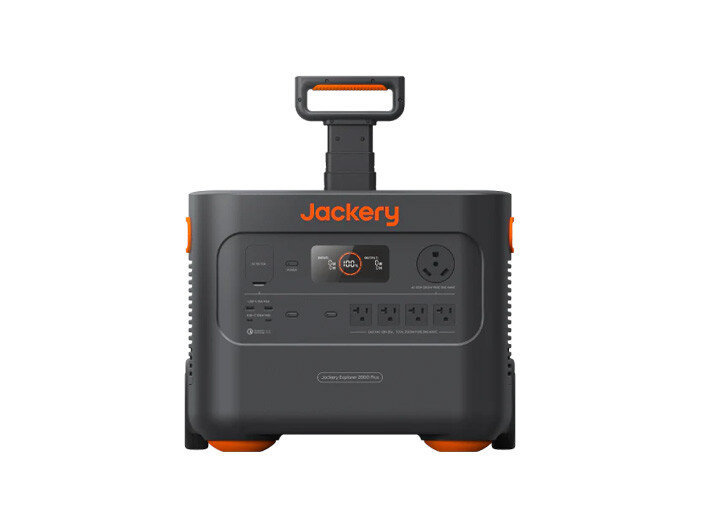
Jackery Explorer 2000 Plus |
2000 Plus on Jackery 2000 Plus on Amazon |
Anker F3800 vs. Jackery 2000 Plus: Power Station Showdown
You have a decent idea of the differences between the Anker F3800 and Jackery 2000 Plus. Now it’s time to make sure that the one you’re leaning toward is capable of doing what you want. Understanding power station specs is vital. There’s no point in getting one you won’t be happy with.
We’ll break down this comparison into key categories to make the decision easier:
- What Can These Power? Inverter and Outputs
- How Long Will They Last? Battery Capacity and Performance
- How Fast Do They Recharge? Charging Speeds and Inputs
- Are They Easy to Move? Portability and Dimensions
- Which One Should You Choose? Final Verdict
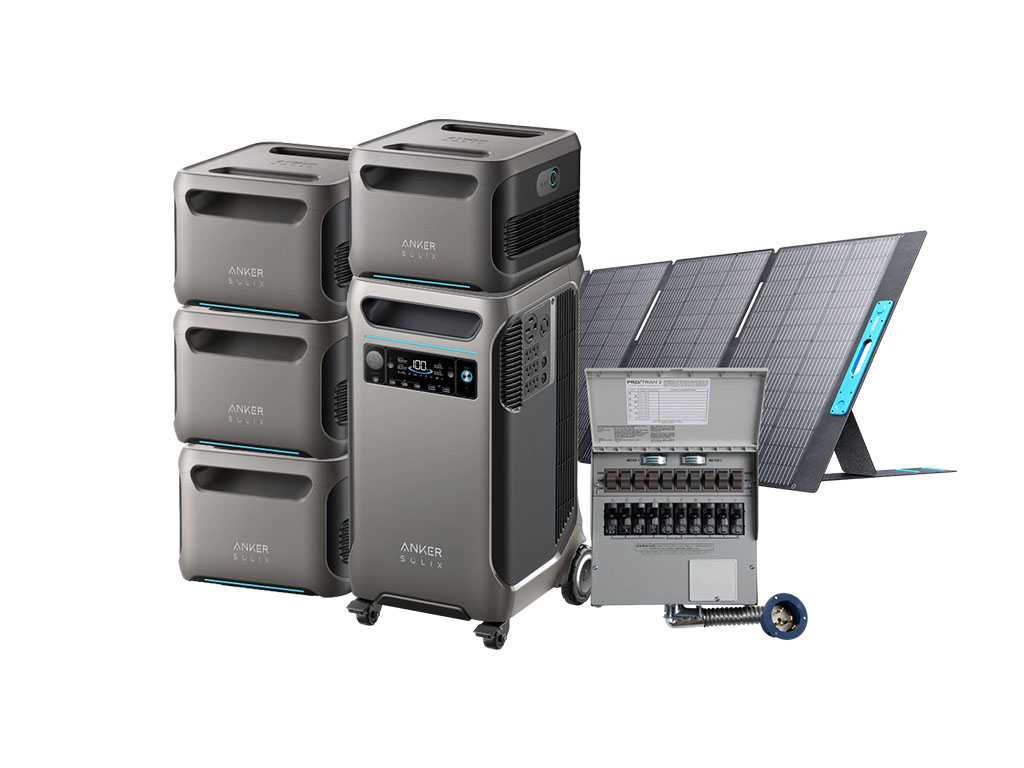
Powering Your Devices: Inverters and Outputs Unpacked
When choosing a portable power station, the inverter plays a crucial role in determining what devices you can run. Inverters convert the DC power stored in the battery into the AC power that your appliances and electronics use. Whether you’re trying to keep your lights on during a blackout or power up a mini-fridge on your next camping trip, the inverter size and output matter.
You don’t always have to use the inverter. In fact, whenever possible, it’s better to use the DC outputs directly. These include the USB ports, 12V car cigarette lighter port, and in some cases, other DC outputs. When you use these, you don’t have to turn on the inverter. The inverter uses some power so you’ll maximize battery life by using the DC outputs.
For these heavy-duty units, it’s very common to use the AC inverter output. That’s the best way to connect to things like an RV’s shore power inlet or a transfer switch and critical loads panel to power your home. So we’ll focus on the AC output to make sure it’ll meet your needs.
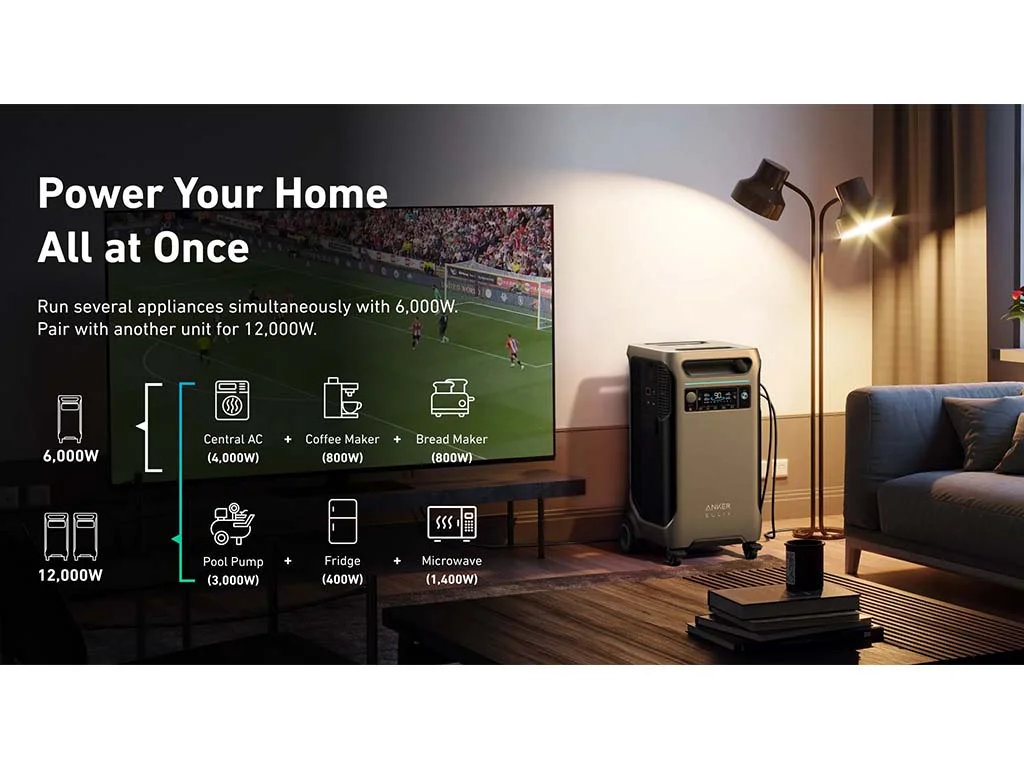
The Anker Solix F3800 brings serious power to the table with its 6,000W continuous output. Meanwhile, the Jackery Explorer 2000 Plus offers a respectable 3,000W continuous output rating. If this isn’t enough power, Anker and Jackery have designed multiple units to function as one system. You can use two Anker F3800’s to get to 12,000W output or two Jackery 2000 Plus units to reach 6,000W output.
Even Jackery’s limited 3,000W output is serious business. That can power:
- All the small devices you want: 10W phones, 30W tablets and WiFi routers, 60W laptops, and 100W mini fridges
- Quite a few medium sized devices: 200W computers and TVs and 500W full-size refrigerators
- At least one or two energy-intensive devices: 1,000W coffee makers, 1,500W microwaves, 2,000W induction cooktop

The problems for Jackery’s 3kW output start with heavy-duty appliances, like a large air conditioner. It can also be difficult to power a lot of light or medium devices then try to use a more intensive one. Even for a short time. That’s why the Jackery is best for limited home backup use for your most essential devices and appliances. It can keep your phones charged, computers running, television playing, and refrigerator cold. But you might have to turn some things off to run the microwave.
Anker’s 6kW inverter can handle that microwave and the rest of your critical devices. If you have two Anker F3800 power stations with 12kW total output, now you can run a big air conditioner on top of everything else. You’ll need to be worried about battery life though (covered in the next section).
For home use, especially during longer outages, the Anker Solix F3800 shines due to its high inverter output.
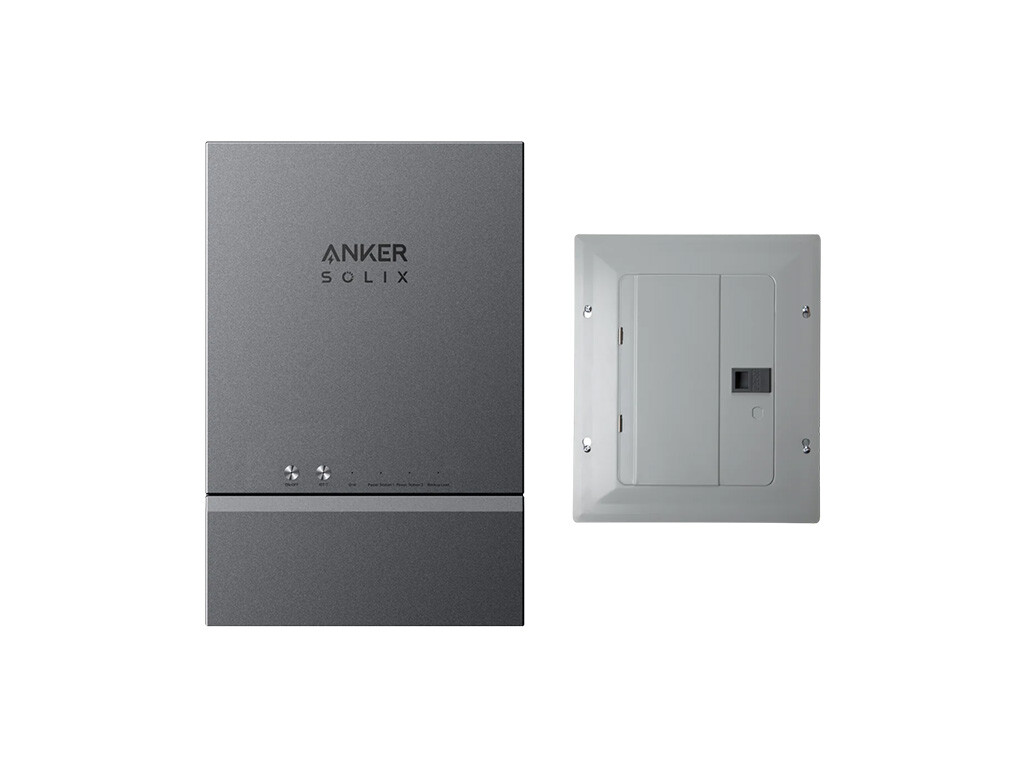
You can use both of these power stations with transfer switches and critical load panels to provide direct home integration. Anker has the advantage here as well, with the Anker Solix Home Power Panel. This is an automatic transfer switch made for the F3800 and it will identify when the grid power has failed and automatically switch to battery backup. It comes with intelligent software that is packed with useful controls to maximize your battery usage and lower your energy bills.
Both of these heavy-duty options can also use generic transfer switches, such as:
- Automatic transfer switches: Easiest way to ensure your power stays on even if the grid goes down.
- Manual transfer switches: Requires you to physically flip a switch to go from grid power to battery power.
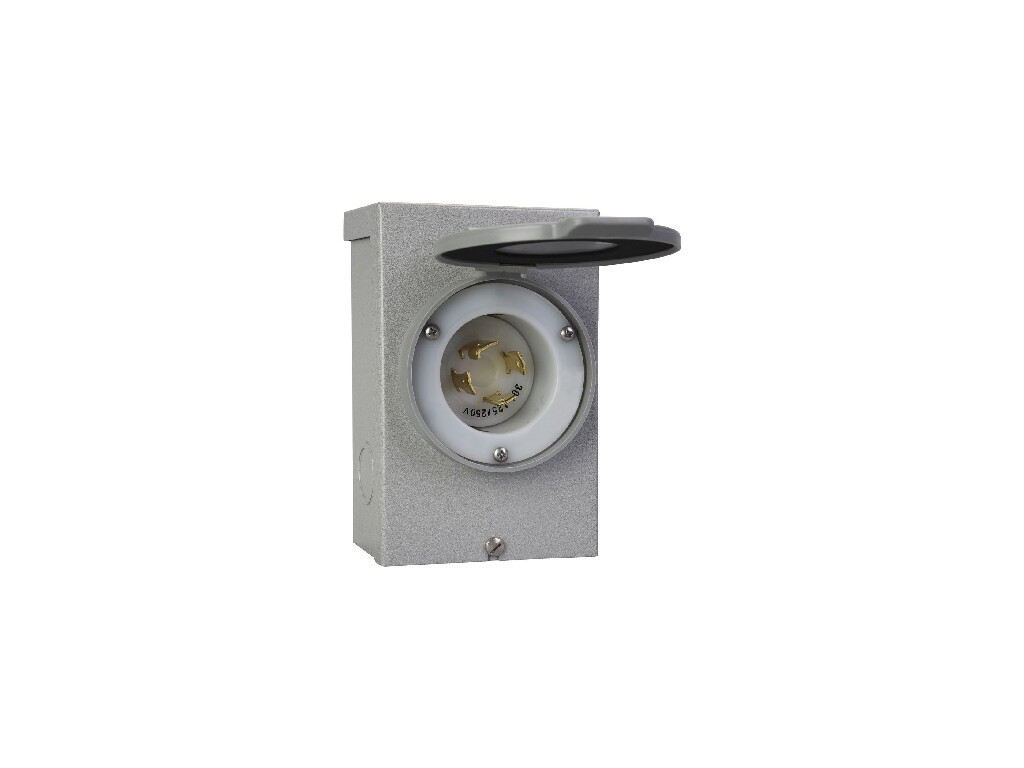
- Generator inlets: Simple connection that must be used with caution and always with an interlock if on grid power.
|
Anker SOLIX Home Power Panel |
Buy on Anker |
|
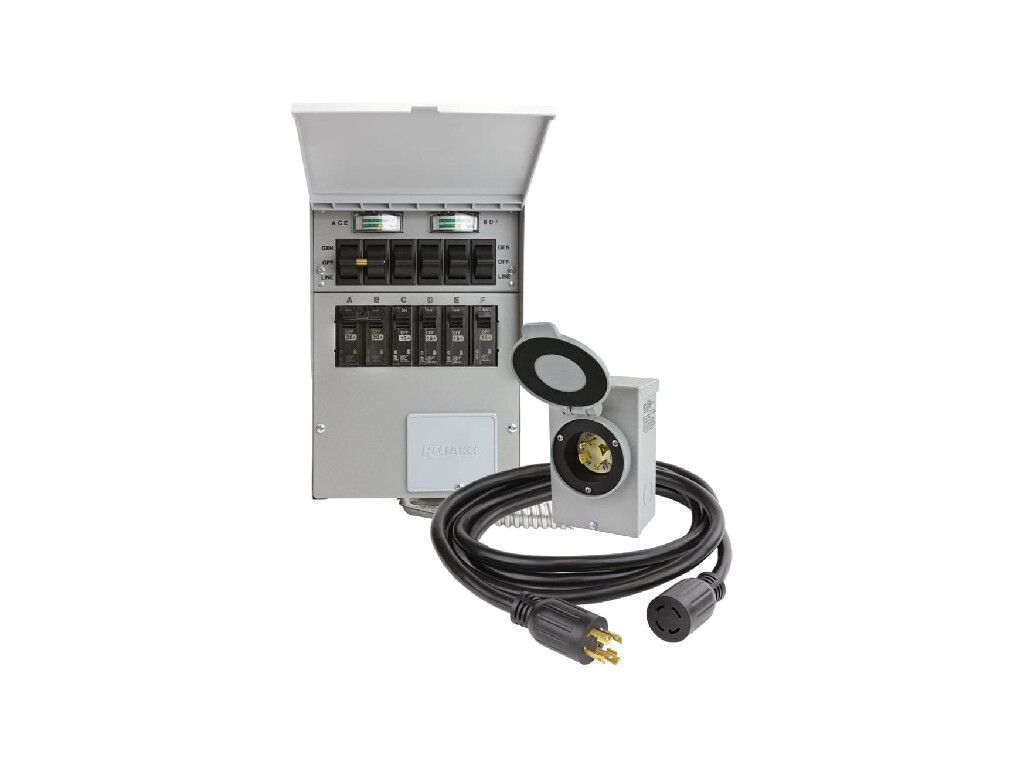
Reliance Controls 306CRK Transfer Switch Kit |
Buy on Amazon |
|
Reliance Controls PB30 30-Amp Generator Inlet Box |
Buy on Amazon |
Raw output power isn’t the only thing that matters. You also want the right number of ports and outlets. Here’s a closer look at the outputs:
- Anker F3800: Multiple 120V AC outlets including high-amp options that can dish out 240V, plus USB ports.
- Jackery 2000 Plus: Plenty of 120V AC outlets with one high-amp output, USB ports, and 12V car cigarette lighter output. Need two units to get 240V output.
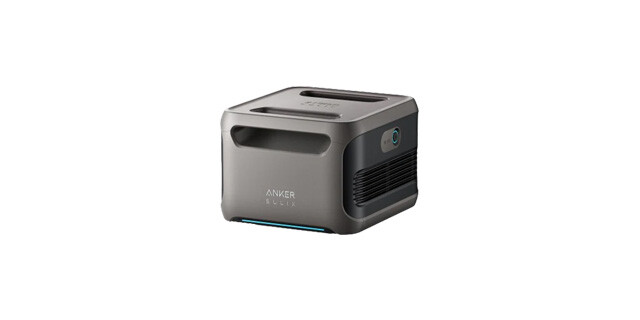
Jackery has one useful 30-amp outlet. But Anker has a 30-amp and a 50-amp, both of which can switch between 120V or 240V output. Anker even has one more USB port. It’s superior all around with its outputs.
Are you wanting to make sure some critical devices don’t lose power at all when a blackout rolls through? That’s a feature called the uninterruptible power supply (UPS). If the grid power goes out, the power station kicks in automatically, keeping critical devices like WiFi routers or medical equipment running without interruption. These both boast an incredibly fast <20ms transfer time, but it’s only through select AC outlets.
Output Verdict: The Anker Solix F3800 wins in terms of sheer power and flexibility. It has the ability to run more high-demand devices simultaneously, including the use of 240V outputs. Although it’s not as powerful, the Jackery Explorer 2000 Plus can still power a lot of small and medium devices, even handling bigger appliances like an induction cooktop. But you’re going to hit the maximum limits much sooner compared to the Anker F3800.
| Product | Jackery 2000 Plus | Anker Solix F3800 |
|---|---|---|
| AC Output | 3,000W | 6,000W |
| AC Output (System Max) | 6,000W | 12,000W |
| 120V Outlets | 4x20A; 1x25A | 6x20A |
| 240V Outlets | – | 2x25A (L14-30R & 14-50) |
| UPS / EPS | 20ms | 20ms |
| USB-A Ports | 2x18W | 2x12W |
| USB-C Ports | 2x100W | 3x100W |
| Cigarette Lighter | 1x120W | – |
Battery Power: How Long Can They Last?
Battery capacity is the key to knowing how long your devices can run. The Anker Solix F3800 has a massive 3,840Wh battery and the Jackery Explorer 2000 Plus features a 2,048Wh internal battery. But how does this translate into everyday use?
A typical 60W laptop could run for about 51 hours on the Anker and 27 hours on the Jackery, factoring in a 20% reduction for inefficiencies like heat loss, inverter use, and power wasted through wires.
If you’re powering something more demanding, like a whopping 1,000W continuous use of many devices and appliances (TV, fridge, lights, and countless small devices plus occasional microwave or induction cooktop use), you could get around 3 hours of use from the F3800 and 1.5 hours from the 2000 Plus.
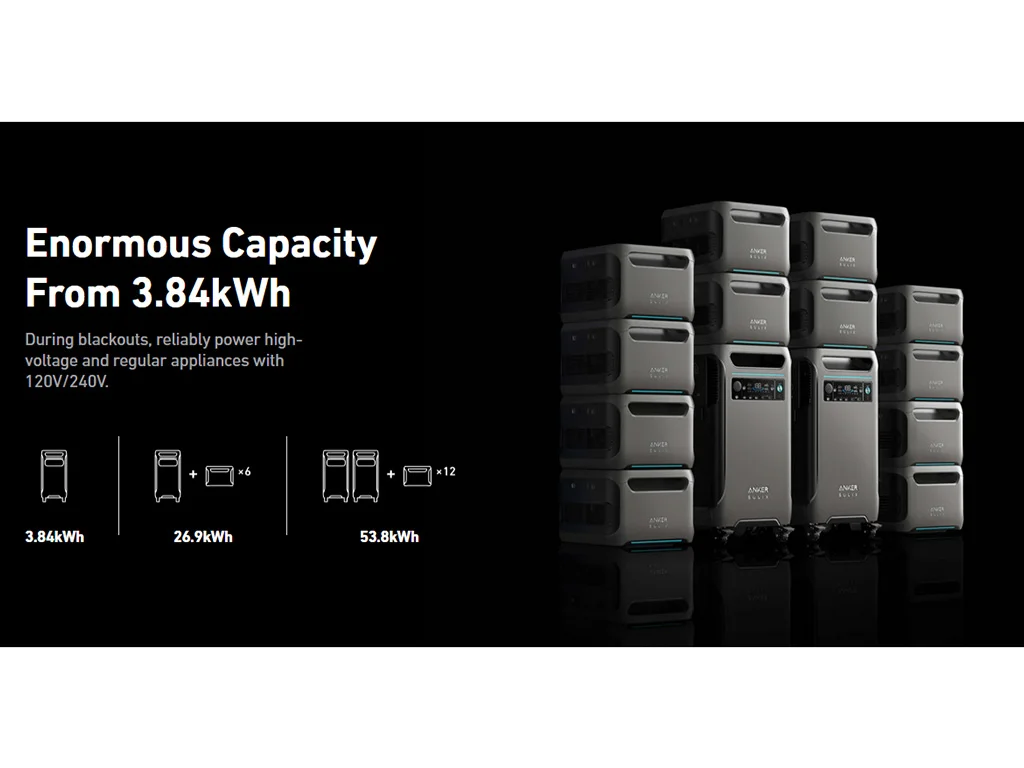
If you want more runtime without changing, use expandable battery options. The Anker F3800 allows up to 53.8kWh when paired with additional battery units, while the Jackery 2000 Plus can expand its capacity to 24.5kWh. Using 1,000W of energy, the Anker full system can run for nearly 2 days while the Jackery is about 20 hours. Once again, the Anker is clearly ahead but it’ll cost you more to get to that max amount.
Do these times seem short to you? These are based on 1,000W of continuous use. That’s a LOT of power. If you just have your fridge and phones, that’s closer to 250W continuous use. So you’ll get four times the hours.
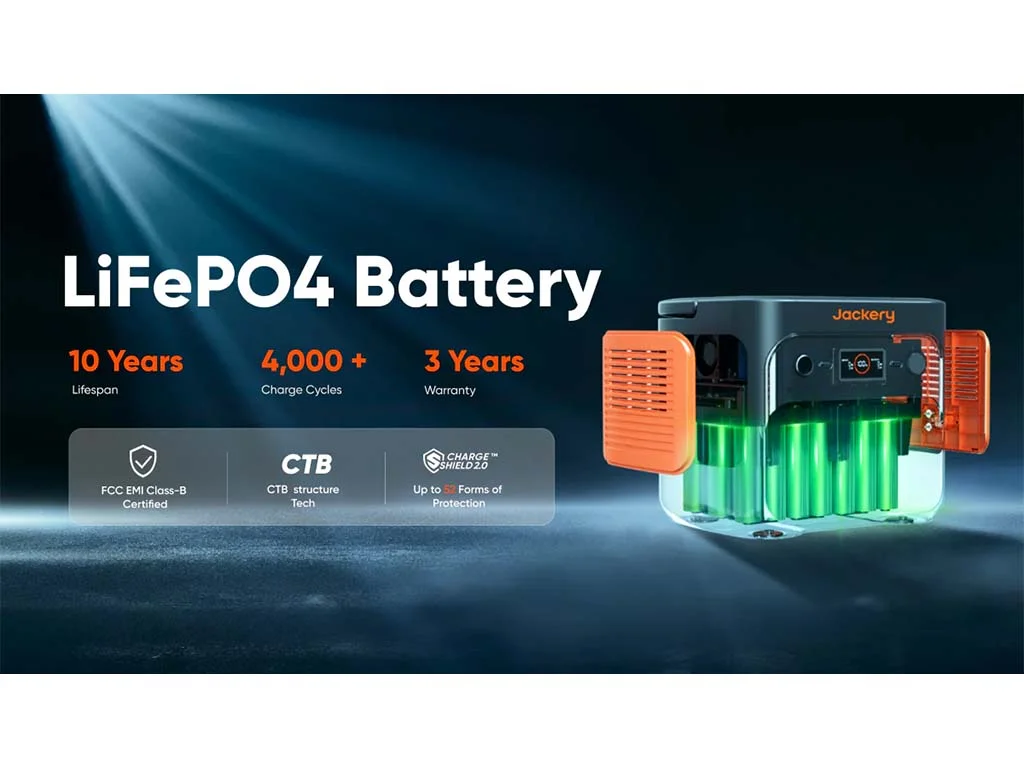
Another thing to consider regarding batteries is longevity. You want these to last years before having issues holding a charge. Both the Anker Solix F3800 and Jackery Explorer 2000 Plus use LiFePO4 (lithium iron phosphate) batteries rated for >3,000 cycles. They can be fully charged and discharged daily for about 8 years while still having at least 80% capacity.
On top of that, Anker and Jackery offer a 5-year warranty for these two power stations. Make sure to buy directly from Jackery to get the longest coverage.
Battery Verdict: The Anker Solix F3800 wins with its significantly larger 53.8kWh maximum battery capacity. Yet the Jackery Explorer 2000 Plus can still reach 24.5kWh battery capacity. That may be half what the Anker F3800 offers, yet it’s a massive amount of stored energy. Even the 2kWh of a single Jackery 2000 Plus is a giant battery. That can charge a 10Wh phone about 160 times!
| Product | Jackery 2000 Plus | Anker Solix F3800 |
|---|---|---|
| Battery | 2,043Wh | 3,840Wh |
| Battery (System Max) | 24,516Wh | 53,760Wh |
| Warranty | 3-5 years | 5 years |
| Battery Type | LiFePO4 / LFP | LiFePO4 / LFP |
| Battery Cycles | >3,000 | >3,000 |
| Buy Now | Buy 2000 Plus | Buy Now |
| Buy on Amazon | 2000 Plus on Amazon | F3800 on Amazon |
Charging Speeds and Input Options
You might think that charging is only determined by the source of power you connect. That’s true up to a certain limit. Both of these power stations can use the full 1,800W available from a traditional home outlet (120V / 15A). The Anker takes longer because it has a lot more battery to recharge. And if you connect 500W of solar, they’ll both absorb as much of that power as possible.
However, the incoming power must go through internal components of each power station known as charge controllers. And these have maximum rates which will determine the fastest charging time. This is a very important consideration if you want to maximize charging speed, especially for solar.
Solar panels and solar charging speed are measured in watts. The more solar input you can handle, the faster you can recharge from the sun.
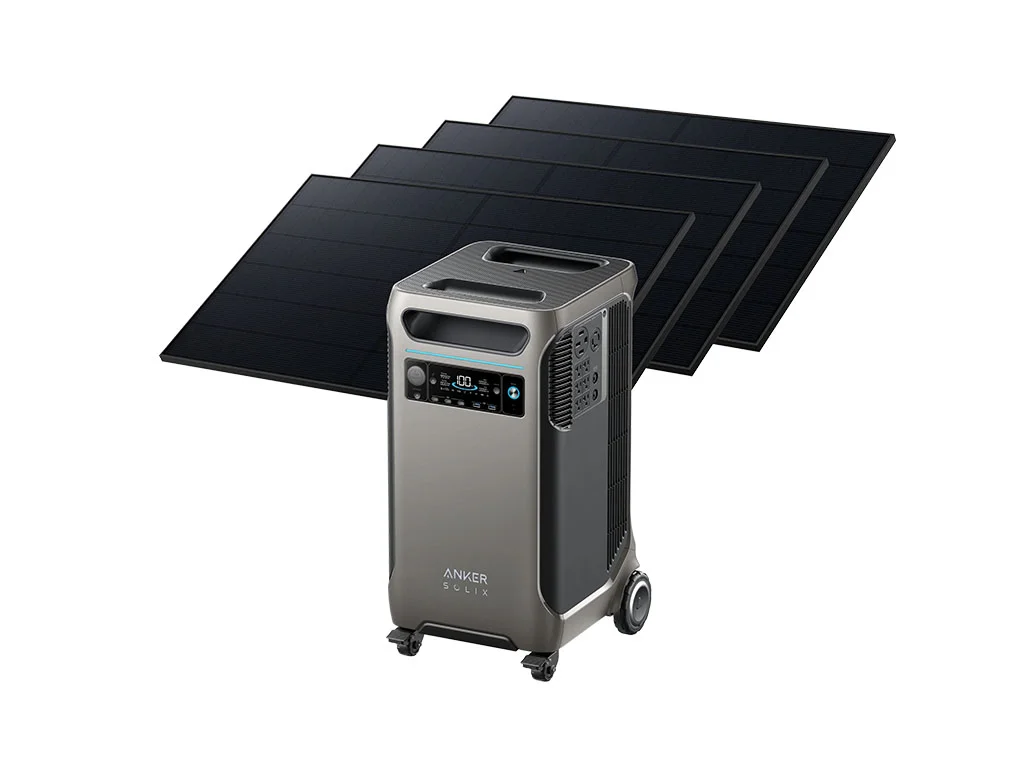
Each Anker Solix F3800 supports up to 2,400W of solar input, allowing it to fully charge in about 2 hours if you can hit that full 2,400W. The Jackery 2000 Plus has a lower 1,400W solar input, allowing its smaller battery to fill in about 2 hours as well.
But things start to take a turn when you add on more units or extra batteries. Anker follows the usual trend of relying on the main F3800 unit to charge the extra batteries. That means the 2,400W can be stretched thin.
Jackery takes a unique approach, allowing each battery to directly take in another 1,400W of solar. As you size up your battery capacity, your solar array can grow with it. This makes it much easier to get full charge from solar even if you have a monster battery system.
You need to stay within the voltage limit of the solar input, and in this case, they’re both at 60V. This is rather low for the Anker’s solar input and can make it challenging to actually hit 2,400W in reality.
If you want to use a vehicle whether it’s a car or RV to recharge the power station, we recommend getting a Pecron 500W DC Car Charger or the Bluetti 560W Car Charger 1. The usual 12V cigarette lighter ports are limited to 120W, which is just too slow for these big power stations. These two chargers mimic solar output and makes it so your car can recharge these much faster. The Bluetti is a universal power station car charger option (not just Bluetti power stations).
Charging Verdict: The Jackery Explorer 2000 Plus offers much better charging rates because each battery includes an additional 1,400W of solar input. The Anker F3800’s charging times are very fast, but the solar input will be a little difficult if you add many extra batteries. They both can use a full 1,800W from a standard wall outlet.
| Product | Jackery 2000 Plus | Anker Solix F3800 |
|---|---|---|
| AC Input | 1,800W | 1,800W |
| AC Recharge Hours (Est.) | 1.4h | 2.6h |
| Solar Input | 1,400W | 2,400W |
| Solar Recharge Hours (Est.) | 1.8h | 1.9h |
| Solar Input (System Max) | 17,000W | 4,800W |
| Solar Input 1 Watts | 700W | 1200W |
| Solar Input 1 Volts Min | 11V | 11V |
| Solar Input 1 Volts Max | 60V | 60V |
| Solar Input 1 Amps | 12A | 27A |
| Solar Input 2 Watts | 700W | 1200W |
| Solar Input 2 Volts Min | 11V | 11V |
| Solar Input 2 Volts Max | 60V | 60V |
| Solar Input 2 Amps | 12A | 27A |
Size and Portability: How Heavy Are They?
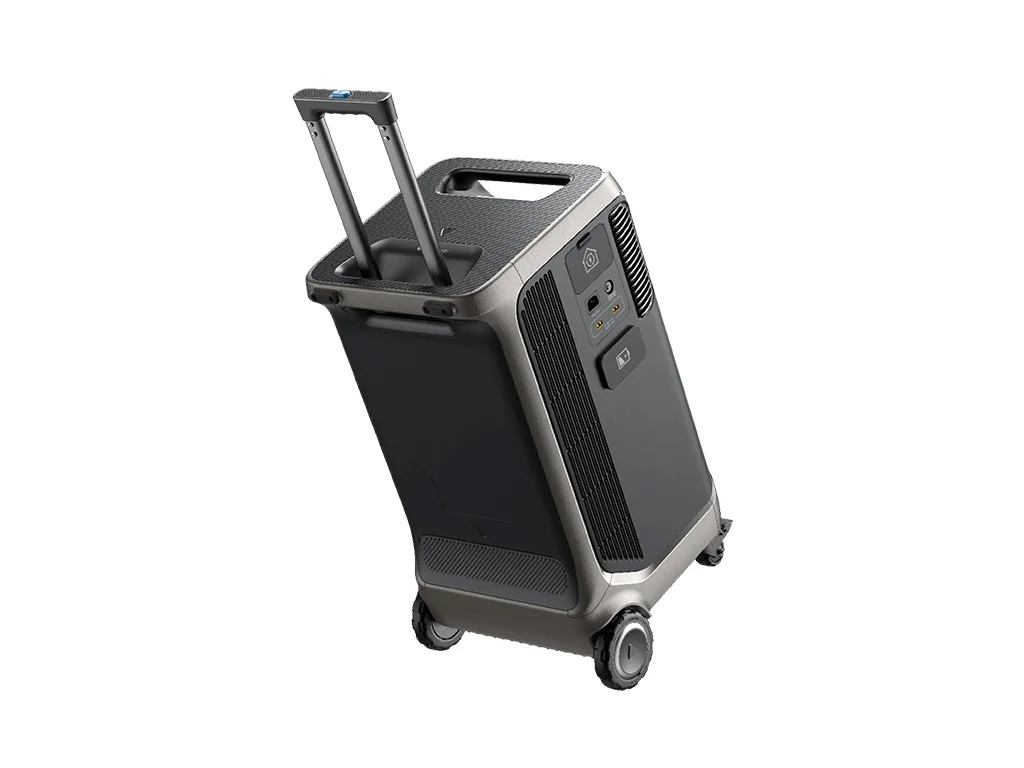
Portable power stations have a big leg up on the customized DIY home power systems since you can actually bring them anywhere. It doesn’t matter if you’re moving out of your house for good or just out for the day, these Anker and Jackery power stations can go along for the ride. They both have wheels and telescopic handles to make mobility a lot easier.
The 2000 Plus is much easier to move around than the F3800. The Jackery is about 60lbs (28kg) while the Anker is a massive 132lbs (60kg). That big battery comes around the other direction.
Portability Verdict: The Jackery Explorer 2000 Plus is the clear winner for portability, offering a lighter, more compact design that’s easier to handle on the go. The Anker Solix F3800 is best for users who don’t need to move their power station frequently and prefer higher energy storage.
| Product | Jackery 2000 Plus | Anker Solix F3800 |
|---|---|---|
| Weight (lbs) | 61.5lbs | 132lbs |
| Weight (kg) | 27.9kg | 60kg |
| Dimensions (in) | 18.6×14.1×14.7in | 27.6×15.3×15.6 in |
| Dimensions (mm) | 473x359x374mm | 702x388x395mm |

Final Verdict: Our Recommendation
We’ve gone over the most important details for these two heavy-duty power stations. In general, it’s easy to see that the Jackery is best for lighter use even though it can have massive battery capacity. The Anker is a much more powerful system.
Here’s a recap of the main features:
- Inverter and Outputs: The Anker F3800 excels with its high 6kW inverter output, while the Jackery 2000 Plus has a 3kW inverter. You can double both of those by using them with another unit.
- Battery Capacity: The Anker F3800 has 3.8kWh single-unit battery and up to 53.8kWh total capacity. It has significantly more storage than the Jackery 2000 Plus with 2kWh each and 24.5kWh total potential.
- Charging Speeds: The Jackery 2000 Plus wins here with faster and more convenient solar charging, especially when extra battery units are considered. The Anker F3800 still has fast charging from both AC and solar, but using the max 2,400W is difficult due to the low voltage limit.
- Portability: At less than half the weight, the Jackery 2000 Plus is much easier to handle and move around. The Anker is a beastly unit with specs to match, but lifting it is a two-person job.
| Anker F3800 | Jackery 2000 Plus |
|---|---|
Final Recommendation: The Anker Solix F3800 is our top choice to maximum power storage, inverter output, and longer home backup situations. It’s the best power station for those focused on energy capacity over mobility. However, we recommend the Jackery Explorer 2000 Plus if portability, faster solar charging, and reliable performance for smaller devices are your priorities. It also is much cheaper. Both are high-quality and heavy-duty portable power stations, but your ideal pick depends on whether you value power or portability more.
|
|
Anker Solix F3800 |
F3800 on Anker F3800 on Amazon |
|
|
Jackery Explorer 2000 Plus |
2000 Plus on Jackery 2000 Plus on Amazon |
Side-by-Side Specs Comparison Chart
Here’s a full spec comparison chart for the Anker Solix F3800 and Jackery Explorer 2000 Plus. We’ve also included links to the user manuals for your quick reference.
| Product | Jackery 2000 Plus | Anker Solix F3800 |
|---|---|---|
| Battery | 2,043Wh | 3,840Wh |
| Battery (System Max) | 24,516Wh | 53,760Wh |
| AC Output | 3,000W | 6,000W |
| AC Output (System Max) | 6,000W | 12,000W |
| AC Input | 1,800W | 1,800W |
| AC Recharge Hours (Est.) | 1.4h | 2.6h |
| Solar Input | 1,400W | 2,400W |
| Solar Recharge Hours (Est.) | 1.8h | 1.9h |
| Solar Input (System Max) | 17,000W | 4,800W |
| Warranty | 3-5 years | 5 years |
| Weight (lbs) | 61.5lbs | 132lbs |
| Weight (kg) | 27.9kg | 60kg |
| Dimensions (in) | 18.6×14.1×14.7in | 27.6×15.3×15.6 in |
| Dimensions (mm) | 473x359x374mm | 702x388x395mm |
| Solar Input 1 Watts | 700W | 1200W |
| Solar Input 1 Volts Min | 11V | 11V |
| Solar Input 1 Volts Max | 60V | 60V |
| Solar Input 1 Amps | 12A | 27A |
| Solar Input 2 Watts | 700W | 1200W |
| Solar Input 2 Volts Min | 11V | 11V |
| Solar Input 2 Volts Max | 60V | 60V |
| Solar Input 2 Amps | 12A | 27A |
| Battery Type | LiFePO4 / LFP | LiFePO4 / LFP |
| Battery Cycles | >3,000 | >3,000 |
| 120V Outlets | 4x20A; 1x25A | 6x20A |
| 240V Outlets | – | 2x25A (L14-30R & 14-50) |
| UPS / EPS | 20ms | 20ms |
| USB-A Ports | 2x18W | 2x12W |
| USB-C Ports | 2x100W | 3x100W |
| Cigarette Lighter | 1x120W | – |
| Connectivity | WiFi / Bluetooth | WiFi / Bluetooth |
| User Manual | User Manual | User Manual |
| Buy Now | Buy 2000 Plus | Buy Now |
| Buy on Amazon | 2000 Plus on Amazon | F3800 on Amazon |
|
|
Anker Solix F3800 |
F3800 on Anker F3800 on Amazon |
|
|
Jackery Explorer 2000 Plus |
2000 Plus on Jackery 2000 Plus on Amazon |
Final Summary
As two strong contenders in the portable power station market, you can’t go wrong with these two options. The Anker F3800 is the more robust and expensive option, bringing larger battery capacity and an AC inverter output above almost every option around.
On the other hand, the Jackery 2000 Plus is still a heavy-duty power station that keeps weight down while offering extensive battery capacity and solar charging growth. It’s good for more limited home backup needs while excelling at portable adventures. And it has a much lower total price (although price per Wh is typically about equal).
See our in-depth review of the Anker Solix F3800 or the Jackery Explorer 2000 Plus review. You can also see some of our most popular comparison articles:
- Anker F3800 vs. Bluetti AC500
- EcoFlow Delta Pro 3 vs. Anker F3800
- EcoFlow Delta Pro 3 vs. Jackery 2000 Plus
- Jackery Comparison Chart
- Anker Comparison Chart
Whatever your power requirements, it’s time to buy your answer to energy independence. Forget about power outages and enjoy the confidence of having continuous power wherever you are.


