
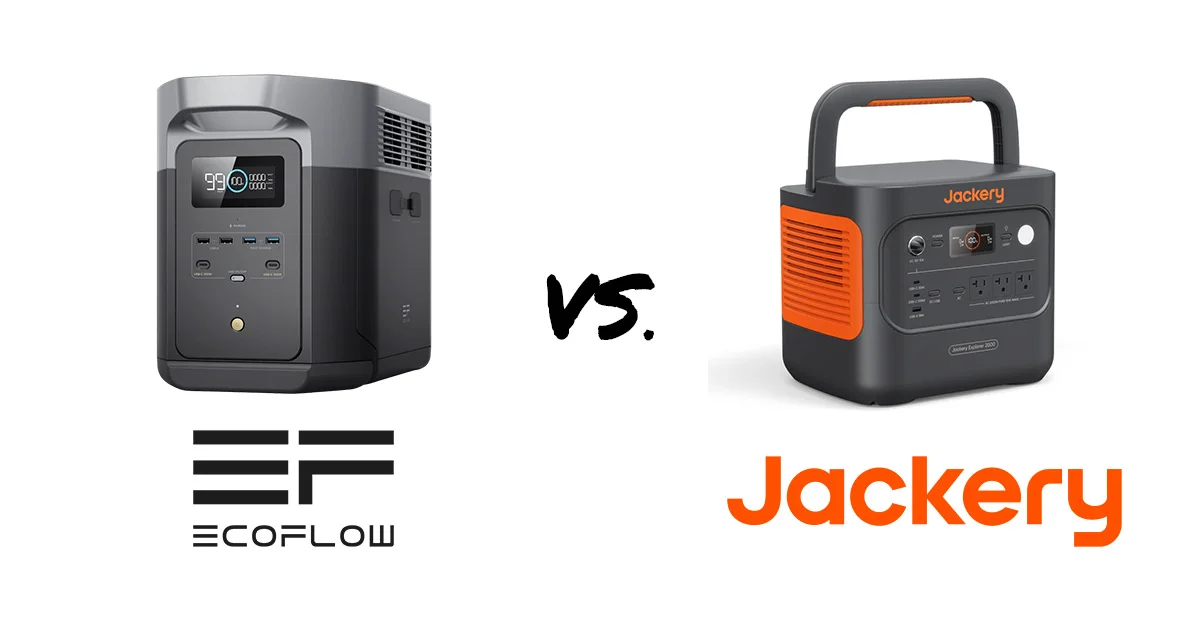
When it comes to portable power, the EcoFlow Delta 2 Max vs. Jackery 2000 v2 comparison is worth your time. They’re similar power stations with large batteries and powerful inverters. Yet there are some key differences that you should know about before buying either one.
This is your guide to understanding what makes each power station stand out. We’ll dive into everything from battery capacity to charging speeds, helping you see the details that matter most, including what sort of devices you can run and for how long.
Ready to power up your knowledge and make the right choice? Let’s take a closer look at the EcoFlow Delta 2 Max and Jackery 2000 v2.
We carefully select the products and services we link to. If you buy through our links, we may earn a commission. There’s no extra cost to you and it helps us provide this information.

Quick Summary: Portable Priority or Superior Solar?
The EcoFlow Delta 2 Max vs. Jackery 2000 v2 face-off isn’t your typical power station duel. These two might seem similar at first glance, but dig deeper, and the differences become clear.
Need a quick charge or more outlets for all your devices? The Delta 2 Max has you covered. Prefer a lighter, no-fuss option? The Jackery 2000 v2 shines in simplicity. Both deliver reliable power for camping trips, road adventures, or backup at home – yet each brings something unique to the table.
EcoFlow’s Delta 2 Max stands out for those who need more than just basic power:
- Modular battery expansion
- Faster solar charging
- More outlets and ports
The Jackery 2000 v2 isn’t far behind. The inverter and internal battery are almost identical. But if portability is your top priority, it’s the better choice and includes:
- Extremely compact and lightweight
- Faster UPS transfer speed
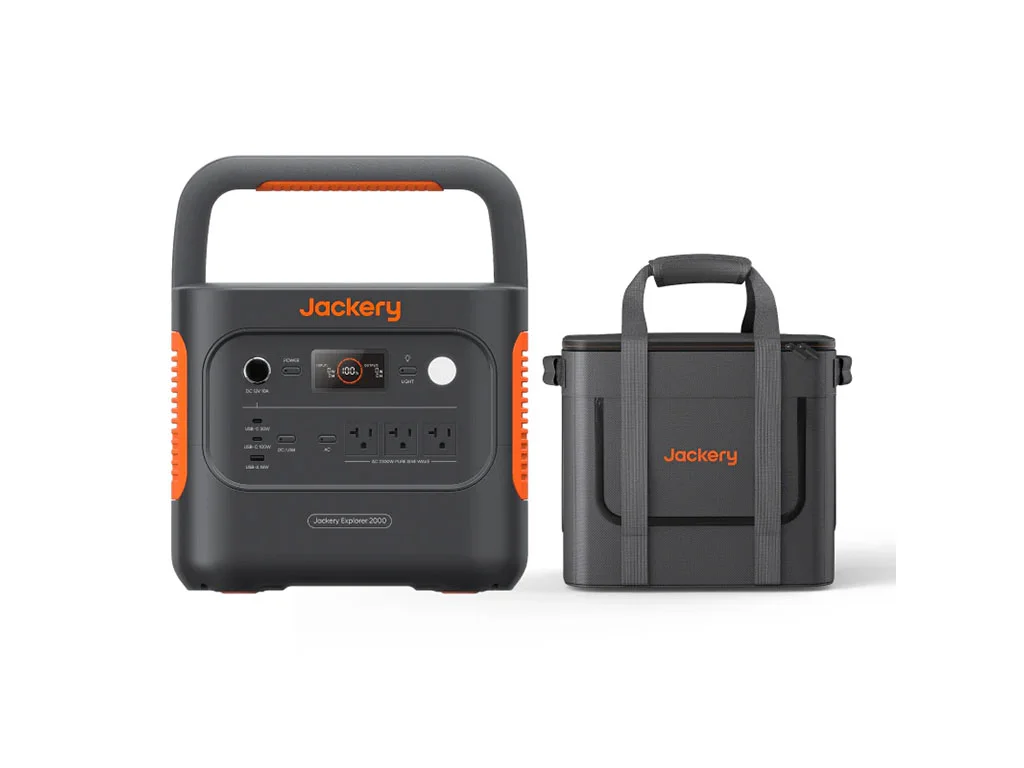
Both power stations offer good value per watt-hour, especially when you consider their build quality and the brands’ reputations. EcoFlow’s modular design makes it a better long-term investment for heavy-duty use, while Jackery appeals to users looking for simplicity and lighter travel. The price per Wh of both is very competitive (around $0.90 per Wh or less). But the Jackery per Wh cost is a little lower, which is to be expected because it includes less capability.
If you get at least 3kWh of battery, the Delta 2 Max may qualify for the 30% clean energy tax credit.
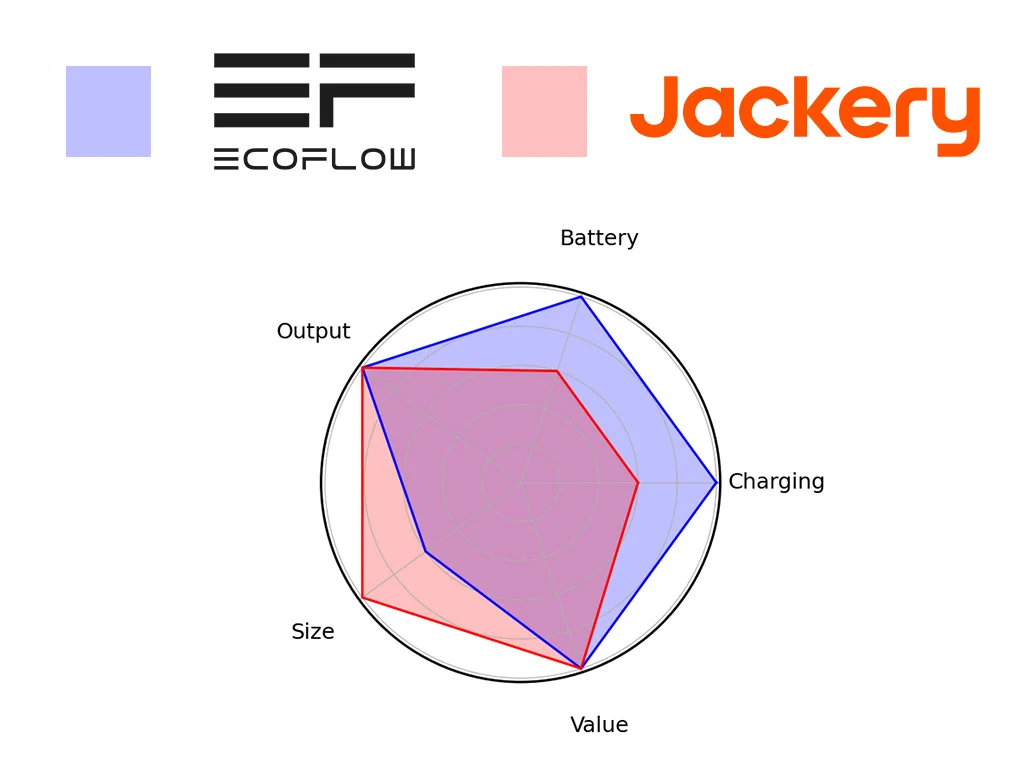
Overall, the EcoFlow Delta 2 Max takes our top spot in this comparison due to the ability to add more battery capacity, better solar input, and more versatile outlets and ports. It reigns supreme for those looking to future-proof their power setup. The Jackery Explorer 2000 v2 is the go-to option if this battery and inverter is what you need but you also want it to be as small and light as possible.
Get 5% off most EcoFlow orders with the SOLARWAY5OFF discount code.
|
EcoFlow DELTA 2 Max |
D2M on EcoFlow D2M on Amazon |

|
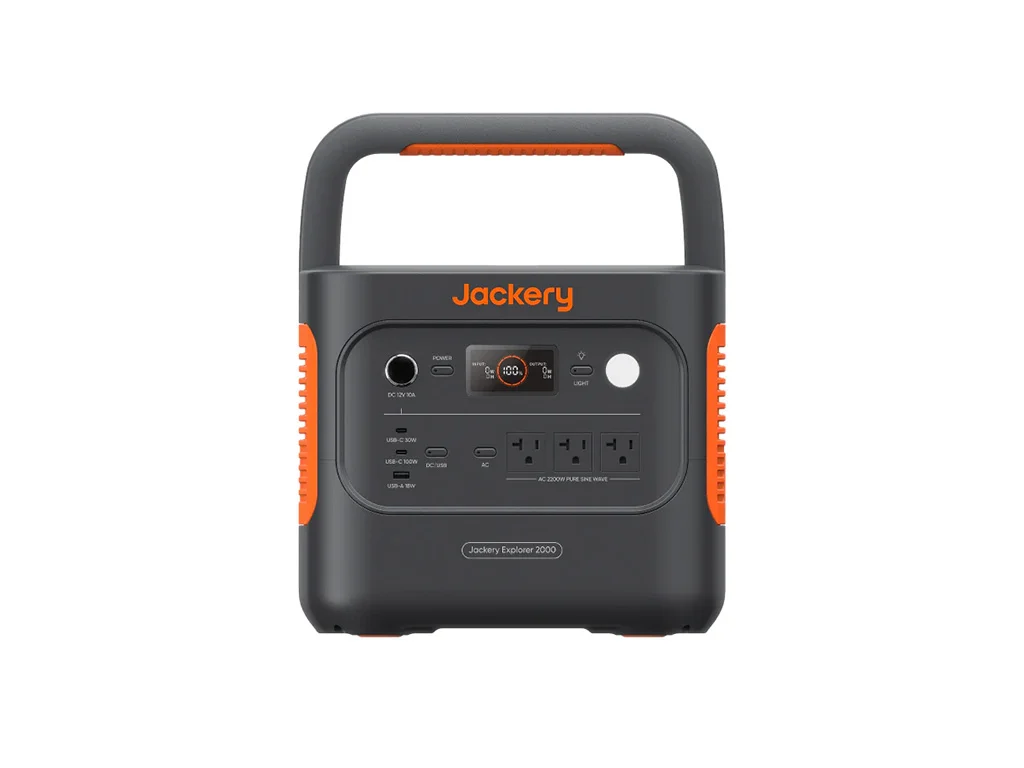
Jackery Explorer 2000 v2 |
2000v2 on Jackery 2000v2 on Amazon |

Head-to-Head Comparison: EcoFlow Delta 2 Max vs. Jackery 2000 v2
We’re about to dig deep into the heart of what makes these portable powerhouses tick. To help you navigate the comparison, we’ve broken it down into five essential categories:
- Which Has More Inverter Power?
- Do The Batteries Last a Long Time?
- Is the Charging Speed Fast?
- Are They Really Portable?
- Spec Comparison Chart
- Which One Wins? Final Verdict
Watt’s the Deal: Inverters and Outputs
When it comes to portable power stations, the inverter is your key to turning stored energy into usable AC power. It converts the direct current (DC) from the battery into alternating current (AC), which most household devices need to run. Both the EcoFlow Delta 2 Max and Jackery 2000 v2 offer powerful inverters, but the real question is: What can they handle?
The EcoFlow Delta 2 Max brings a 2,400W inverter with a peak output of 4,800W, and its X-Boost mode pushes it up to 3,400W, allowing it to power more demanding devices. The Jackery 2000 v2 isn’t far behind, offering a 2,200W inverter with a 4,400W peak, but lacks the extra kick of X-Boost.
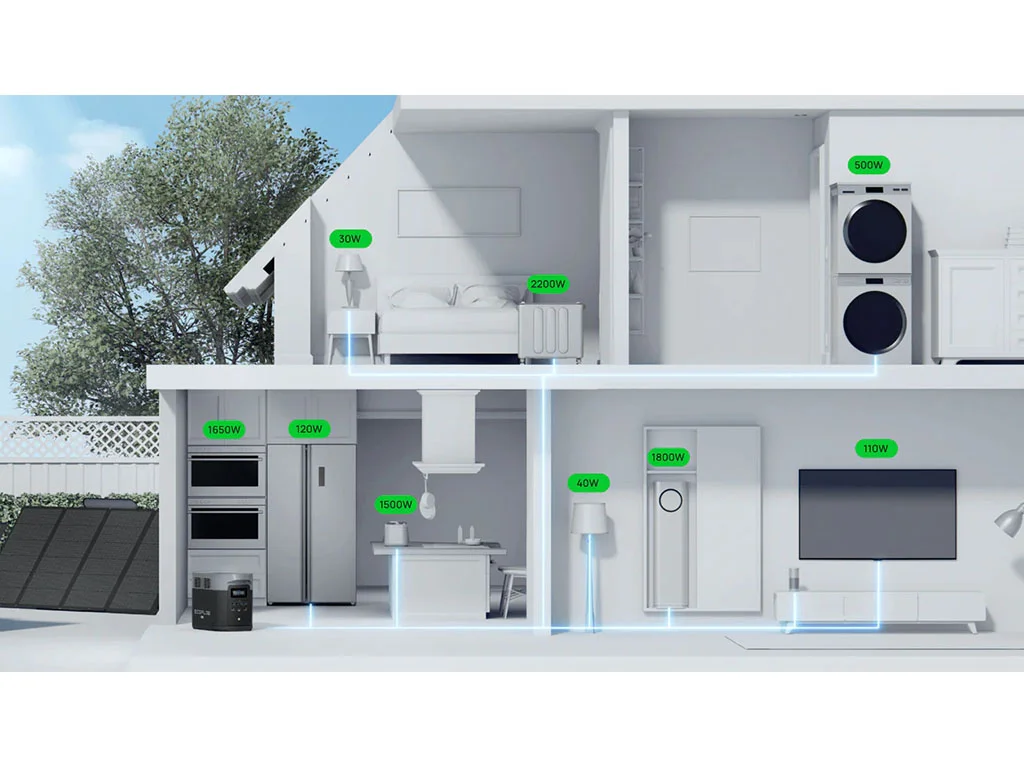
Here’s a quick look at the running wattage of common devices you can use with these power stations:
- Low wattage (under 100W): Phones, tablets, WiFi routers, laptops, portable fridges.
- Medium wattage (200W to 500W): Desktop computers, TVs, full-size refrigerator..
- High wattage (1,000W to 2,000W): Microwaves, power tools, coffee makers.
For more demanding appliances, like a fridge and microwave running together, the Delta 2 Max’s higher inverter capacity and X-Boost feature make it a better choice, handling up to 3,400W spikes without breaking a sweat. If you’re trying to run several medium-to-high watt devices simultaneously, EcoFlow’s setup gives you more headroom, reducing the chances of overloading.
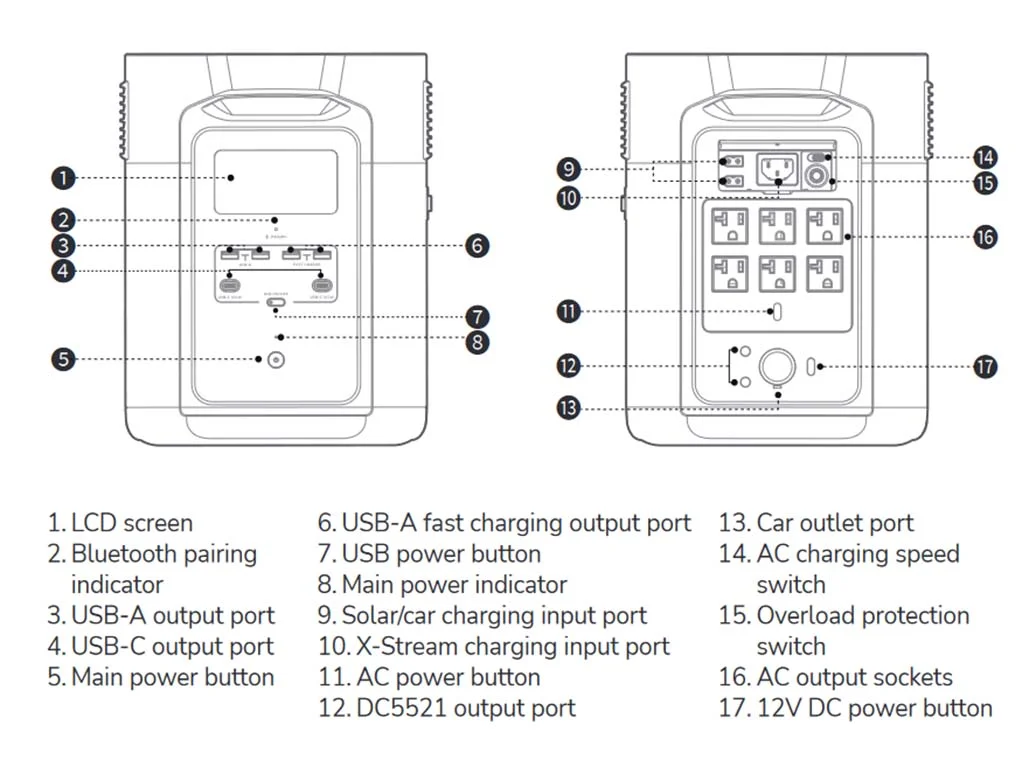
You also need to look at the outlets and ports, the places where you’ll actually connect your devices:
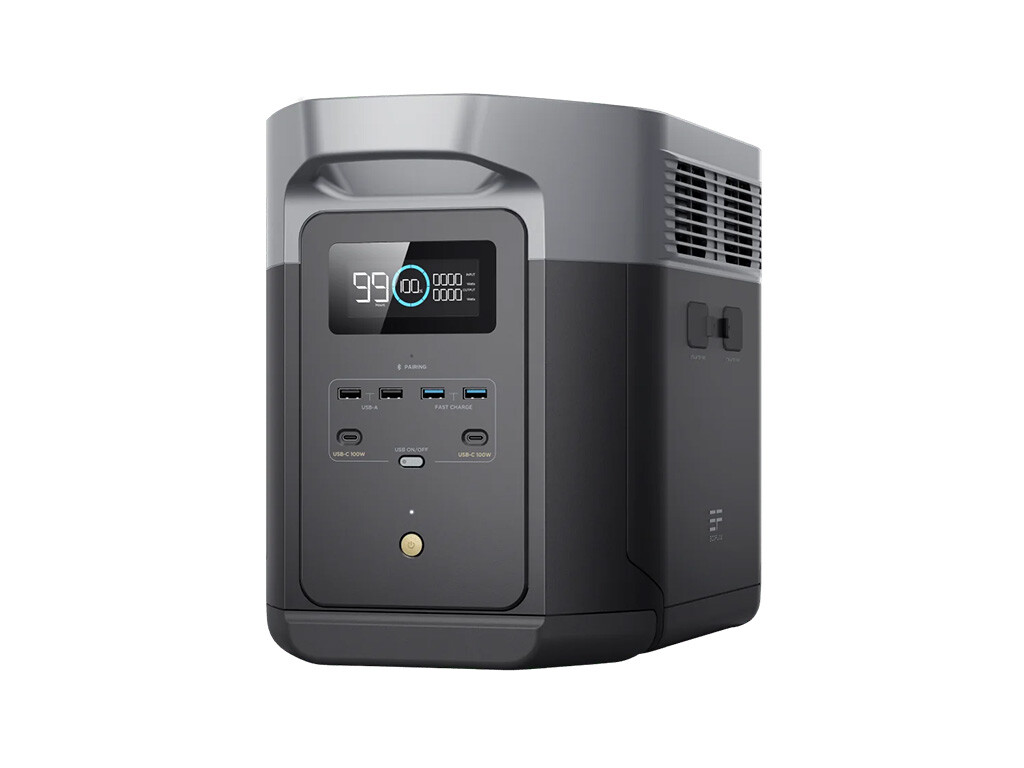
- EcoFlow Delta 2 Max: 6 AC outlets, 4 USB-A ports, 2 USB-C ports, 3 other DC ports.
- Jackery Explorer 2000 v2: 3 AC outlets, 3 USB total, 1 other DC port.
With more outlets and a wider range of ports, the Delta 2 Max is ideal for users who need to power multiple devices at once, whether at home, in an RV, or off-grid. The Jackery 2000 v2 is more streamlined, with fewer outlets, making it better suited for those who need basic power without a lot of connections.
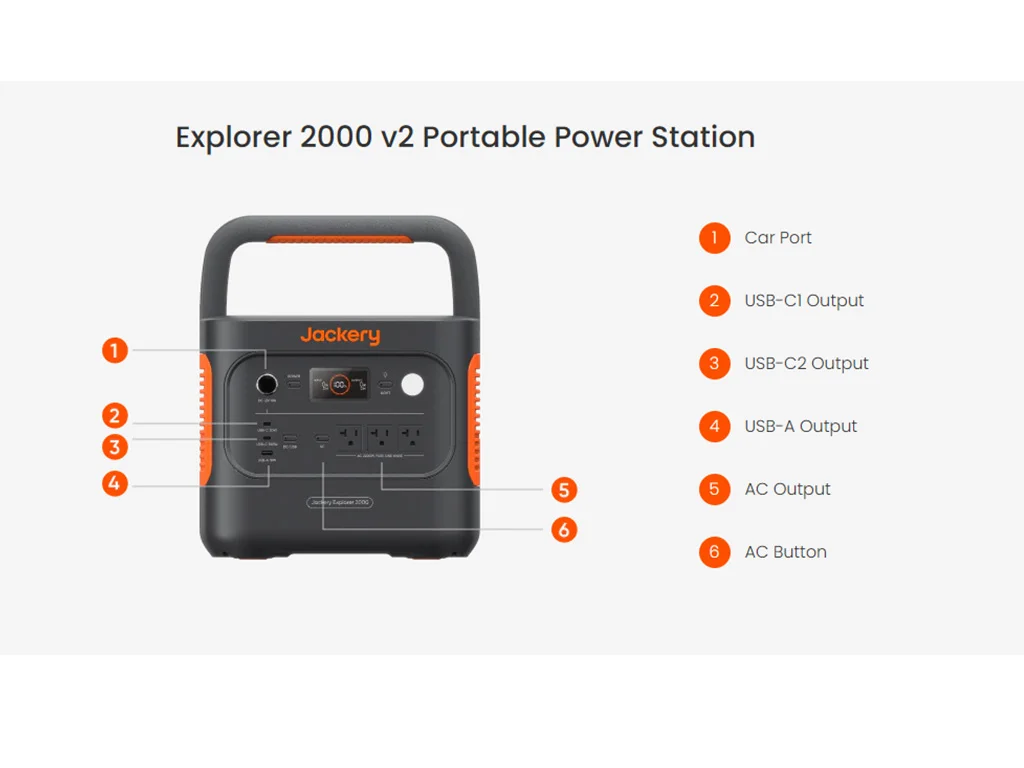
Both power stations feature a UPS (Uninterruptible Power Supply) function, which automatically kicks in during a power outage. The Jackery 2000 v2 has a faster transfer time of under 20ms, making it great for critical devices like computers or medical equipment. The Delta 2 Max has a slightly slower 30ms transfer time, which is still fine for most home appliances but might not be fast enough for sensitive electronics.
Output Verdict: The EcoFlow Delta 2 Max has higher inverter capacity, X-Boost mode, and superior outlet selection. It’s the more versatile and powerful choice. The Jackery 2000 v2 excels in portability and speedier UPS transfer, making it a great option for campers or RV users who prioritize simplicity and quick response times over raw power.
| Product | EcoFlow DELTA 2 Max | Jackery Explorer 2000 v2 |
|---|---|---|
| AC Output | 2,400W | 2,200W |
| AC Output Peak | 4,800W | 4,400W |
| AC X-Boost | 3,400W | – |
| 120V Outlets | 6 | 3×18.3A |
| 240V Outlets | – | – |
| UPS / EPS | 30ms (EPS) | 20ms |
| USB-A Ports | 4x12W/18W | 1x18W |
| USB-C Ports | 2x100W | 1x100W; 1x30W |
| DC 5521 (Barrel Plug) | 2x38W 3A | – |
| Cigarette Lighter | 1x126W | 1x120W |
| Connectivity | WiFi / Bluetooth | WiFi / Bluetooth |
Battery Life: Powering Your Day and Night
The heart of any power station lies in its battery, and here’s where the EcoFlow Delta 2 Max and Jackery 2000 v2 show their true colors. Battery capacity, measured in watt-hours (Wh), tells you how long these power stations can keep your devices running.
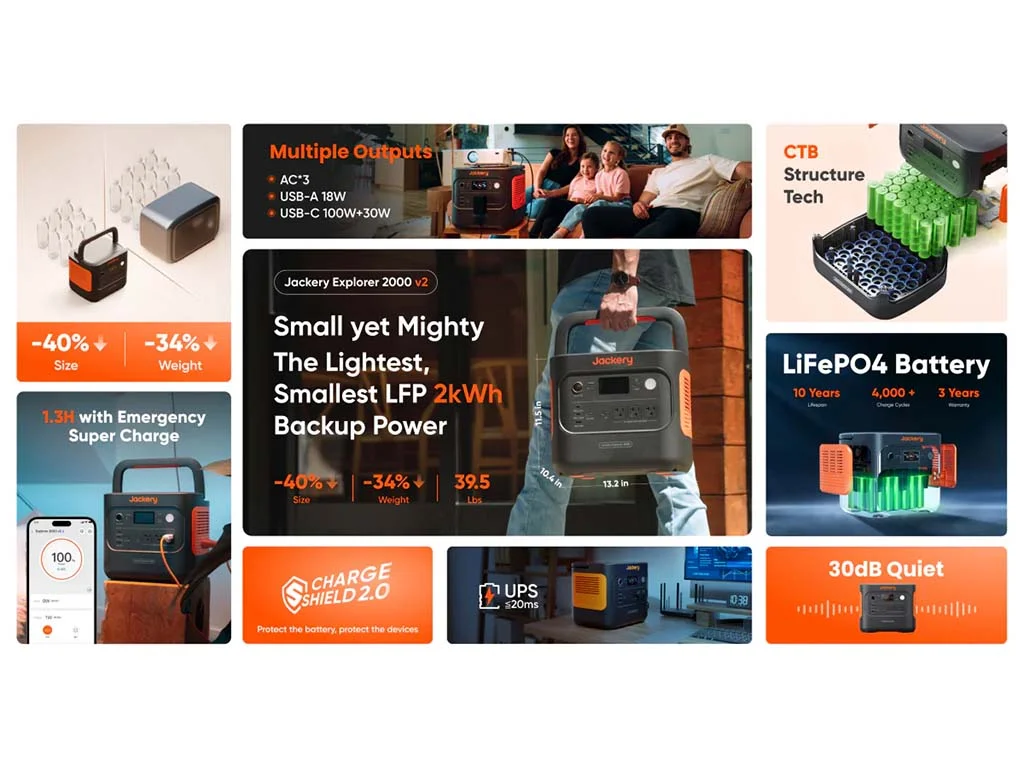
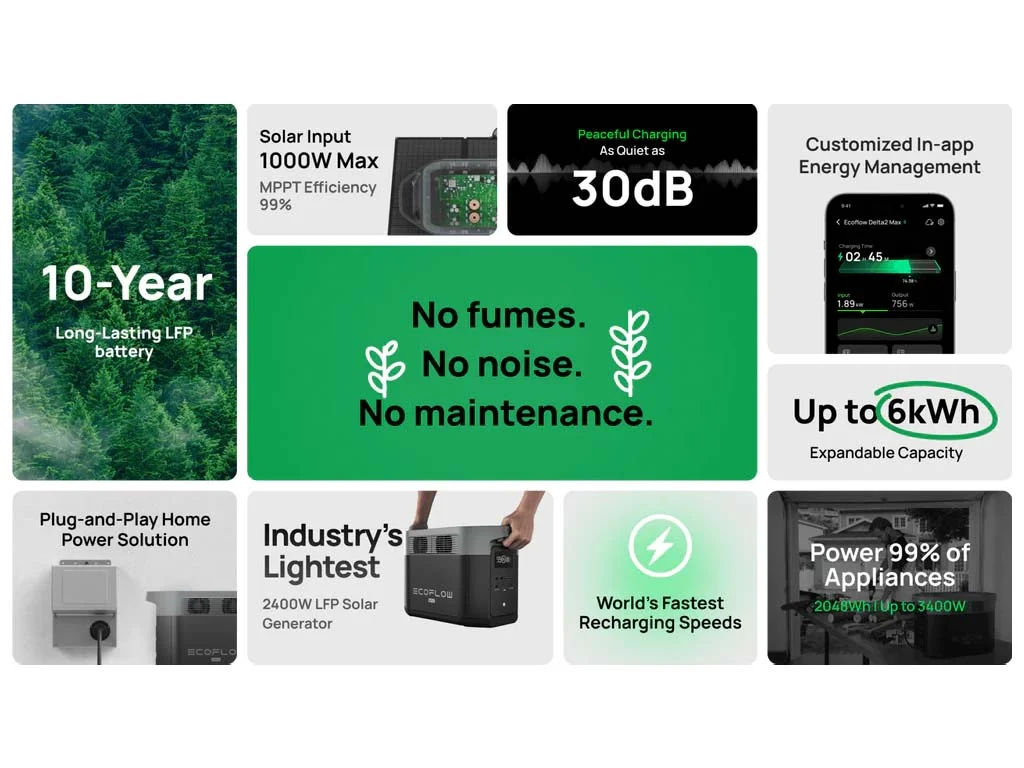
The internal battery capacities are nearly identical. The EcoFlow Delta 2 Max packs 2,048Wh of energy, while the Jackery 2000 v2 holds 2,042Wh.
Both power stations can keep a 60W laptop running for about 27 hours. For a more power-hungry setup such as your fridge, TV and a couple small devices (total running at 500W), both units can provide around 3.3 hours of use.
This makes both excellent for:
- Camping trips: Powering a mini-fridge (40W) for about 40 hours.
- Home backup: Keeping essential small devices running for days (phones, router, lights) or keep larger appliances and fridge running for a handful of hours.
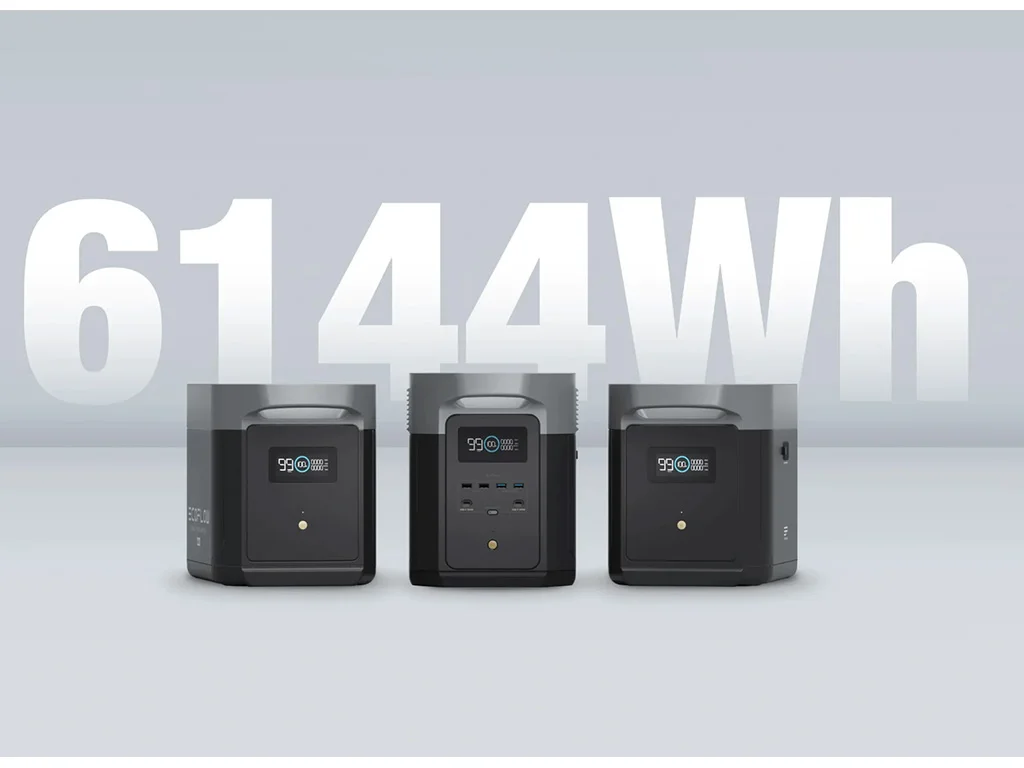
Where the EcoFlow Delta 2 Max really pulls ahead is its modular battery expansion. With extra battery units, you can expand up to 6,144Wh. This triples your available power and allows for even longer runtimes for things like home backup.
The Jackery 2000 v2 lacks this flexibility. What you get is what you have, with no option to expand beyond its original capacity.
Both power stations use long-lasting LiFePO4 (LFP) batteries, rated for over 3,000 charge cycles. They can last for years of daily use, up to a decade without significant loss of capacity. EcoFlow offers a 5-year warranty, while Jackery’s warranty can match the 5 years as long as you buy it directly from Jackery. We always recommend buying directly from the manufacturer to ensure proper care during storage and transit, plus it reduces chances of warranty or service issues.
Battery Verdict: The EcoFlow Delta 2 Max is far better than the Jackery with its expandable battery capacity, making it ideal for those needing long-term, off-grid power or home backup. The Jackery 2000 v2 offers solid performance but falls short in flexibility, though it’s perfect for users who value a lighter, simpler setup. The internal batteries are almost identical.
| Product | EcoFlow DELTA 2 Max | Jackery Explorer 2000 v2 |
|---|---|---|
| Battery | 2,048Wh | 2,042Wh |
| Battery (System Max) | 6,144Wh | 2,042Wh |
| Warranty | 5 years | 3-5 years |
| Battery Type | LiFePO4 / LFP | LiFePO4 / LFP |
| Battery Cycles | >3,000 | >3,000 |
| Buy Now | Buy D2M | Buy 2000 v2 |
| Buy on Amazon | D2M on Amazon | 2000v2 on Amazon |
Charging Speeds: Fast Power, Anywhere
When you’re on the go or facing a power outage, the last thing you want is to wait around while your power station charges. In this battle of the EcoFlow Delta 2 Max vs. Jackery 2000 v2, how fast you can get back up and running makes a big difference.
Both of these two power stations can use the full output from most home outlets (1,800W AC is 120V at 15A). They can fill up from 0 to 100% in about an hour and a half. That’s fast enough to grab a quick charge while you pack up for a trip or prep for an incoming storm.
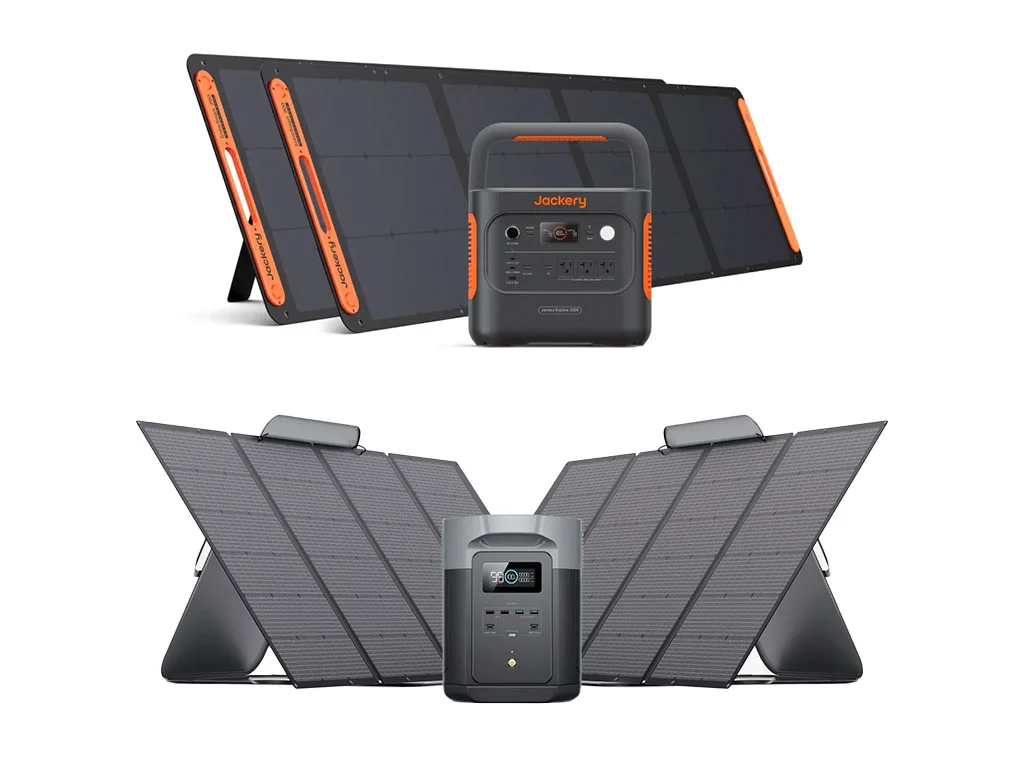
If you’re charging with solar panels, the difference becomes even clearer. The Delta 2 Max can take in up to 1,000W of solar input, getting a full recharge in as little as 2.5 hours under perfect conditions. It’s also easier to connect multiple panels to. The Jackery 2000 v2, however, maxes out at just 400W of solar input, taking roughly 6 hours in the best sunlight.
For off-grid adventures, that’s a game-changer. Picture setting up camp in the morning and having a fully charged Delta 2 Max by noon, versus waiting until evening with the Jackery 2000 v2. In fact, that speed from Jackery will be tough to get a full charge in one day from solar because peak sunlight often doesn’t last 6 hours.
If you’re venturing far from a power grid, both power stations offer car charging and can work with fuel generators, but here’s where EcoFlow shines again.
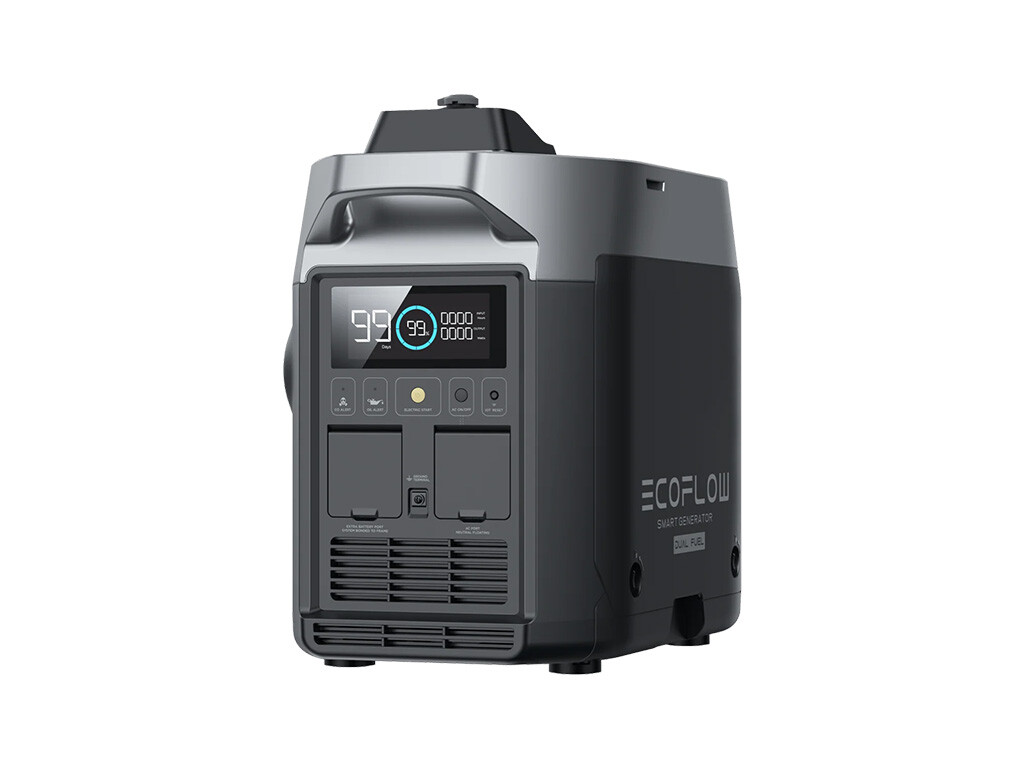
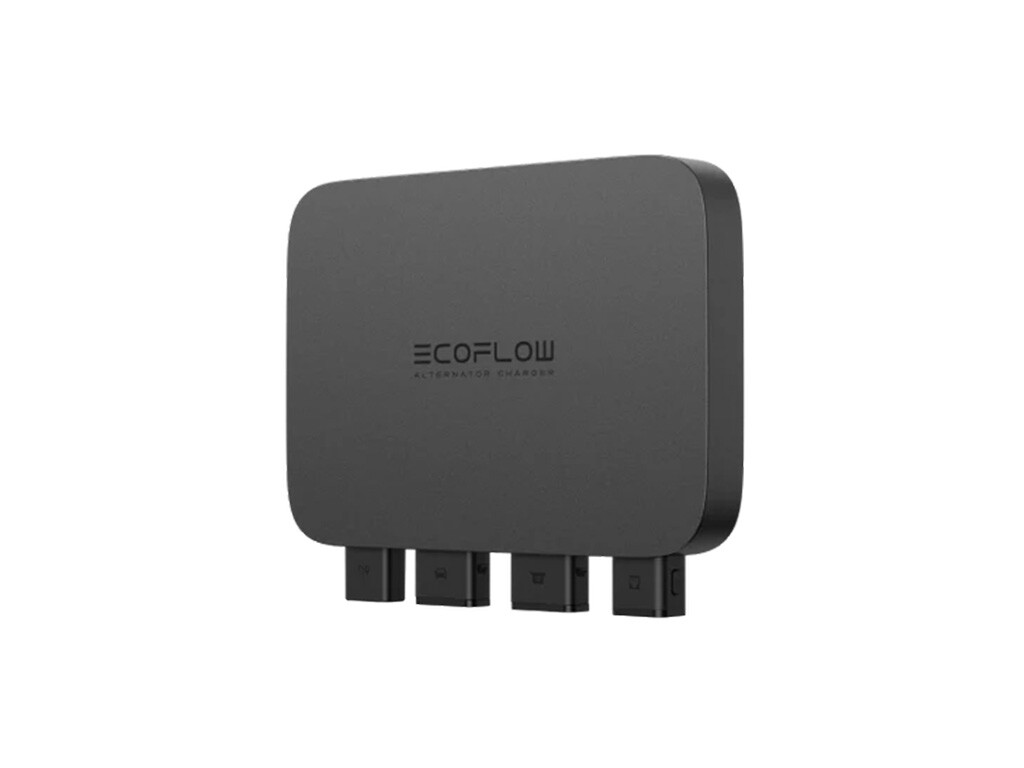
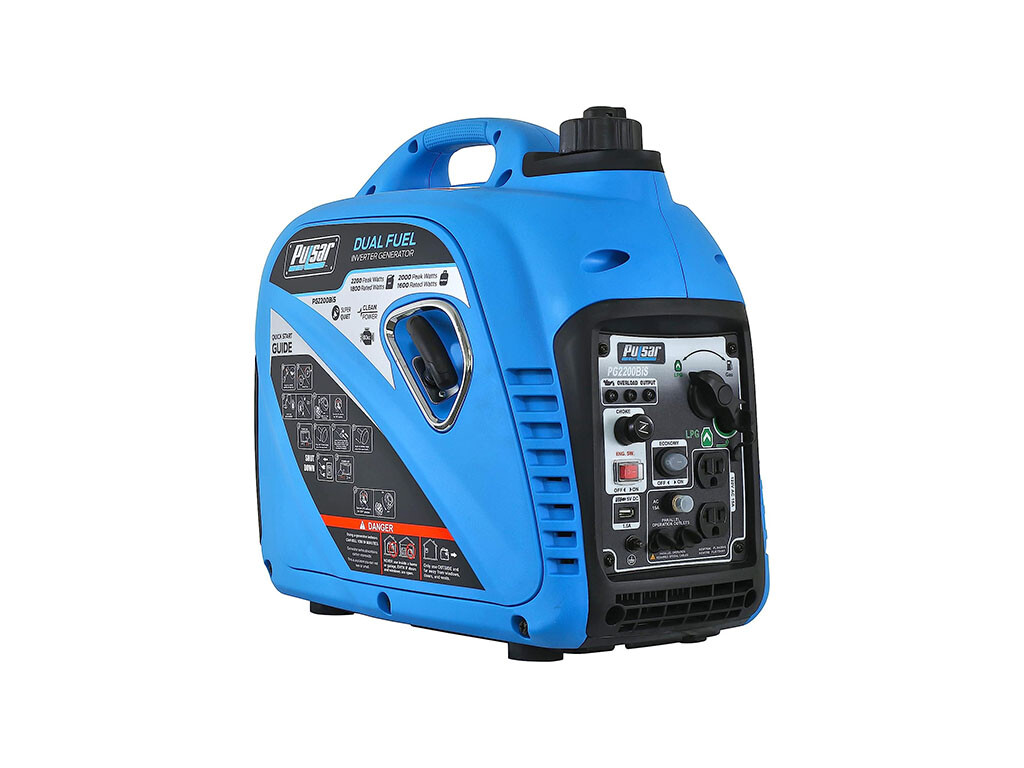
The EcoFlow Dual Fuel Generator is designed to run on both gasoline and propane, packed with smart features for efficiency and control. The EcoFlow 800W Alternator Charger is a super-fast, smart car charging option that outpaces any standard car charger. Both of these with the Delta 2 Max and some solar panels to create one of the most capable and powerful systems. Rain, shine, moving, or stationary, you’ll always have power.
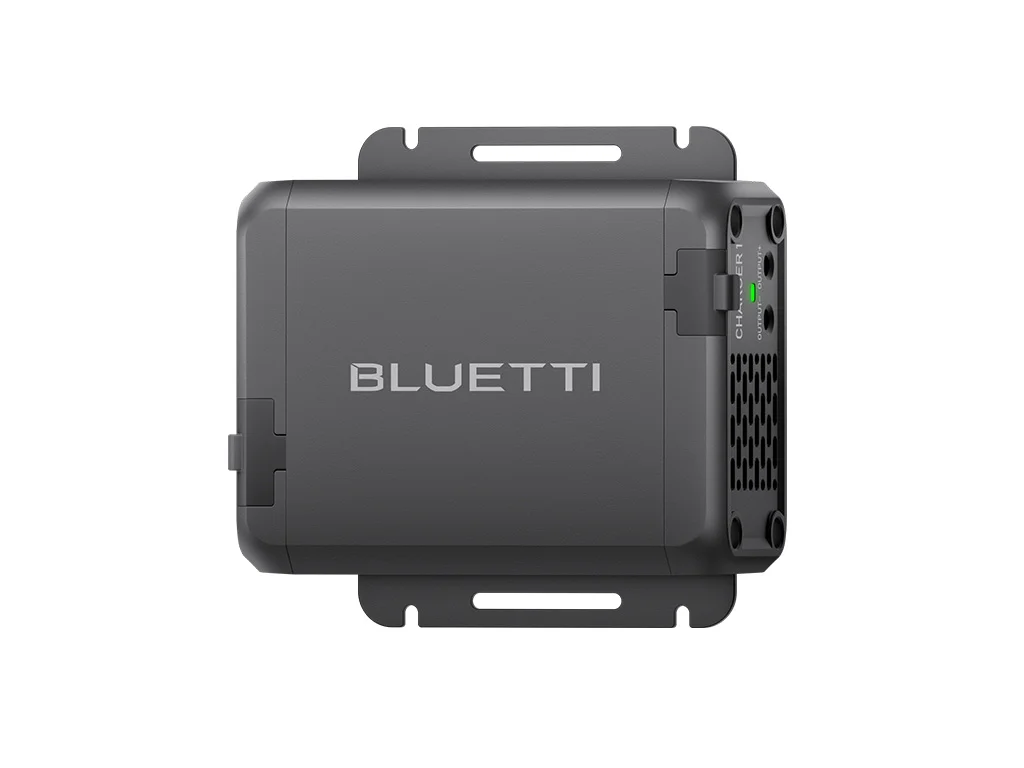
Meanwhile, the Jackery 2000 v2 would need to rely on universal options. This includes standard dual-fuel generators via AC input or third-party car chargers, like the Pecron 500W Car Charger or Bluetti’s Alternator Charger 560W, which are decent but lack the seamless integration and speed of EcoFlow’s custom solutions.
Charging Verdict: The EcoFlow Delta 2 Max takes the clear win here, with more than double the solar capability and superior EcoFlow charging accessories. The Jackery 2000 v2 has sufficient charge times as long as you’re not looking for a full daily charge from solar alone. You can also use universal options to make up for the lack of Jackery accessories, but they don’t come with the advanced intelligence of the EcoFlow options.
|
EcoFlow Dual Fuel Smart Generator |
DFSG on EcoFlow Buy on Amazon |
|
EcoFlow 800W Alternator Charger |
EFAC on EcoFlow EFAC on Amazon |
|
Pulsar 2,200W Portable Dual Fuel Generator |
Buy on Amazon |
|
BLUETTI 560W Alternator Charger 1 |
Charger on Bluetti |
| Product | EcoFlow DELTA 2 Max | Jackery Explorer 2000 v2 |
|---|---|---|
| AC Input | 1,800W | 1,800W |
| AC Recharge Hours (Est.) | 1.4h | 1.4h |
| Solar Input | 1,000W | 400W |
| Solar Recharge Hours (Est.) | 2.5h | 6.1h |
| Solar Input 1 Watts | 500W | 200W |
| Solar Input 1 Volts Min | 11V | 11V |
| Solar Input 1 Volts Max | 60V | 60V |
| Solar Input 1 Amps | 15A | 12A |
| Solar Input 2 Watts | 500W | 200W |
| Solar Input 2 Volts Min | 11V | 11V |
| Solar Input 2 Volts Max | 60V | 60V |
| Solar Input 2 Amps | 15A | 12A |
Portable Power: Size and Weight Comparison
When choosing a power station, size and portability are crucial factors, especially if you’re planning to move it around. Unlike bulky DIY systems, portable power stations are designed to go where you go. Take off on a summer road trip, fill the RV and hit the campground, or simply bring it with you as you move to a new home.
The EcoFlow Delta 2 Max weighs in at 50 lbs (23 kg). It’s manageable for most people and is less than many other similar power stations, which often are above 60 lbs and sometimes approaching 70 lbs. Plus, its modular battery option means you can expand its capacity without having to break your back over one heavy unit.
However, this is the area where the Jackery Explorer 2000 v2 stands ahead of the entire market. It is lighter (39.5 lbs / 18 kg) and smaller. Others are pushing the size of a carry-on suitcase while this Jackery is like a small microwave or large shoebox. It’s easier to carry and toss in any car or storage spot. If you prioritize portability over battery or solar, the 2000 v2 is your pick.
Portability Verdict: The Jackery 2000 v2 is the winner when it comes to portability, with its lighter weight and smaller footprint. It’s best for easy-to-carry power on the go. However, the EcoFlow Delta 2 Max still offers solid portability above most in this segment, including flexible battery options to add power without increasing single-unit weight.
| Product | EcoFlow DELTA 2 Max | Jackery Explorer 2000 v2 |
|---|---|---|
| Weight (lbs) | 50lbs | 39.5lbs |
| Weight (kg) | 23kg | 17.9kg |
| Dimensions (in) | 19.6×9.5x12in | 13.2×10.4×11.5in |
| Dimensions (mm) | 497x242x305mm | 335x264x292mm |
Spec Comparison Chart
See the spec comparison chart for the EcoFlow Delta 2 Max and Jackery Explorer 2000 v2 below.
| Product | EcoFlow DELTA 2 Max | Jackery Explorer 2000 v2 |
|---|---|---|
| Battery | 2,048Wh | 2,042Wh |
| Battery (System Max) | 6,144Wh | 2,042Wh |
| AC Output | 2,400W | 2,200W |
| AC Output Peak | 4,800W | 4,400W |
| AC Input | 1,800W | 1,800W |
| AC Recharge Hours (Est.) | 1.4h | 1.4h |
| Solar Input | 1,000W | 400W |
| Solar Recharge Hours (Est.) | 2.5h | 6.1h |
| Warranty | 5 years | 3-5 years |
| Weight (lbs) | 50lbs | 39.5lbs |
| Weight (kg) | 23kg | 17.9kg |
| Dimensions (in) | 19.6×9.5x12in | 13.2×10.4×11.5in |
| Dimensions (mm) | 497x242x305mm | 335x264x292mm |
| Solar Input 1 Watts | 500W | 200W |
| Solar Input 1 Volts Min | 11V | 11V |
| Solar Input 1 Volts Max | 60V | 60V |
| Solar Input 1 Amps | 15A | 12A |
| Solar Input 2 Watts | 500W | 200W |
| Solar Input 2 Volts Min | 11V | 11V |
| Solar Input 2 Volts Max | 60V | 60V |
| Solar Input 2 Amps | 15A | 12A |
| Battery Type | LiFePO4 / LFP | LiFePO4 / LFP |
| Battery Cycles | >3,000 | >3,000 |
| 120V Outlets | 6 | 3×18.3A |
| UPS / EPS | 30ms (EPS) | 20ms |
| USB-A Ports | 4x12W/18W | 1x18W |
| USB-C Ports | 2x100W | 1x100W; 1x30W |
| DC 5521 (Barrel Plug) | 2x38W 3A | – |
| Cigarette Lighter | 1x126W | 1x120W |
| Connectivity | WiFi / Bluetooth | WiFi / Bluetooth |
| User Manual | User Manual | User Manual |
| Buy Now | Buy D2M | Buy 2000 v2 |
| Buy on Amazon | D2M on Amazon | 2000v2 on Amazon |
Choosing the Right Power Station: Our Pick
Deciding between the EcoFlow Delta 2 Max and Jackery 2000 v2 ultimately comes down to how you plan to use your power station.
If you’re someone who values more outputs and solar, plus future-proofing with battery expansion, the Delta 2 Max is the right call. On the other hand, if portability and simplicity are more important, the Jackery 2000 v2 may be just what you need for smaller-scale trips or home backup.
| EcoFlow Delta 2 Max | Jackery 2000 v2 |
|---|---|
Here’s a quick recap of the key highlights:
- Inverter & Outputs: The EcoFlow Delta 2 Max offers a higher wattage inverter with X-Boost and more outlets, making it better for handling larger appliances or multiple devices.
- Battery Capacity: Both have similar capacity, but the Delta 2 Max has a huge advantage with its expandable battery system, allowing for much longer runtimes.
- Charging Speeds: The EcoFlow Delta 2 Max charges significantly faster from solar and EcoFlow accessories add a unique advantage you can’t find elsewhere.
- Portability: The Jackery 2000 v2 is lighter and more compact, making it the easier option to carry for road trips or RV adventures.
- Value: Both offer a great value at around $0.90 per Wh or less. Jackery is typically a little lower, but that comes with less features and capability. The value comparison is just about equal.
Final Recommendation: The EcoFlow Delta 2 Max is the superior choice for users who need faster charging, more power outlets, and expandable battery capacity. It’s a more versatile long-term investment for off-grid adventures and limited home backup needs. The Jackery 2000 v2 is still a great unit, but is better suited for users who prioritize portability and simplicity.
Get 5% off most EcoFlow orders with the SOLARWAY5OFF discount code.
|
|
EcoFlow DELTA 2 Max |
D2M on EcoFlow D2M on Amazon |
|
|
Jackery Explorer 2000 v2 |
2000v2 on Jackery 2000v2 on Amazon |
Final Thoughts
When it comes to overall power, speed, and expandability, the EcoFlow Delta 2 Max takes the lead with its faster solar charging, superior outlets and ports, as well as the modular battery expansion. On the flip side, the Jackery 2000 v2 is the lighter and smaller choice and still comes with the same internal battery and nearly-identical inverter power.
Explore our EcoFlow Delta 2 Max Review and Jackery 2000 v2 Review for in-depth looks.
Power up your next adventure or secure backup for your home with one of these reliable power stations right away. Don’t force yourself to go through another outage or adventure without the power you need.


