

Portable power stations have entered a new era. One where they’re capable of handling bigtime power needs at home or away from a single compact device. The main challenge today is figuring out which one is right for your needs. You don’t want to choose the wrong one and you want to get your money’s worth. Two units we’re looking at today are the Bluetti AC300 and Jackery Explorer 2000 Plus. Our expert team is here to walk you through this close-up investigation to bring you the truth of the matter.
In this comparison, we’ll review exactly how these differ and what they’re capable of. By leveraging our passion for power stations, you’ll be able to pick the one that’s right for your needs. Or know that you should look elsewhere. These are two of our favorite options, although both brands have slightly larger models to choose from as well. But perhaps these hit the right target and are the ones you should get. Perhaps not.
Are you ready for this detailed comparison? Let’s see if one of these is right for your needs.
We carefully select the products and services we link to. If you buy through our links, we may earn a commission. There’s no extra cost to you and it helps us provide this information.

Quick Overview: Our Power Pick and Why
Bluetti and Jackery are two industry anchors with many capable options. Compared to most brands, Bluetti leads with modular capabilities and unique attributes like wireless charging pads. Jackery is perhaps the longest standing name that manages to keep up with industry standards while leveraging its knowledge to create user-friendly power stations.
The comparison of Bluetti AC300 vs. Jackery 2000 Plus makes for an electrifying matchup. Each is near the top of the power charts, offering incredible battery performance and high-amp outputs ready for serious energy delivery. And they’re nearly identical in terms of total modular battery capacity, inverter power, and AC outputs.
The Bluetti AC500 is one up from the AC300. The biggest difference between those two (besides price) is the 5kW inverter in the AC500 compared to the 3kW inverter in the AC300. For Jackery, the 2000 Plus used to be the biggest modular system. Now the giant 5000 Plus has some to take over the reigns. And in the middle is the 3000 Pro, which has better single-unit specs but not modular expansion. It’s a tough call all around.
To get a closer look at how these compare within each brand lineup, head over to the Jackery Comparison Chart or Bluetti Comparison Chart articles.

When it comes down to the AC300 vs. 2000 Plus, our close inspection found the Bluetti AC300 comes out on top for those who want more power, flexibility, and features. Here’s why:
- Larger single-unit battery capacity (2.8kWh in Bluetti vs. 2.4kWh in Jackery)
- Faster single-unit solar recharging speeds (2.4kW for Bluetti vs. 1.4kW for Jackery)
- More DC output options including high-amp output and wireless charging pads
On the flip side, the Jackery Explorer 2000 Plus has its own strengths. The one thing we think is most crucial in this comparison is the solar input on the extra batteries. This Jackery has the extremely unique ability to charge with solar WITHOUT the main 2000 Plus inverter unit. That means as you grow the system with exrra batteries, you can also scale up your solar accordingly. It also makes it a lot easier to charge the battery with solar in the sun, but keep the main inverter powering other items with you in the shade.
For some people, the Jackery is the better option. It offers:
- More solar charging with extra batteries (up to 17kW solar total for Jackery vs. 4.8kW for Bluetti with two AC300s)
- Better portability due to single-unit design (integrated battery for Jackery while Bluetti has all battery power external)
- Longer warranty for added peace of mind, always a big plus in our book
Price and value should always be part of the decision too. The MSRP of the Bluetti is higher, but many times the prices after discounts and sales are nearly identical. Despite the Bluetti offering more power and faster charging, when you equal out the price comparison by using a price per battery Wh, you’ll find the Bluetti is typically a better value. It is usually $0.90 or less per Wh while the Jackery is closer to $1.00 per Wh.
If you get extra battery units, these power stations might qualify for a major 30% tax credit.
Ultimately, if you’re prioritizing battery size and extra features for home or off-grid setups, the Bluetti AC300 is the clear winner. However, for life where portability and solar charging with extra batteries matter more, the Jackery 2000 Plus should be your choice instead.

|
Bluetti AC300 |
AC300 on Bluetti AC300 on Amazon |
|
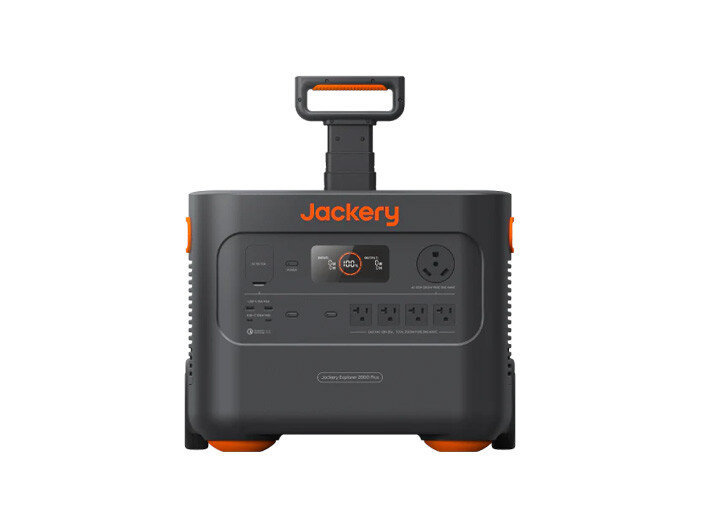
Jackery 2000 Plus |
2000 Plus on Jackery 2000 Plus on Amazon |
Deep Comparison Dive: Bluetti AC300 vs. Jackery 2000 Plus
In this comparison, we’ll break down each product’s key features, showing you exactly what each brings to the table. You’re not going to find wild marketing claims or numbers that you won’t experience in real life. We bring true information and the details you need to understand why.
Our team carefully scrutinizes each power station, using a thorough approach that covers the most important details in turn. We take the time to do it right so you can trust our information and know that you’re getting what you need. This article also has many links to our detailed how-to guides and other information pieces. These can help provide useful background information without making you hunt for it. We like to point out the solar calculators linked in the charging sections the most. These are the questions that people usually have down the line.
Here’s how we’ll look at these power stations:
- What Can These Power? Inverter and Outputs
- How Long Does it Last? Battery Details
- How Quickly Do They Recharge? Charging Inputs
- Can You Take it Anywhere? Portability
- Which Should You Buy? Final Verdict

Power Where You Need It: Inverters and Outputs Explained
When you’re relying on a portable power station, the inverter is the muscle behind the AC outlets. It takes the stored DC power from the battery and converts it to AC, so you can run devices like laptops, fridges, or even power tools.
At a high level, the Bluetti AC300 and Jackery 2000 Plus come with identical 3,000W inverters. Both have a 6,000W surge potential too. Inverters of this size are extremely capable, even though they’re not the absolute biggest in the industry.
Here are examples of what you can power from a 3,000W inverter:
- Low-watt devices: Laptops, WiFi routers, LED lights (~50-100W each).
- Medium-watt devices: Fridges, TVs, fans (~200-700W each).
- High-watt devices: Microwaves, space heaters, power tools (~1,000-1,500W each).
You can run multiple low and medium-watt devices together without issue. Powering a fridge (700W), a laptop (60W), and a TV (100W) simultaneously. However, combining two high-watt devices like a space heater (1,500W) and a microwave (1,000W) can quickly max out these 3kW inverters.

For heavy setups exceeding 3,000W, like running multiple appliances at once, you’ll need more power.
To get this, you can use two AC300 units or two 2000 Plus together to generate up to 6,000W of power. If you regularly need this much power, it’s worth considering a larger option instead, such as the Bluetti AC500 or EcoFlow Delta Pro 3. The 2000 Plus is currently the most powerful Jackery inverter.
The actual connections and outputs are a crucial consideration as well, both AC and DC options:
- Bluetti AC300: High-amp AC and DC outputs, with 5 USB ports and 2 wireless charging pads
- Jackery 2000 Plus: High-amp AC output only, with 4 USB ports
Both have the high-amp output necessary for connecting to an RV shore power inlet or home transfer switch. Some brands offer specialized transfer switches (EcoFlow and Anker), but not Bluetti or Jackery. The Bluetti kicks into high gear and surpasses the Jackery with the 30-amp DC Anderson port, great for high-powered DC devices or a DC fuse box. Jackery’s advantage is an extra USB-C port.
The UPS feature helps your devices stay powered during outages, quickly switching from grid power to battery backup. The transfer time on both devices is fast at 20 milliseconds. This can keep most critical electronics like Wi-Fi routers or medical equipment running smoothly.
Output Verdict: The Bluetti AC300 takes the crown for inverter and output flexibility. Its superior number of AC outlets, high-amp DC port, and the ability to run heavier appliances give it the edge for home backup and RV setups. The Jackery 2000 Plus matches the inverter power and has a high-amp AC output, but isn’t quite as versatile.
| Product | BLUETTI AC300 | Jackery 2000 Plus |
|---|---|---|
| AC Output | 3,000W | 3,000W |
| AC Output (System Max) | 6,000W | 6,000W |
| 120V Outlets | 7 total (6x20A; 1x30A) | 4x20A; 1x25A |
| 240V Outlets | – | – |
| UPS / EPS | 20ms | 20ms |
| USB-A Ports | 2x15W; 2x18W | 2x18W |
| USB-C Ports | 1x100W | 2x100W |
| Other DC (Anderson or other) | 30A | – |
| DC 5521 (Barrel Plug) | – | – |
| Cigarette Lighter | 1x240W | 1x120W |
| Wireless Charging Pad | 2x15W | – |
| Connectivity | WiFi / Bluetooth | WiFi / Bluetooth |
Power Packed: Battery Life and Capacity
Measured in watt-hours (Wh), battery capacity tells you how long your station will keep things running. For example, a 1,000Wh battery can power a 100W device for about 10 hours. In the real world, system inefficiencies (think wires, connections, and heat loss) reduce that capacity by about 20% to ~8 hours.
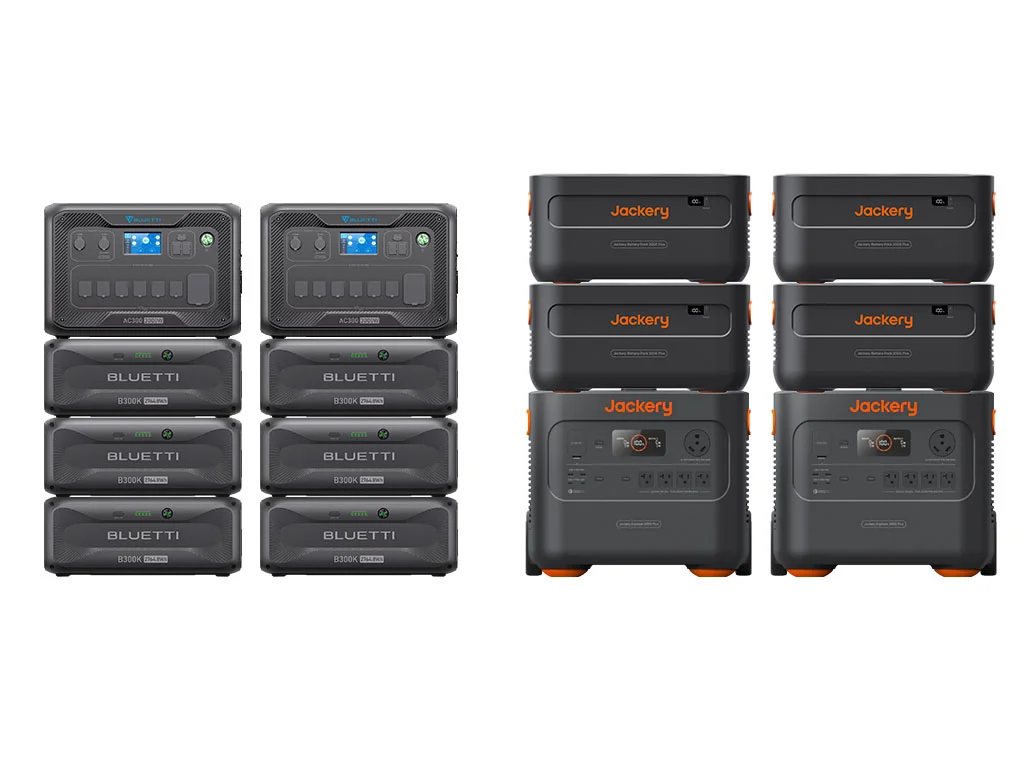
The Bluetti AC300 includes 2,765Wh of battery capacity in one B300K battery unit. You can expand that up to 22,118Wh with 8 extra battery packs across two AC300 units.
The Jackery 2000 Plus has an integrated battery with 2,043Wh, and expansion potential up to 24,516Wh with two 2000 Plus units and 10 extra batteries.
It’s easy to a get a little carried away with these numbers. While we respected the modular potential, it’s also important to stay grounded in reality. And the fact is that these extra batteries aren’t free. And they’re not like going to the store and picking up another set of AAAs. They more expensive add-ons than most of your car’s options. However, they’re also an important part of making sure that your up-front investment is worthwhile. Even if you don’t need them today, being able to grow the system in the future means you don’t have to start all over with a new power station. And THIS reason is why we love the modular expansion. Start with the right basic inverter pack. If you know you need more batteries, by all means get them. But if you aren’t certain, then just take solace in knowing your system can provide more power if you need it.
Bottom line is they both have tons of single-unit power and incredible expansion potential. Bluetti has about 20% more with one battery pack while Jackery has about 10% more when the systems are maxed out.
Here’s a look into the real-word usage of the single-unit battery amounts:
- Bluetti AC300:
- 60W laptop: ~40 hours
- 1,000W appliance: ~2.2 hours
- Jackery 2000 Plus:
- 60W laptop: ~27 hours
- 1,000W appliance: ~1.6 hours
Let’s say you have a full-size fridge, a big television, five LED lights, a WiFi router modem, and want to charge a laptop as well as multiple phones and tablets. That’s around 650W of consistent use. The single-unit Bluetti will last more than 3 hours while a full system will last over a day. The single-unit Jackery will last more than 2.5 hours while a full system can reach over 30 hours.
All of these are without any charging. We’ll cover that in the next section.
Both power stations use lithium iron phosphate (LiFePO4 or LFP) batteries. You can expect about 8 years of daily use before the capacity starts to decline noticeably. These are essentially the best batteries you can find. Although we won’t hide it from you: solid-state lithium batteries are making their way into the power station world. However, only two of our trusted brands have these options and they’re actually surprisingly similar to LiFePO4. On top of that, we see a lot of value in sticking with the technology that’s tried-and-true. Using the bleeding-edge innovation can come at a price of reliability. Even more important, the biggest advantage of the upcoming solid-state and semi-solid-state batteries are weight savings. They still have ~3,000 cycles or 8 to 10 year lifespans with most of the capacity.
Bluetti backs that up with a 4 year warranty while Jackery steps up with an extra year to 5 years total, as long as you buy it directly from Jackery. We always recommend buying directly from the manufacturer to avoid customer service and warranty issues. These brands produce thousands upon thousands of units and they stand behind them. But they don’t like to foot the bill when a third-party retailer messes up by using inadequate storage or transportation. Stick with buying direct to avoid a hassle.
Battery Verdict: The Bluetti AC300 has larger single-unit capacity but the Jackery Explorer 2000 Plus has a higher capacity if you max out the entire system, plus it includes a longer warranty. Both can offer many hours of home backup power or days of lighter use while camping or on the road.
| Product | BLUETTI AC300 | Jackery 2000 Plus |
|---|---|---|
| Battery | 2,765Wh | 2,043Wh |
| Battery (System Max) | 22,118Wh | 24,516Wh |
| Warranty | 4 years | 3-5 years |
| Battery Type | LiFePO4 / LFP | LiFePO4 / LFP |
| Battery Cycles | >3,000 | >3,000 |
| Buy Now | Buy AC300 | Buy 2000 Plus |
| Buy on Amazon | AC300 on Amazon | 2000 Plus on Amazon |
Charging Speeds That Keep You Moving
Fast charging speeds can be a lifesaver. Nobody wants to wait hours for their backup power to be ready. The charging speed of a power station depends on its input capabilities, whether through a standard AC wall outlet, solar panels, or even a car charger.
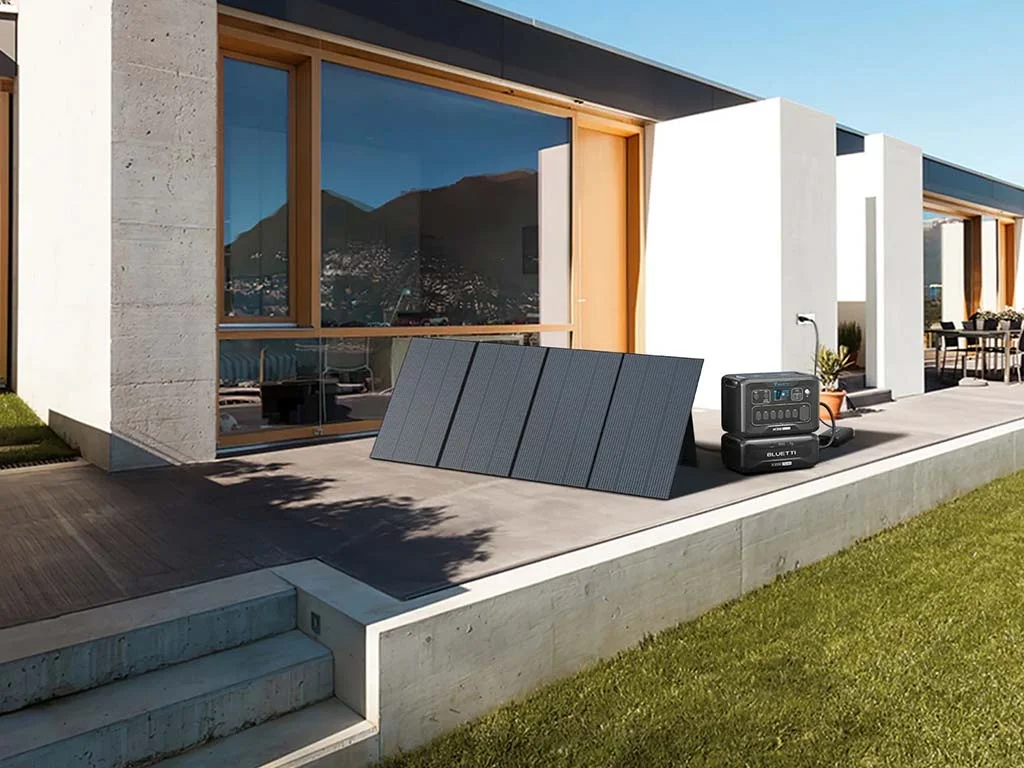
The Bluetti AC300 is designed to recharge rapidly. It supports up to 3,000W of AC input, meaning you can get a full charge in just about 1.2 hours. Jackery’s is slightly slower, but it’s actually the entire power available from most outlets. 120V / 15A maximum is equal to Jackery’s 1,800W. So the extra Bluetti AC input only applies when you use a high-amp or 240V outlet.
The solar charging specs are a little messy in this power station comparison:
- Single-unit solar charging: Bluetti is superior with 1kw more input and higher voltage inputs.
- Using extra batteries: Each extra Jackery battery has independent charging abilities, greatly increasing solar input capacity as you stack on extra batteries.

For the single-units, we really like this Bluetti power station’s ports. The high voltage is key for stringing together multiple panels and trying to maximize solar charging without damaging the power station. However, the fact you can connect solar directly to the Jackery batteries is very attractive. Which is better? It depends on your needs. You might want to calculate what your solar panel needs are.
Car charging is tough with batteries this big. The regular 12V outlets that can charge your phone are just too slow for power stations this big. Bluetti recently introduced the Bluetti 560W Alternator Charger 1. This provides a fast charging option from your car or RV while driving. For the Jackery, you can see our list of universal power station car chargers.
Charging Verdict: With faster AC charging, better single-unit solar inputs, and a unique Bluetti car charging system, the Bluetti AC300 has better charging capabilities. The main advantage for the Jackery 2000 Plus comes from using more solar with the extra battery packs, which can greatly exceed the Bluetti input.
| Product | BLUETTI AC300 | Jackery 2000 Plus |
|---|---|---|
| AC Input | 3,000W | 1,800W |
| AC Recharge Hours (Est.) | 1.1h | 1.4h |
| Solar Input | 2,400W | 1,400W |
| Solar Recharge Hours (Est.) | 1.4h | 1.8h |
| Solar Input (System Max) | 4,800W | 17,000W |
| Solar Input 1 Watts | 1200W | 700W |
| Solar Input 1 Volts Min | 12V | 11V |
| Solar Input 1 Volts Max | 150V | 60V |
| Solar Input 1 Amps | 12A | 12A |
| Solar Input 2 Watts | 1200W | 700W |
| Solar Input 2 Volts Min | 12V | 11V |
| Solar Input 2 Volts Max | 150V | 60V |
| Solar Input 2 Amps | 12A | 12A |
Size and Portability: How Heavy Are These Power Stations?
Portable power stations are a game changer for anyone needing electricity on the go. Whether you’re off-grid camping, traveling in an RV, or just moving between job sites, the ability to pick up and take your power source with you is a huge advantage over fixed DIY systems.
So how portable are the Bluetti AC300 and Jackery 2000 Plus?
The Jackery 2000 Plus actually weighs more at 61.5 lbs (28 kg), but we like its design for portable use much more. It includes an internal battery, plus it has wheels and a telescopic handle.
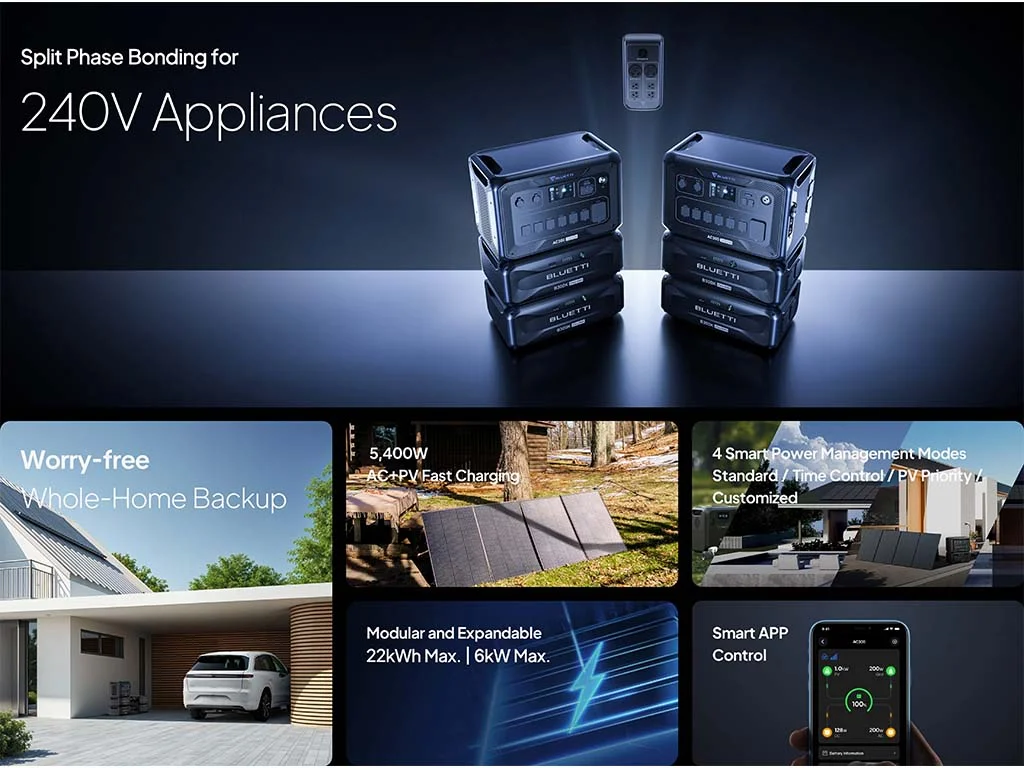
On the other hand, the Bluetti AC300 is super light for this category of power stations, weighing 48 lbs (22 kg) for the main unit. But it always requires an external battery pack, adding to its overall weight and bulk. Once you factor in the battery unit, you’re looking at a system that’s less convenient to move around.
Portability Verdict: The Jackery 2000 Plus takes the top spot in the portability department thanks to its lighter weight and more compact design. The Bluetti AC300 is still a very manageable and portable unit, but its need for an external battery is less convenient compared to the Jackery.
| Product | BLUETTI AC300 | Jackery 2000 Plus |
|---|---|---|
| Weight (lbs) | 47.6lbs | 61.5lbs |
| Weight (kg) | 21.6kg | 27.9kg |
| Dimensions (in) | 20.5×12.5×14.1in | 18.6×14.1×14.7in |
| Dimensions (mm) | 520x320x358mm | 473x359x374mm |
Specs Comparison Chart
Check out this comparison chart to see the key specs, as well as links to the official user manuals:
| Product | BLUETTI AC300 | Jackery 2000 Plus |
|---|---|---|
| Battery | 2,765Wh | 2,043Wh |
| Battery (System Max) | 22,118Wh | 24,516Wh |
| AC Output | 3,000W | 3,000W |
| AC Output (System Max) | 6,000W | 6,000W |
| AC Output Peak | 6,000W | 6,000W |
| AC Input | 3,000W | 1,800W |
| AC Recharge Hours (Est.) | 1.1h | 1.4h |
| Solar Input | 2,400W | 1,400W |
| Solar Recharge Hours (Est.) | 1.4h | 1.8h |
| Solar Input (System Max) | 4,800W | 17,000W |
| Warranty | 4 years | 3-5 years |
| Weight (lbs) | 47.6lbs | 61.5lbs |
| Weight (kg) | 21.6kg | 27.9kg |
| Dimensions (in) | 20.5×12.5×14.1in | 18.6×14.1×14.7in |
| Dimensions (mm) | 520x320x358mm | 473x359x374mm |
| Solar Input 1 Watts | 1200W | 700W |
| Solar Input 1 Volts Min | 12V | 11V |
| Solar Input 1 Volts Max | 150V | 60V |
| Solar Input 1 Amps | 12A | 12A |
| Solar Input 2 Watts | 1200W | 700W |
| Solar Input 2 Volts Min | 12V | 11V |
| Solar Input 2 Volts Max | 150V | 60V |
| Solar Input 2 Amps | 12A | 12A |
| Battery Type | LiFePO4 / LFP | LiFePO4 / LFP |
| Battery Cycles | >3,000 | >3,000 |
| 120V Outlets | 7 total (6x20A; 1x30A) | 4x20A; 1x25A |
| 240V Outlets | – | – |
| UPS / EPS | 20ms | 20ms |
| USB-A Ports | 2x15W; 2x18W | 2x18W |
| USB-C Ports | 1x100W | 2x100W |
| Other DC (Anderson or other) | 30A | – |
| DC 5521 (Barrel Plug) | – | – |
| Cigarette Lighter | 1x240W | 1x120W |
| Wireless Charging Pad | 2x15W | – |
| Connectivity | WiFi / Bluetooth | WiFi / Bluetooth |
| User Manual | User Manual | User Manual |
| Buy Now | Buy AC300 | Buy 2000 Plus |
| Buy on Amazon | AC300 on Amazon | 2000 Plus on Amazon |

Final Verdict: Our Power Station Recommendation
When it comes down to the Bluetti AC300 vs. Jackery 2000 Plus comparison, the decision ultimately hinges on how you plan to use your portable power station. The Bluetti AC300 has more single-unit battery capacity, solar input, and more flexible outputs. The Jackery 2000 Plus is easier to transport, plus it has higher max battery capacity and each battery includes additional independent solar charging – a big plus in our book.
This is a tough situation. They’re both two highly-trusted options from top brands. Don’t beat yourself up too much over it. If you know which one you want, trust your gut.
| Bluetti AC300 | Jackery 2000 Plus |
|---|---|
Here’s a quick recap of this power station comparison:
- Inverter and Outputs: While the inverter ratings are identical, the Bluetti offers more flexibility with multiple high-amp outputs and wireless charging pads.
- Battery Capacity: Both have larger batteries with serious expansion potential. Bluetti brings a larger single-unit capacity while Jackery has a higher maximum capacity.
- Charging Speeds: Bluetti charges faster with its superior AC and solar inputs, while Jackery is still fast and offers better solar charging with extra batteries.
- Portability: The Jackery’s lighter and more compact design wins here, making it a better fit for on-the-go adventures.
- Value: The Bluetti usually has a lower per Wh price, but sale prices and discounts can have a major impact.
Final Recommendation: The Bluetti AC300 is superior for users who need high power, fast charging, and long-lasting performance in home backup or off-grid setups. The high-amp DC output and larger single-unit battery take the win. However, if you want more batteries and more solar, a longer warranty, or a more portable single unit design, go with the Jackery 2000 Plus.
|
|
Bluetti AC300 |
AC300 on Bluetti AC300 on Amazon |
|
|
Jackery 2000 Plus |
2000 Plus on Jackery 2000 Plus on Amazon |
Final Wrap Up
As a single unit, the Bluetti AC300 stands out with larger battery capacity, faster charging speeds, and more versatile outputs. It also usually offers a better value with a lower per Wh price.
The Jackery 2000 Plus shines in portability with its more compact design. And when you’re looking at extra batteries, the Jackery has more total expansion potential with additional solar input on every one you add.
Ready to dive deeper? Check out our individual reviews for the Bluetti AC300 and Jackery 2000 Plus, or explore more of our popular comparison articles:
No matter your needs, power your next adventure or experience confidence through a power outage by choosing the right portable power station today.


