

Sifting through product listings to find the right power station for your needs is a pain. We’re here to make things easy. In this power station comparison between the EcoFlow River 3 vs. Anker 522, we’ll cut through the advertising gimmicks and show you the real deal.
We’ll review the specs and translate them into meaningful takeaways. By answering crucial questions like “What can these power?” and “How long will they last?”, you’ll be able to figure out which is the right choice. Or if you should look elsewhere.
Ready to find out the difference between the EcoFlow River 3 and Anker PowerHouse 522?
We carefully select the products and services we link to. If you buy through our links, we may earn a commission. There’s no extra cost to you and it helps us provide this information.

Quick Summary
When it comes to compact power stations, there’s no shortage of options. Separating the best from the rest is a worthwhile task. Starting with a trusted brand like EcoFlow or Anker is a good starting point. These brands have a proven track record of reliable and innovative power stations.
After carefully analyzing this matchup, it’s a close call. The inverters are almost identical, the number of outlets and ports match, and the solar charging rates are about the same.
The choice might come down to the current prices. And that’s the start of the scale tipping toward EcoFlow. It has a lower MSRP and EcoFlow sales, discount codes, and other deals can make it even cheaper.
On top of that, the EcoFlow River 3 is the more innovative power station with:
- <20ms UPS function and special X-Boost inverter
- More powerful USB-C port and faster wall charging
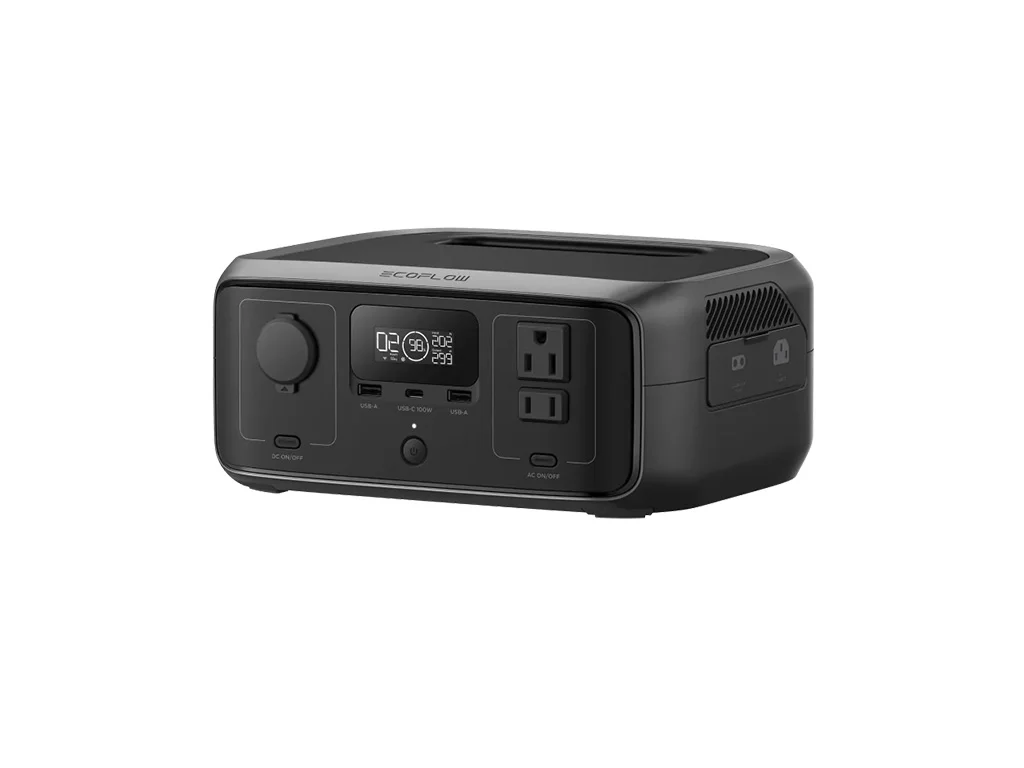
- Extremely compact size and sleek design
Yet the Anker 522 power station doesn’t go down without a fight. It offers:
- Longer warranty coverage
- Larger battery size
- Nearly identical outlets and other specs
The warranty and battery are two features worth putting a lot of weight into. On one hand, the EcoFlow dazzles us all with impressive UPS and tiny size. Then Anker comes to the table with two central items that can change the tide. It is a difficult decision.
Still uncertain? You’re not alone. Let’s check out what the details of these differences are. Plus, we’ll fill you in on what the X-Boost feature is and what the UPS function does.
Get 5% off most EcoFlow orders with the discount code SOLARWAY5OFF.
| Product | EcoFlow RIVER 3 | Anker PowerHouse 522 |
|---|---|---|
| Battery | 245Wh | 299Wh |
| AC Output | 300W | 300W |
| Warranty | 2 years | 5 years |
| Battery Type | LiFePO4 / LFP | LiFePO4 / LFP |
| 120V Outlets | 2 | 2×2.5A |
| UPS / EPS | 20ms | – |
| Buy Now | Buy R3 | Buy Now |
| Buy on Amazon | Buy on Amazon | Buy on Amazon |
|
EcoFlow RIVER 3 |
R3 on EcoFlow R3 on Amazon |

|
Anker 522 PowerHouse 299Wh Portable Power Station |
Buy on Anker Buy on Amazon |

Detailed Comparison: EcoFlow River 3 vs. Anker 522
In this detailed review of the River 3 vs. Anker 522, we’ll break it down based on the following list. We also have a big comparison chart after, and a special tool that allows you to compare these to almost any power station on the market.
- What Can These Power? Inverter and Outlet Details
- How Long Will They Last? Battery Specs
- How Long Do They Take to Charge? Charging Speeds
- Weight and Dimensions
- User Manual Links
- Final Verdict

What Can These Power? Inverter and Outlet Details
The hard truth about compact power stations is that they have limited capabilities. It is critical to ensure your choice can power the devices you have in mind.
A good starting point is looking at the available outlets and ports, as well as the AC inverter ratings.
But we’ll save you heartache right away. These are not made for large appliances. You want to stick to lightweight electronics. If you want to keep your fridge running, power a full entertainment center, or keep a device like a CPAP or portable fridge running for 10+ hours, you should step up into midrange power stations. Head over to the EcoFlow DELTA 3 Plus vs. Anker Solix C1000 comparison instead. They’re up to the task.

DC Ports and Connections
Whenever possible, it’s ideal to use DC outputs on your power station, like the USB ports and 12V car charger. By using these, you’ll get more out of the battery. If you use the AC outlets, you must turn on the AC inverter, which uses some power to run.
The DC outputs of the EcoFlow River 3 and Anker PowerHouse 522 are nearly identical with:
- Two USB-A ports
- One USB-C port
- One 12V car cigarette lighter outlet
There is one difference. The USB-C port of the EcoFlow goes up to 100W, while the Anker only has 60W. This could mean slower charging rates for laptops and other medium-sized devices. It depends on the specs of your device. Some only take in 60W at most anyway. Others will go higher.
Both power stations have DC outputs that can run two USB-A devices with low power, one high USB-C device (with EcoFlow going higher), and one device through the 12V car charger outlet.

AC Inverter and Outlets
The AC inverter is a special part of the power station that allows it to have the regular 110V/120V outlets you find at home. Since the battery (and solar panels) use direct current (DC) electricity, it must be changed to alternating current (AC) before the outlets will function. That’s the inverter’s role.
The River 3 and Anker 522 have a 300W AC inverter with two AC outlets.
This 300W is the continuous rating, made for extended use. Some devices need a surge of power when they start – just for an instant. That’s the surge or peak power. And these both have 600W.
EcoFlow’s advantage is the X-Boost feature. This allows you to run at the higher 600W for longer periods. It does so by lowering the voltage. It’s fine for quite a few devices and will just run them a little slower. For example, a 500W blender will likely work, but it won’t spin the blade as quickly.
This feature is nice in a pinch. We recommend buying power stations with the appropriate continuous rating to avoid frustrations.
Based on 300W, you can power things like a 200W television, multiple 50W electronics like a WiFi router or modem, and some smaller refrigerators.
UPS Function
Not long ago, if you wanted to provide continuous power to a critical device like a computer, you had to get a dedicated UPS device. These offer an uninterruptible power supply (UPS) by using power from a wall outlet most of the time, and then switching to internal battery power during outages.
The time it takes to switch from one power source to the other is the transfer time or switchover time. The faster it is, the more likely your device will have continuous power, avoiding data loss or damage from unexpected shutdowns.
The EcoFlow River 3 can be used as a UPS. And it has a fast transfer time of <20ms. Ideal is <10ms or less, but for this price, <20ms UPS is something to be grateful for.
You can use the Anker 522 while charging, but it doesn’t have a specified UPS mode or pass-through charging specs.
Outlets and Inverter Verdict: This is a close matchup with the same number of ports and outlets backed by a 300W inverter. The EcoFlow River 3 wins out due to the more powerful USB-C port, special X-Boost inverter mode, and the <20ms UPS function.
| Product | EcoFlow RIVER 3 | Anker PowerHouse 522 |
|---|---|---|
| AC Output | 300W | 300W |
| AC Output Peak | 600W | 600W |
| AC X-Boost | 600W | – |
| 120V Outlets | 2 | 2×2.5A |
| UPS / EPS | 20ms | – |
| USB-A Ports | 2x12W | 2x12W |
| USB-C Ports | 1x100W | 1x60W |
| Cigarette Lighter | 1x126W | 1x 120W |
| Connectivity | WiFi / Bluetooth | – |

How Long Will They Last? Battery Specs
There’s nothing worse than running out of battery at the wrong time. You also want to get a power station with a battery that will withstand the test of time. Warranty coverage is also crucial. Let’s see how this EcoFlow vs. Anker comparison turns out when we inspect the batteries.
You’ll find LiFePO4 battery types rated to >3,000 cycles in both of these power stations. Charge and discharge them daily for about 8 years and you’ll still have at least 80% of the battery capacity. This battery type is the leading industry standard. And a great reason to buy from these top brands that use reliable and respected battery cells.
For battery capacity, the Anker PowerHouse 522 comes out ahead with 299Wh compared to EcoFlow River 3 with 245Wh. This is a nearly 20% difference or about 4-5 phone charges.
Keep in mind, these are still small batteries. Ideal for charging phones, tablets, and laptops from anywhere or during an outage. They can also run small electronics like LED lights and small fans. But if you try to push them to run something like a 50W CPAP, you’ll be sorely disappointed.
Here are some examples of how long the 299Wh Anker battery will last:
- Charge a 10Wh phone battery about 25 times
- Charge a 30Wh tablet battery about 8 times
- Charge a 60Wh laptop battery about 3-4 times
- Run a 50W CPAP for about 4-5 hours
- Run a 200W television for about 1 hour
You’ll also see Anker is the lead with the 5-year warranty coverage. EcoFlow has a 5-year warranty on many products (including the old River 2), but it dropped the smallest River 3 power station’s warranty to 2 years.
While that stings, EcoFlow chooses lower costs over a longer warranty. For this compact power station, a 2-year warranty still isn’t such a bad deal. Especially if you can save some big bucks.
Battery and Warranty Verdict: The Anker PowerHouse 522 comes out ahead with 20% more battery and 3 extra years of warranty coverage. EcoFlow shoots low but also keeps prices down. Both power stations are relatively small with LiFePO4 batteries.
| Product | EcoFlow RIVER 3 | Anker PowerHouse 522 |
|---|---|---|
| Battery | 245Wh | 299Wh |
| Warranty | 2 years | 5 years |
| Battery Type | LiFePO4 / LFP | LiFePO4 / LFP |
| Battery Cycles | >3,000 | >3,000 |

How Long Do They Take to Charge? Charging Speeds
Waiting for a device to charge is like watching paint dry, but worse because you need to go somewhere. Charging speeds are not just about the outlet or the number of solar panels you use.
Each power station has charge controllers that feed the power source to the battery. These have maximum rates (in watts). This is the charging speed. Higher wattage means faster charging.
Since these batteries are pretty small, recharging isn’t a monumental task. Nonetheless, the EcoFlow River 3 is the hands-down winner for charging speeds:
- AC wall outlets: EcoFlow in less than an hour; Anker in more than 2 hours
- Solar panels: EcoFlow barely wins with 10% more at 110W compared to Anker’s 100W input
EcoFlow’s rates fit its battery well. Even the 110W solar input will recharge it fully in less than 3 hours when maximized with peak sunlight.
Anker’s AC charging rate is fine. Its solar rate is nearing 4 hours though, mainly due to the larger battery size paired with slower solar rate. Is it a huge difference in rates? No, but there’s no doubting EcoFlow’s advantage.
Charging Verdict: EcoFlow pulls ahead with super-fast wall charging and a sufficient solar input that allows for a full charge in a partial day of sun. Anker’s rates are still very manageable, although its larger battery makes the solar input seem worse than it is.
| Product | EcoFlow RIVER 3 | Anker PowerHouse 522 |
|---|---|---|
| AC Input | 320W | 160W |
| AC Recharge Hours (Est.) | 0.9h | 2.2h |
| Solar Input | 110W | 100W |
| Solar Recharge Hours (Est.) | 2.7h | 3.6h |
| Solar Input 1 Volts Min | 11V | 11V |
| Solar Input 1 Volts Max | 30V | 28V |
| Solar Input 1 Amps | 8A | 9A |
| Buy Now | Buy R3 | Buy Now |

Weight and Dimensions
In this segment of compact power stations, there’s usually not much to discuss for weight. And that mostly holds true. These are around 8lbs (3.6kg) each and have small footprints. Anyone can take them anywhere.
However, we prefer the EcoFlow dimensions and handle design. By integrating the handle into the backside, you can easily stack things on top of the EcoFlow. Or store it without taking up much space. It also has an incredibly small size, pushing the industry to new limits.
Anker’s dimensions are still pretty impressive. But it’s larger and its handle protrudes up, taking up more space and not providing the extra utility of having a flat top to put things on.
Dimensions Verdict: EcoFlow River 3’s sleek and compact design with an unobtrusive handle takes this category of the power station comparison to the Anker 522.
| Product | EcoFlow RIVER 3 | Anker PowerHouse 522 |
|---|---|---|
| Weight (lbs) | 7.8lbs | 8.6lbs |
| Weight (kg) | 3.5kg | 3.9kg |
| Dimensions (in) | 10×8.3×4.4in | 8.5×8.3×5.7in |
| Dimensions (mm) | 254x211x112mm | 216x211x144mm |
User Manual Links
This article has the specs and details you need for both power stations, but if other questions come up, here are links to the official user manuals from Anker and EcoFlow:
| Product | EcoFlow RIVER 3 | Anker PowerHouse 522 |
|---|---|---|
| User Manual | User Manual | User Manual |

Final Verdict
The list of similarities between the River 3 and Anker 522 is long. 300W inverter, same outlets and ports, and similar solar charging rates.
After looking deep into the details, the EcoFlow River 3 is going to be the better choice for most people because it has:
- <20ms UPS function and special X-Boost inverter
- More powerful USB-C port and fast wall charging
- Ultra-compact design with style
The Anker’s extended warranty and 20% larger battery are screaming in the background. But in most cases, you have to pay for those additions. And at the end of the day, the extra battery capacity is a hard call when both are still very small overall. The warranty length is a value choice we all have to make. If you’d rather pay for extended warranty coverage, the Anker is more for you. Most people would prefer lower prices instead.
Overall Verdict: Despite the smaller battery and shorter warranty, we recommend the EcoFlow River 3 over the Anker PowerHouse 522 power station. They’re both excellent choices, but EcoFlow’s UPS function and higher-powered USB-C ports are two major features worth going for.
Get 5% off most EcoFlow orders with the discount code SOLARWAY5OFF.
|
|
EcoFlow RIVER 3 |
R3 on EcoFlow R3 on Amazon |
|
|
Anker 522 PowerHouse 299Wh Portable Power Station |
Buy on Anker Buy on Amazon |

Comparison Charts: EcoFlow River 3 vs. Anker 522
These comparison charts will provide the high-level overview needed to see the details of the power stations.
We’ll stick to the two in question first, then move on to a special tool exclusive to Solar Waypoint. You can choose up to three power stations across the entire EcoFlow and Anker lineups, plus other top brands. Don’t miss it.
Full Specs and Comparison Chart
Here is the detailed comparison chart for the specs of the EcoFlow River 3 and Anker PowerHouse 522:
| Product | EcoFlow RIVER 3 | Anker PowerHouse 522 |
|---|---|---|
| Battery | 245Wh | 299Wh |
| AC Output | 300W | 300W |
| AC Output Peak | 600W | 600W |
| AC X-Boost | 600W | – |
| AC Input | 320W | 160W |
| AC Recharge Hours (Est.) | 0.9h | 2.2h |
| Solar Input | 110W | 100W |
| Solar Recharge Hours (Est.) | 2.7h | 3.6h |
| Warranty | 2 years | 5 years |
| Weight (lbs) | 7.8lbs | 8.6lbs |
| Weight (kg) | 3.5kg | 3.9kg |
| Dimensions (in) | 10×8.3×4.4in | 8.5×8.3×5.7in |
| Dimensions (mm) | 254x211x112mm | 216x211x144mm |
| Solar Input 1 Watts | 110W | 100W |
| Solar Input 1 Volts Min | 11V | 11V |
| Solar Input 1 Volts Max | 30V | 28V |
| Solar Input 1 Amps | 8A | 9A |
| Battery Type | LiFePO4 / LFP | LiFePO4 / LFP |
| Battery Cycles | >3,000 | >3,000 |
| 120V Outlets | 2 | 2×2.5A |
| UPS / EPS | 20ms | – |
| USB-A Ports | 2x12W | 2x12W |
| USB-C Ports | 1x100W | 1x60W |
| Cigarette Lighter | 1x126W | 1x 120W |
| Connectivity | WiFi / Bluetooth | – |
| User Manual | User Manual | User Manual |
| Buy Now | Buy R3 | Buy Now |
| Buy on Amazon | Buy on Amazon | Buy on Amazon |

Compare Any Power Station
Now it’s time for you to extend your wings. Choose up to 3 power stations from the drop-down menus. Then pick the spec group you want to see.
When you click the button, a table will populate with the requested information. We’re very proud of this tool and are happy to have you share it for others to use (or bookmark it for later).
Select Power Stations
Select up to three power stations to compare:
Get 5% off most EcoFlow orders with the discount code SOLARWAY5OFF. See our EcoFlow Sales, Codes, and Prices page for more details to get the best price.
|
|
EcoFlow RIVER 3 |
R3 on EcoFlow R3 on Amazon |
|
|
Anker 522 PowerHouse 299Wh Portable Power Station |
Buy on Anker Buy on Amazon |
Wrap Up
Our dedicated team has a unique ability to compare power stations in a way that matters most to you. After looking at these two choices, the EcoFlow River 3 comes out ahead with features that you don’t want to pass up. The powerful USB-C port can handle a ton of charging needs while the <20ms UPS makes sure to keep your most important devices running constantly.
The Anker 522 is an excellent alternative with a slightly larger battery and longer warranty. For some people, it may be worth the extra cost.
Want to see more power station details? Check out the full EcoFlow River 3 guide or the slightly smaller Anker 521 details. We also have these comparison articles:


