
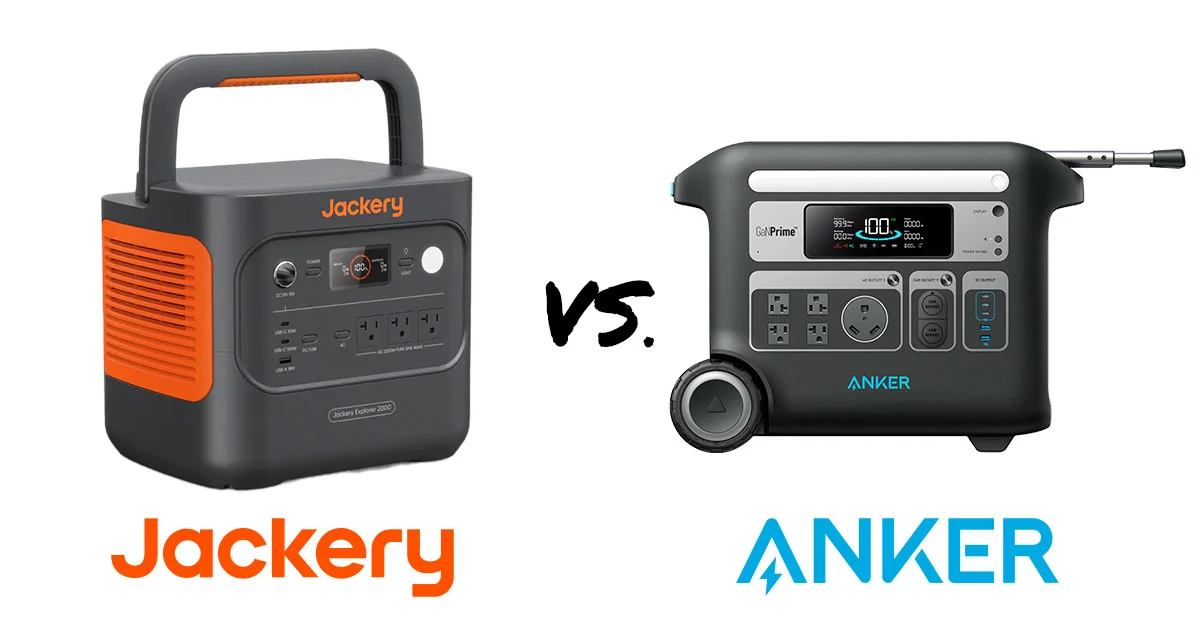
When it comes to choosing between the Jackery Explorer 2000 v2 and the Anker Solix F2000, there’s a lot of details to get through. You can relax because we’ve done the hard work for you. This comparison will help you understand the differences between these two powerhouses, so you can decide which is the right fit for your needs.
By the end, you’ll know exactly where the Jackery Explorer 2000 v2 shines and where the Anker Solix F2000 outperforms. From inverter strength to battery longevity, we’ll cover the details that matter most.
There’s an intense battle between the Jackery Explorer 2000 v2 and the Anker Solix F2000. And we’re here to find the winner.
We carefully select the products and services we link to. If you buy through our links, we may earn a commission. There’s no extra cost to you and it helps us provide this information.

Quick Analysis: Power vs. Portability
There are a lot of things to like about both of these power stations. As long as you get the one that fits your needs the best, you can’t go wrong. These have nearly identical internal battery capacities, inverter ratings, and warranty coverage. They both offer <20ms UPS function too. It’s only when you dig deep into the details you discover the difference.
After much digging, the Anker Solix F2000 comes out on top for those needing more power and flexibility because it:
- Can double battery capacity with external pack
- Higher solar input and faster charging
- 30-amp AC output with extra outlets and USB ports
Yet this power station comparison isn’t over yet. Jackery is ready to fight back.
While the Jackery Explorer 2000 v2 may not pack quite the same punch, it’s the go-to choice for portability and quick AC charging. Its key strengths include:
- Lightweight and easy to carry
- Faster AC charging speed
- Sleek, minimal design
In the end, if you need serious off-grid power and don’t mind a bulkier setup, the Anker Solix F2000 is hard to beat. If you value portability and quick plug-and-play options, the Jackery Explorer 2000 v2 is a smart choice.
|
Anker SOLIX F2000 |
Buy on Anker Buy on Amazon |

|
Jackery Explorer 2000 v2 |
2000v2 on Jackery 2000v2 on Amazon |
Jackery Explorer 2000 v2 vs. Anker Solix F2000: Ultimate Comparison
Both the Jackery Explorer 2000 v2 and the Anker Solix F2000 power stations boast impressive features. Whether you’re looking for something portable and lightweight or packed with power and expansion options, this detailed breakdown will help you decide.
Here’s how we’ll get through this comparison:
- What Can These Power? Inverter and Outputs
- How Long Will They Run? Battery Capacity and Warranty
- Do They Take Long to Recharge? Charging Speeds
- Are They Portable? Weight and Size
- Which Is Right for You? Final Verdict

Powering Your Devices: Inverter, Outputs, and UPS Function
An inverter is the heart of any portable power station, determining the kinds of devices it can handle. A larger inverter can run more power-hungry appliances like refrigerators or microwaves, while smaller inverters are better suited for electronics like laptops and fans. Both the Jackery Explorer 2000 v2 and the Anker Solix F2000 offer robust inverters, but their capabilities differ slightly.
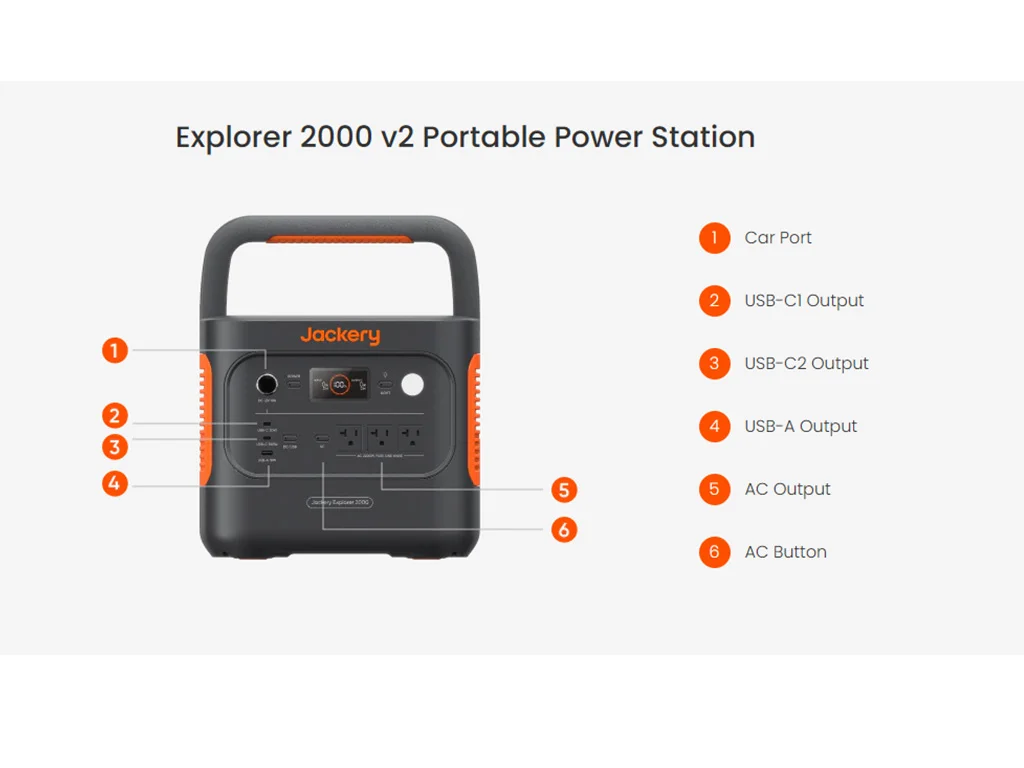
The Jackery Explorer 2000 v2 comes equipped with a 2,200W continuous AC inverter with a peak output of 4,400W. And it comes with a variety of connections to cover a weekend camping trip or basic home backup needs, allowing users to charge phones, laptops, and kitchen appliances simultaneously:
- Three standard AC outlets
- One USB-C port (100W)
- One USB-A port
- One 12V car port
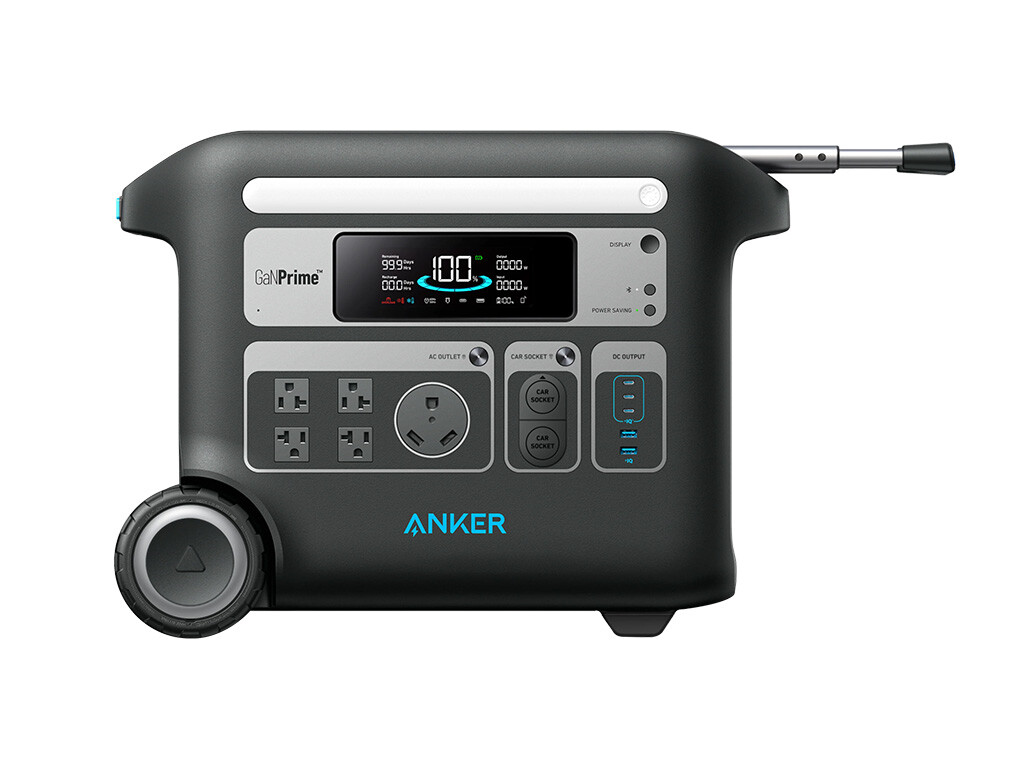
The Anker Solix F2000 edges ahead with a slightly larger 2,400W inverter. It also includes a crucial 30-amp AC output, ideal for RV use and other high-energy appliances. On top of that, the Anker power station has:
- Four AC outlets
- Two USB-C (100W each)
- Three USB-A ports
- Two 12V car ports
Not only does the Anker bring the high-amp output, it also outdoes the Jackery with every other output as well. The Anker F2000 is ideal for RV users who need to power larger equipment like an RV air conditioning unit, which often exceeds the capabilities of the Jackery’s outlets.
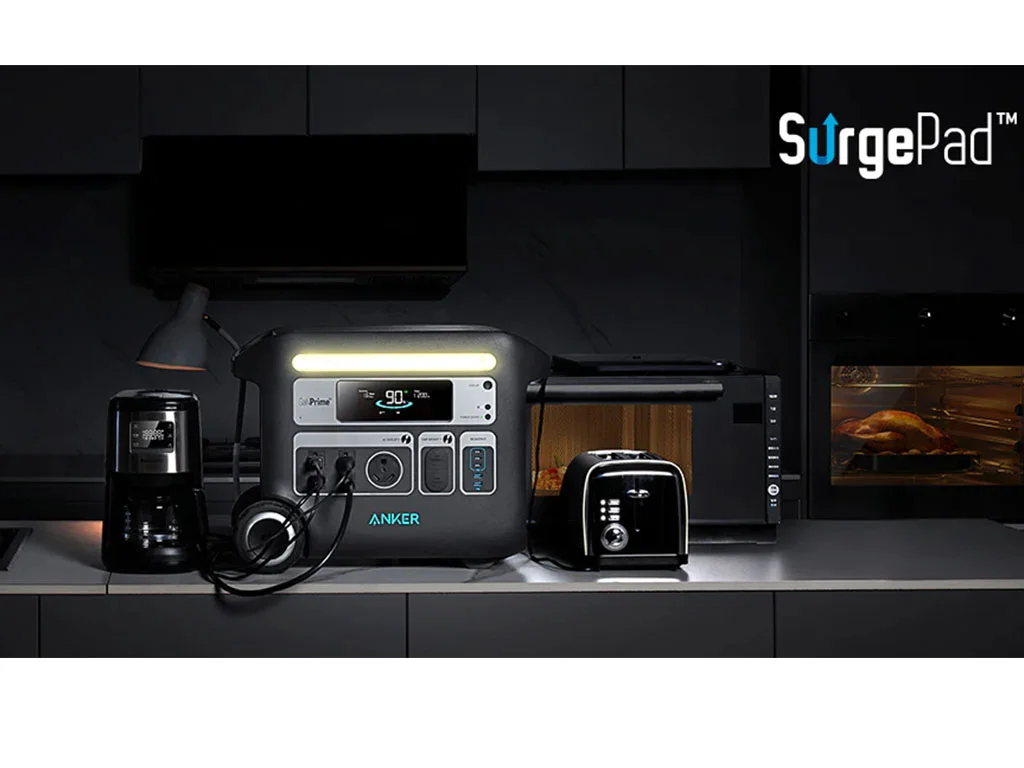
Both of these inverters can comfortably power mid-range appliances like a 1,000W microwave, a full-size refrigerator, or a 150W television. You can bring them camping to power a small fridge, charge phones, and keep lights on without worrying about output power (battery is up next).
You’ll start to find limits when you run multiple devices while trying to add on a 1,500W air conditioner unit, induction cooktop, or other high-energy device. You may need more inverter power from multiple units or a bigger power station, like the Bluetti AC500.
The Jackery Explorer 2000 v2 and the Anker Solix F2000 offer an uninterruptible power supply (UPS) function with a rapid transfer time of less than 20 milliseconds. This ensures that if the grid goes down, your essential devices (such as a WiFi router, medical equipment, or desktop computer) stay powered without interruption.
Output Verdict: The Anker Solix F2000 wins the output comparison due to its higher inverter capacity and more versatile outlets, including the 30A RV port. While the inverter is plenty capable, the Jackery Explorer 2000 v2 lacks the same outputs.
| Product | Jackery Explorer 2000 v2 | Anker Solix F2000 / PowerHouse 767 |
|---|---|---|
| AC Output | 2,200W | 2,400W |
| 120V Outlets | 3×18.3A | 4x20A, 1x30A |
| UPS / EPS | 20ms | 20ms |
| USB-A Ports | 1x18W | 2x12W |
| USB-C Ports | 1x100W; 1x30W | 3x100W |
Battery Capacity, Longevity, and Warranty
Battery capacity, measured in watt-hours (Wh), tells you how long a power station can run your devices before needing to be recharged. For instance, a power station with a 2,000Wh capacity could theoretically run a 60W laptop for about 33 hours (2,000 ÷ 60), or a 1,000W appliance for roughly 2 hours. In reality, you should expect about 20% less time due to normal system inefficiencies.
When you need reliable power during camping trips or home outages, the 2kWh internal battery capacity of the Jackery Explorer 2000 v2 and Anker Solix F2000 is ready for the job.
Short-term off-grid adventures or home power outage coverage is easily handled. These can:
- Power a 60W mini-fridge for more than a day.
- Charge a 10Wh smartphone over 150 times or a 60Wh laptop about 25 times.
- Connect your home fridge, TV, and WiFi router for around 4 hours.
Need more time without recharging? The Anker Solix F2000 goes a step further with an external battery pack to double its capacity to 4,096Wh. It can grow with your needs. The extra confidence that comes from the double battery capacity is hard to overlook.

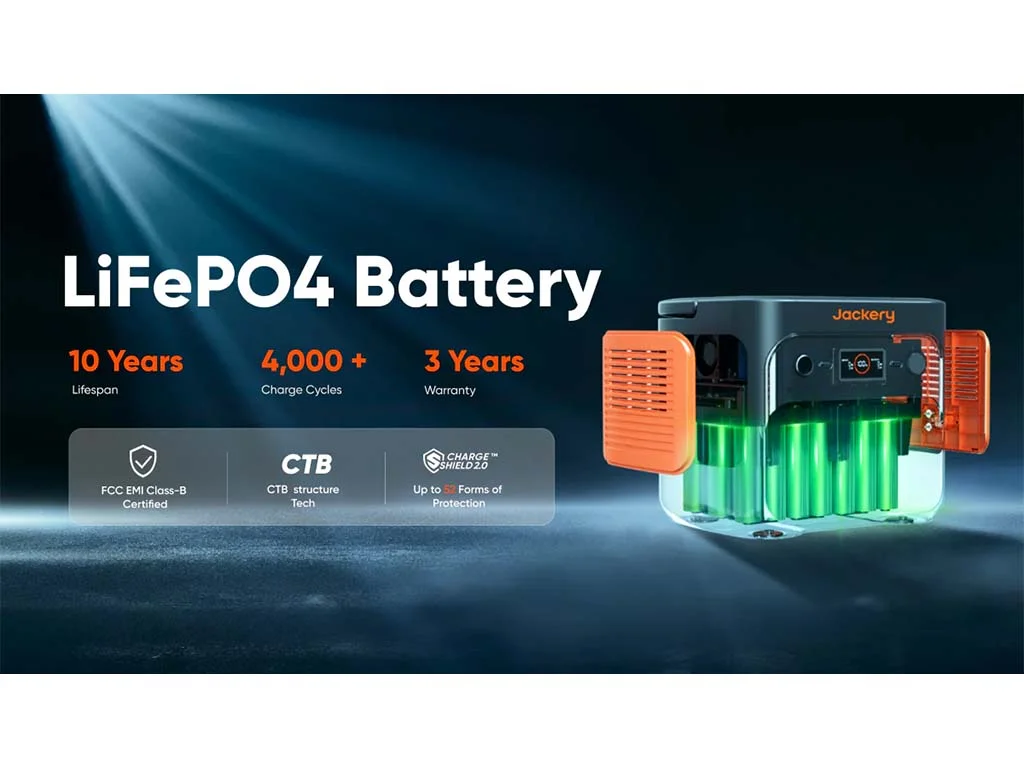
LiFePO4 (Lithium Iron Phosphate or LFP) batteries are known for their superior cycle life and safety compared to other battery types. These two can be fully discharged and recharged 3,000 times while keeping at least 80% of the capacity. You’re getting a device that can last nearly a decade without noticeable drop in capacity.
When it comes to warranty, both the Jackery and the Anker offer solid 5-year protection. Make sure to get the Jackery straight from the manufacturer to get the longest coverage.
Battery Verdict: Thanks to its modular expansion that can double the capacity, the Anker Solix F2000 takes the battery performance category. The Jackery Explorer 2000 v2 offers plenty of power for camping trips or short power outages but is limited to the 2kWh internal battery.
| Product | Jackery Explorer 2000 v2 | Anker Solix F2000 / PowerHouse 767 |
|---|---|---|
| Battery | 2,042Wh | 2,048Wh |
| Battery (System Max) | 2,042Wh | 4,096Wh |
| Warranty | 3-5 years | 5 years |
| Battery Type | LiFePO4 / LFP | LiFePO4 / LFP |
| Battery Cycles | >3,000 | >3,000 |
Charging Speeds and Solar Input
Quickly topping off a power station between uses is what can keep your fun going longer. Whether you use a basic wall outlet or connect a full solar panel array, there’s a way to find some juice. Each method has different charging speeds which are based internal components and the amount of solar panels you use.
- AC Charging: The fastest and most reliable way to recharge when available. Both can use a wall outlet to recharge in less than two hours, taking most of the power available from a standard 120V / 15A outlet. Jackery is slightly faster, but not by much.
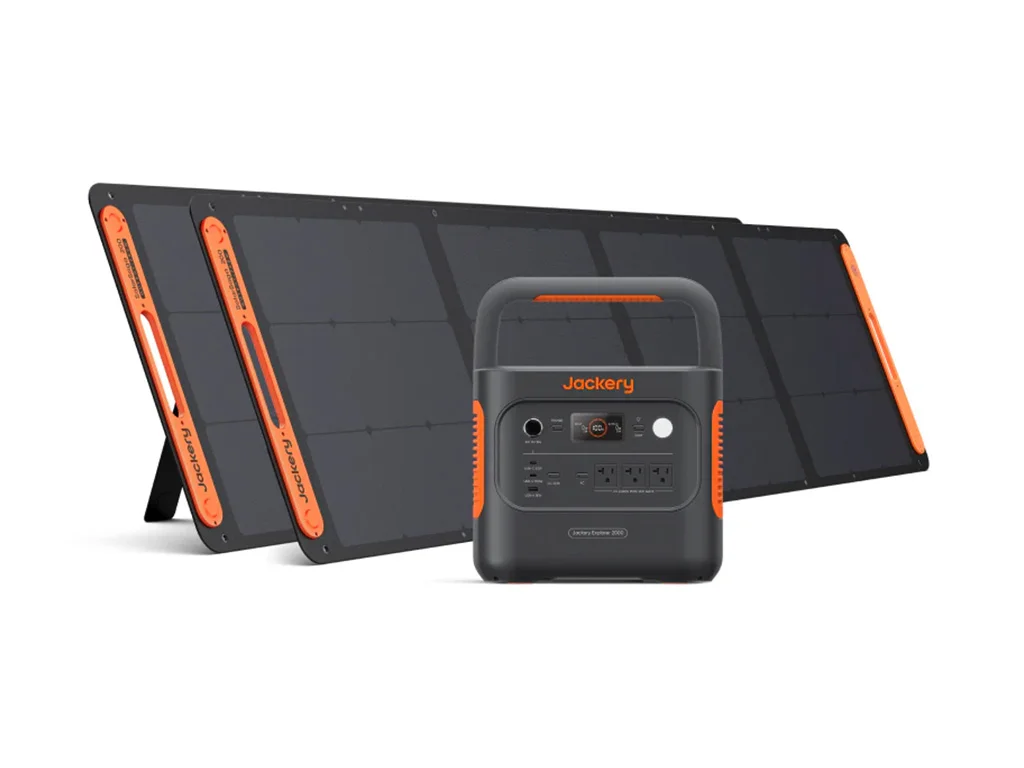
- Solar Input: Off-grid users know solar charging is a game-changer. The higher the solar input capacity (measured in watts), the faster the sun will charge your power station. The Jackery Explorer 2000 v2 can accept up to 400W of solar input, but the Anker Solix F2000 can absorb up to 1,000W of solar input. If you fully maximize these rates, the Jackery will still take more than a day of available sunlight in most situations. The Anker will be less than 3 hours.
- Car Charging: Both support 12V car charging, but expect longer charge times because these ports only offer about 120W. You can find faster ways to charge using a universal power station car charger that connects directly to any vehicle’s battery and electrical system.
Charging Verdict: The Anker Solix F2000 leads the charge here, especially if you want to use more than 400W of solar panels. It can take up to 1,000W. The Jackery 2000 v2 has a small advantage in AC charging speed but its 400W solar will take more than 6 hours of peak sunlight to fill up.
| Product | Jackery Explorer 2000 v2 | Anker Solix F2000 / PowerHouse 767 |
|---|---|---|
| AC Input | 1,800W | 1,440W |
| AC Recharge Hours (Est.) | 1.4h | 1.7h |
| Solar Input | 400W | 1,000W |
| Solar Recharge Hours (Est.) | 6.1h | 2.5h |
| Solar Input 1 Watts | 200W | 1000W |
| Solar Input 1 Volts Min | 11V | 11V |
| Solar Input 1 Volts Max | 60V | 60V |
| Solar Input 1 Amps | 12A | 20A |
| Solar Input 2 Watts | 200W | – |
| Solar Input 2 Volts Min | 11V | – |
| Solar Input 2 Volts Max | 60V | – |
| Solar Input 2 Amps | 12A | – |
| Buy Now | Buy 2000 v2 | Buy Now |
| Buy on Amazon | 2000v2 on Amazon | Buy on Amazon |
Portability, Weight, and Design
A lighter, more compact power station can make all the difference when you’re hauling gear to a campsite or packing it into a car. Weight, dimensions, and handle placement all contribute to how easily a power station can be transported.
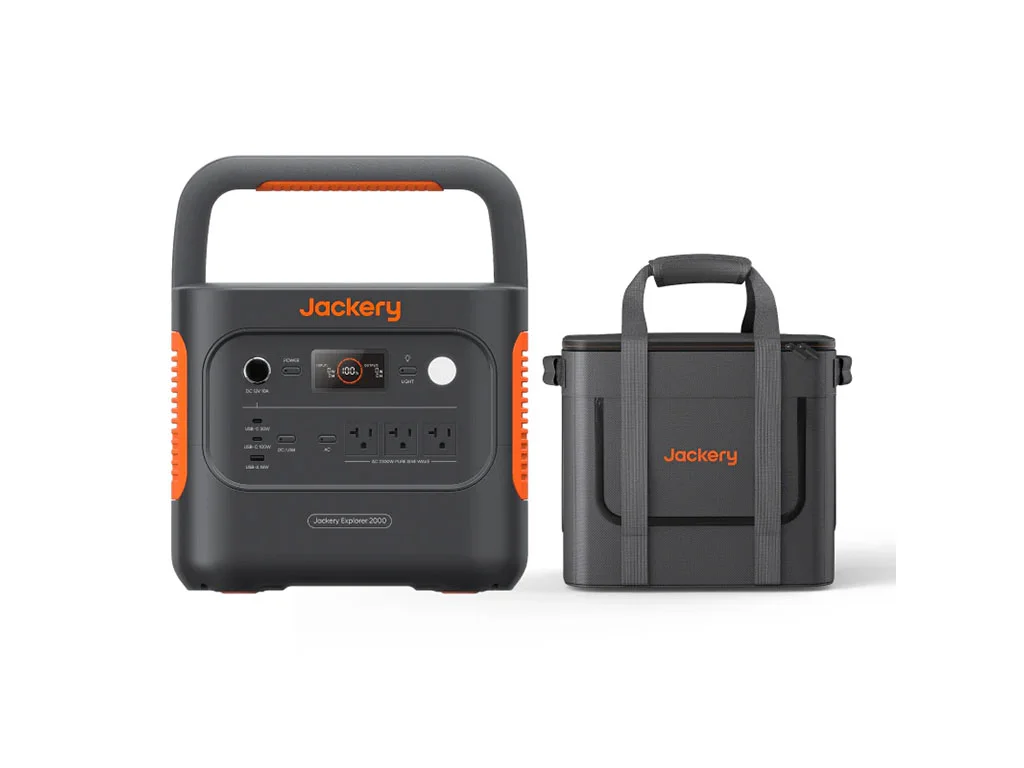
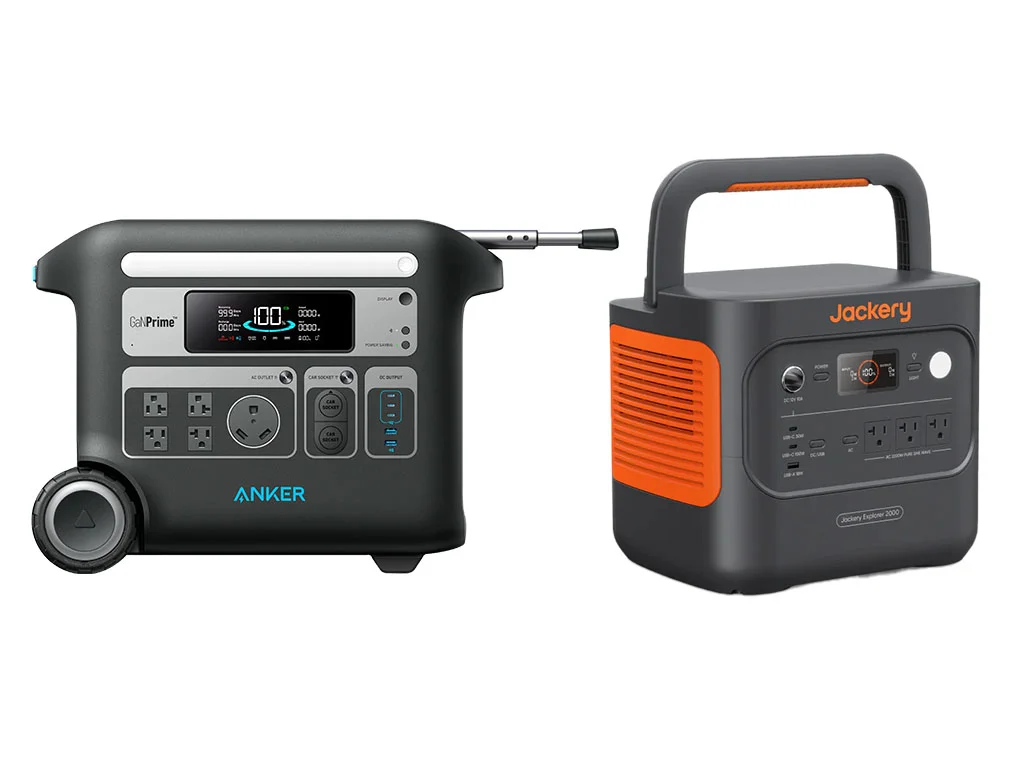
Jackery stands out here and this design element pushes others to the back burner. It weighs just 39.5 lbs (17.9 kg), making it one of the lightest power stations in this class by far. You can easily carry it to a remote campsite or load it into the back of a car without much hassle. It’s the benefit of limited outputs, more restricted charging, and no external battery use.
The weight of the Anker Solix F2000 is much heavier at 67.2 lbs (30.5 kg). It’s at the top of this class for our favorite picks, but Anker takes the load off by including built-in rolling wheels and a telescoping handle. It’s more suitable for RVers or users who might not need to carry it far but still want the convenience of moving it easily.
Portability Verdict: The Jackery Explorer 2000 v2 is the clear winner for portability, thanks to its class-leading weight and compact design. The Anker Solix F2000 is more of a beast but offers rolling wheels and a handle for easier mobility.
| Product | Jackery Explorer 2000 v2 | Anker Solix F2000 / PowerHouse 767 |
|---|---|---|
| Weight (lbs) | 39.5lbs | 67.2lbs |
| Weight (kg) | 17.9kg | 30.5kg |
| Dimensions (in) | 13.2×10.4×11.5in | 20.7×15.5×9.8in |
| Dimensions (mm) | 335x264x292mm | 525x395x250mm |
Final Verdict
In this power station battle between the Jackery Explorer 2000 v2 and the Anker Solix F2000, both are top-tier devices ready to deliver big power. The Jackery Explorer 2000 v2 stands out for its portability, fast AC charging, and user-friendly design. The lightweight build and straightforward features are ideal for those who need reliable power on the go, such as campers or tailgaters.
Meanwhile, the Anker Solix F2000 shines in its expandability, solar charging capability, and more powerful inverter with high-amp output. Its higher solar input and modular battery system make it perfect for off-grid users or those requiring longer home backup solutions.
Key highlights:
- Inverter: The Anker provides more output power, making it better for heavy-duty devices.
- Battery: Both use LiFePO4 batteries, but the Anker’s expandable capacity gives it the edge for long-term use.
- Charging Speeds: Jackery wins for fast AC charging, while Anker is superior for solar-powered recharging.
- Portability: The Jackery is lighter and more compact, whereas the Anker is bulkier but comes with wheels for easier movement.
| Jackery 2000 v2 | Anker F2000 | |
|---|---|---|
| Pros | ||
| Cons |
Final Recommendation: The more robust option is the Anker Solix F2000. It has a high-amp output, superior solar input, and modular battery expansion. If portability if your priority, you don’t need too much solar or a high-amp output, the Jackery Explorer 2000 v2 is a great lightweight choice with ample capabilities and reliability.
|
|
Anker SOLIX F2000 |
Buy on Anker Buy on Amazon |
|
|
Jackery Explorer 2000 v2 |
2000v2 on Jackery 2000v2 on Amazon |
Jackery Explorer 2000 v2 vs. Anker Solix F2000: Specs Comparison Chart
Below is a detailed comparison chart showcasing the key specs of the Jackery Explorer 2000 v2 and the Anker Solix F2000 side-by-side.
| Product | Jackery Explorer 2000 v2 | Anker Solix F2000 / PowerHouse 767 |
|---|---|---|
| Battery | 2,042Wh | 2,048Wh |
| Battery (System Max) | 2,042Wh | 4,096Wh |
| AC Output | 2,200W | 2,400W |
| AC Input | 1,800W | 1,440W |
| AC Recharge Hours (Est.) | 1.4h | 1.7h |
| Solar Input | 400W | 1,000W |
| Solar Recharge Hours (Est.) | 6.1h | 2.5h |
| Warranty | 3-5 years | 5 years |
| Weight (lbs) | 39.5lbs | 67.2lbs |
| Weight (kg) | 17.9kg | 30.5kg |
| Dimensions (in) | 13.2×10.4×11.5in | 20.7×15.5×9.8in |
| Dimensions (mm) | 335x264x292mm | 525x395x250mm |
| Solar Input 1 Watts | 200W | 1000W |
| Solar Input 1 Volts Min | 11V | 11V |
| Solar Input 1 Volts Max | 60V | 60V |
| Solar Input 1 Amps | 12A | 20A |
| Solar Input 2 Watts | 200W | – |
| Solar Input 2 Volts Min | 11V | – |
| Solar Input 2 Volts Max | 60V | – |
| Solar Input 2 Amps | 12A | – |
| Battery Type | LiFePO4 / LFP | LiFePO4 / LFP |
| Battery Cycles | >3,000 | >3,000 |
| 120V Outlets | 3×18.3A | 4x20A, 1x30A |
| UPS / EPS | 20ms | 20ms |
| USB-A Ports | 1x18W | 2x12W |
| USB-C Ports | 1x100W; 1x30W | 3x100W |
| Cigarette Lighter | 1x120W | 2x120W |
| Connectivity | WiFi / Bluetooth | WiFi / Bluetooth |
| User Manual | User Manual | User Manual |
| Buy Now | Buy 2000 v2 | Buy Now |
| Buy on Amazon | 2000v2 on Amazon | Buy on Amazon |
|
|
Anker SOLIX F2000 |
Buy on Anker Buy on Amazon |
|
|
Jackery Explorer 2000 v2 |
2000v2 on Jackery 2000v2 on Amazon |
Comparison Wrap Up
The Jackery Explorer 2000 v2 excels in portability and fast AC charging, making it the go-to option for users seeking a lightweight power station that don’t mind limited solar charging.
Our top pick is the Anker Solix F2000 with more power and versatility. The expandable battery capacity, higher solar input, and high-amp output are three features worth having. Although, its heavier weight and larger size may be less convenient for frequent movement.
Don’t wait until it’s too late. Get your power station today so you’re ready to keep your life going even when the electricity isn’t around.
For more in-depth information, check out our Jackery Explorer 2000 v2 review and Anker Solix F2000 review. You can also explore other comparisons like: